
大内宿
Ouchi-juku
Fukushima · tohoku
Uma vila postal era Edo preservada de casas com telhado de palha ao longo de uma estrada antiga nas montanhas de Fukushima, famosa por soba comida com uma cebola de primavera.

Para quem é Ouchi-juku
Viajantes de história, fotógrafos e aqueles após uma experiência vívida de retrocesso a velho Japão rural, especialmente sob neve de inverno.
Sobre Ouchi-juku
Ouchi-juku era uma estação de retransmissão na estrada Aizu-Nishi Kaido durante o período Edo, e sua rua única de casas com telhado inclinado steep tem sido mantida quase como era. Os edifícios agora contêm lojas de soba, barracas de artesanato e minshuku. Uma curta subida a um ponto de vista de encosta dá o tiro clássico das fileiras de telhados, mágico quando coberto de neve em fevereiro.
Deslocar-se em Ouchi-juku
A estação de comboio mais próxima é Shimogo na Linha JR Tadami, aproximadamente 30 minutos de distância por autocarro local; de lá, pode alcançar principais estações de Fukushima ou conectar a rede de shinkansen. Os autocarros operam de Shimogo diretamente para a vila postal em si, normalmente correndo várias vezes diárias, embora os horários sejam limitados assim planeie com antecedência. Para pagamento, os cartões IC como Suica ou Pasmo funcionam em autocarros regionais, ou adquirem bilhetes de papel (tipicamente cerca de ¥1,000 para a jornada) na estação. Uma vez na aldeia preservada, tudo é a pé, as casas com telhado de palha e restaurantes de soba agrupam-se ao longo da estrada velha em uma distância de caminhada fácil. As bicicletas podem ser alugadas localmente para explorar as estradas de montanha envolventes e atrações próximas, embora o terreno íngreme adequa melhor ciclistas confiantes. Os táxis são escassos e os serviços mínimos, assim confiar em autocarros programados e tráfego pedestre é essencial para este local remoto e histórico.
O que fazer
6 de 6Toque numa etiqueta para filtrar a lista.
Your JP Adventure
Planear uma viagem a Ouchi-juku
Transforme isto numa rota dia a dia. O Tabi-Kun cria um itinerário personalizado de Ouchi-juku em torno das suas datas, ritmo e interesses, gratuito para começar.
Planear uma viagem a Ouchi-juku →Next up
Ouchi-juku sunflower
10 Jul · 30 Jul · 20 Aug
Sunflower usually just starting around your dates.
Full forecast & date overlapMelhor altura para visitar
**Melhor altura para visitar Ouchi-juku** A primavera e outono são ideais para explorar esta vila postal lindamente preservada. Finais de março a princípios de abril traz época de flor de cerejeira, quando as montanhas de Fukushima envolventes amolece com flores cor de rosa, enquanto setembro a outubro oferece folhagem de outono brilhante crimsão e ouro que emoldura as casas com telhado de palha histórico perfeitamente. As temperaturas amenas durante estes meses tornam vagar pelas ruas de paralelo e provar macarrão de soba local genuinamente confortável. Evite a estação chuvosa de junho e julho ao calor opressivo e multidões de verão de julho a agosto. Dezembro a fevereiro transforma a aldeia numa paisagem coberta de neve, que é visualmente impressionante mas desafia acessibilidade. O Ouchi-juku Winter Festival, normalmente realizado em finais de fevereiro, mostra a cidade coberta de neve e apresenta demonstrações tradicionais e barracas de comida locais. As estações intermédias em finais de outubro e novembro oferecem menos visitantes do que outono máximo, permitindo uma experiência mais íntima deste gema cultural.
All seasonal phenomena · 2026
The whole calendar for this city
Live and forecast windows update through the year; historical entries are the multi-year average.
- Historical
1 Feb to 25 Mar
- Historical
18 Mar to 5 May
- Historical
15 Apr to 20 May
- Historical
18 Apr to 12 May
- Historical
5 Jun to 15 Jul
- Historical
SunflowerStarting now
10 Jul to 20 Aug
- Historical
5 Oct to 5 Dec
Monthly Climate & Weather
Best months: May, Oct.
Most challenging: Jan to Feb, Dec (heavy snow).
- ·Autumn colours (koyo) peak in mid-October, often spectacular in Tohoku's mountains.
- ·Summer festivals such as Aomori Nebuta (August) draw large crowds despite the heat.
Historical averages · Source: Japan Meteorological Agency (JMA), 1991 to 2020 normals
Onde fica
Fukushima, tohoku
Getting there
Aeroporto mais próximo
-Tempo até outras cidades
- SendaiTrain2 hr 30 min
- TokyoShinkansen3 hr
Onde ficar
A própria aldeia oferece acomodação limitada, assim a maioria dos visitantes estabelecem-se em Nishi-Aizuwakamatsu próxima, onde hotéis de negócios e um punhado de ryokan tradicionais agrupam-se em torno da estação de comboio e distritos de compras. Os hotéis de negócios normalmente cobram ¥8,000 a ¥15,000 por um quarto duplo, enquanto ryokan com refeições de noite e acesso a onsen geralmente correm ¥12,000 a ¥22,000 por pessoa. Da estação de Nishi-Aizuwakamatsu, a vila postal fica aproximadamente 30 a 40 minutos de distância de autocarro, tornando-a viável como um dia viagem ou curta estadia. Alternativamente, alguns viajantes preferem hotéis de cápsula ou aluguéis de férias compactos na vila para uma experiência mais imersiva da localização de montanha de Fukushima rural. A jornada em si é cênica, passando através de florestas de cedro e vales agrícolas que emolduram o carácter cultural e histórico da região.
O que comer
O prato de assinatura de Ouchi-juku é negi soba, macarrão de trigo mourisco tradicionalmente comido mergulhando-os em caldo quente e mordendo através de fatias espessas de cebola de primavera crua em vez de usar pauzinhos. Vários restaurantes geridos pela família alineiam a rua principal desta aldeia postal lindamente preservada, a maioria cobrando ¥800 a ¥1,200 por tigela. A experiência negi soba captura a simplicidade e história de refeições de viajantes era Edo. Para além de macarrão, prova saque local de Fukushima em pequenas destilarias tuteladas entre os edifícios com telhado de palha, ou desfrute vegetais de montanha sazonais em casas de chá. Para visitantes com orçamento, barracas perto do centro da aldeia oferecem salgadinhos mais leves e bolachas de arroz a preços razoáveis. A comida aqui reflete o património de montanha da região e significância cultural da estrada velha, tornando cada refeição uma conexão a passado feudal do Japão.
Perguntas Frequentes
Reviews
Reviews from Google Maps
A Day Trip to Ouchi-juku from Aizuwakamatsu Overall: A charming visit, worth the trip if you are in the area. • Transport & Cost: I purchased a round-trip ticket from Aizuwakamatsu Station for 2,200 JPY, which is quite a good deal. The train ride is straightforward, but make sure to stay alert for the announcements so you don't miss the stop at Yunokami Onsen Station. • The Shuttle Bus: Upon arrival, the bus to the village can get very crowded. They tend to prioritize passengers with prior reservations first. However, don't worry—the staff is very organized and they will ensure everyone eventually gets a seat on a bus to Ouchi-juku. • The Village Experience: Ouchi-juku is undeniably beautiful with its iconic thatched roofs. However, be aware that it feels more like a tourist attraction than a preserved "living" ancient village. Almost every house has been converted into a souvenir shop or a restaurant. You can easily see everything and walk through the entire village in about 1 to 2 hours. • Facilities: Good news for visitors—there are clean public toilets located right at the main parking lot near the entrance. • Final Verdict: While the experience didn't blow me away as "extraordinary," it was still a pleasant and very photogenic trip. If you have half a day to spare, it’s definitely worth the visit!
Ōuchijuku feels like traveling back in time to the Edo period ❄️🏮 This historic post town in Fukushima is famous for its traditional thatched-roof houses lined along the old street, creating a nostalgic and peaceful atmosphere unlike anywhere else in Japan. I visited during winter, and the snow-covered scenery made the village look even more magical. Walking through the streets while snow gently covered the rooftops felt like stepping into a postcard. There are also many local food stalls, souvenir shops, and cozy restaurants where you can experience the charm of rural Japan. The winter illumination and snow festival held in February make the atmosphere even more beautiful at night. Ōuchijuku is definitely worth visiting if you want to experience traditional Japan and stunning winter scenery away from the busy cities ☃️
This is a wonderful tourist attraction located just outside the city. The view is beautiful, and the entire village was covered in snow during my visit, making it look absolutely stunning. One of the best things about this place is that it wasn’t nearly as crowded as I expected, which made it very peaceful and easy to take plenty of photos without other people in the background. If you are looking for a scenic spot that is off the beaten path, I highly recommend visiting this village.
Visited on 04 Jan 2026 Started the drive from Kōriyama Station, arrived here around 4pm due to some other issues encounter, so most of the stores are closed. Despite that, the scenery of the snowy village/street was quite spectacular and memorable, maybe its because this is my first time on encountering such view, probably visiting once again when the stores are opening. Even with 4wd and winter tyres, the drive to Aizuwakamatsu when we left was quite tough due to the heavy snow pile up on the road.
Ouchi-juku is a phenomenal spot to visit if you’re planning on taking a road trip during your japan trip. The village boasts beautiful buildings from the edo period, which are incredibly well preserved. Most are used for food and drink spots, or souvenir shops. At the foot of the hill by the village, you’ll find a small shrine area. Very charming spot which will take you about 2-3 hours to complete. No entrance fees, but you do have to pay for parking if you plan on arriving by car.
Day trips from Ouchi-juku
Close enough to visit for the day and be back in Ouchi-juku that night.
Guias de Ouchi-juku
View more →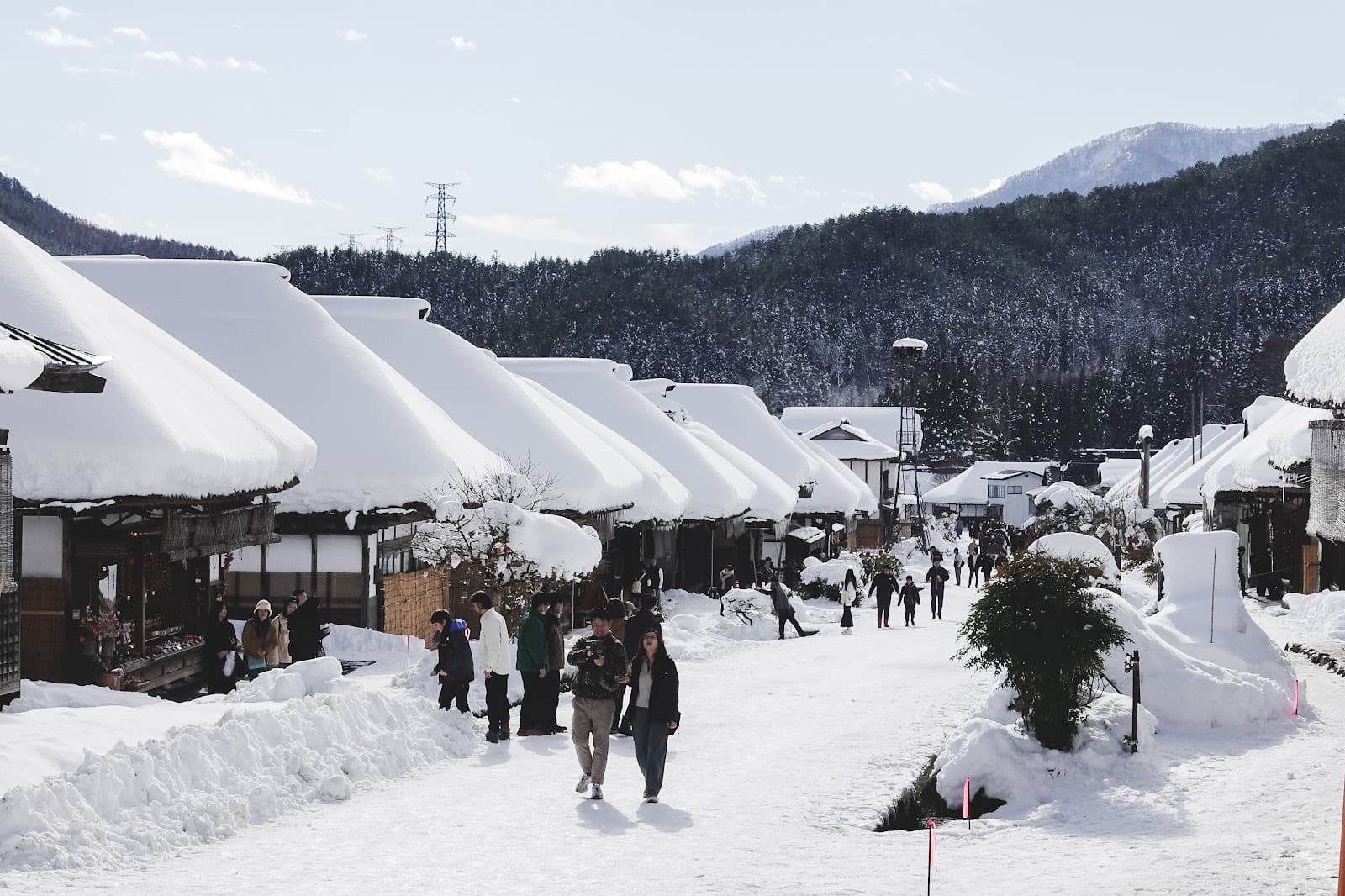
Mais em tohoku
View more →Share
Send this to anyone considering Ouchi-juku.