
 By Declan Barry
Two Weeks in Japan: How to Structure Your Perfect Itinerary
Two weeks in Japan offers the ideal balance between depth and breadth. It's enough time to experience multiple regions without feeling rushed, yet focused enough to avoid exhausting yourself with constant travel. After helping hundreds of travellers plan their Japan adventures, I've learned that how you structure those 14 days matters just as much as where you go.
Let me walk you through the practical considerations that will transform your trip from a series of destinations into a coherent, memorable journey.
The Foundation: Choose Your Base Pattern
Before plotting specific cities, decide on your accommodation strategy. This single choice shapes everything else.
The Hub-and-Spoke Approach
Basing yourself in 2-3 cities and taking day trips works beautifully if you dislike packing and unpacking. Stay in Kyoto for 5 nights, Tokyo for 6 nights, and perhaps Osaka for 2 nights. Use these bases to explore surrounding areas.
Tokyo
Tokyo Tower
Reminiscent of the Eiffel Tower, this landmark features observation areas & other attractions.
Open in Maps ↗From Kyoto, you can reach Nara (45 minutes), Osaka (30 minutes), Kobe (90 minutes), and even Hiroshima (under 2 hours by shinkansen) comfortably. From Tokyo, destinations like Nikko (2 hours), Kamakura (1 hour), Hakone (90 minutes), and Yokohama (30 minutes) become accessible day trips.
Nara
Nara Park
Landscaped, public park with ancient temples & the Nara National Museum of art, plus tame deer.
Open in Maps ↗Hakone
Hakone Shrine
Historic Japanese Shinto shrine with a small museum in a verdant lakefront setting.
Open in Maps ↗Hakone
Hakone Park
Former imperial palace complex offering walking paths & an observation platform with scenic views.
Open in Maps ↗This approach means:
- Less time managing luggage
- Lower accommodation costs (longer stays often mean better rates)
- Freedom to have slower mornings
- More flexibility to skip days if you're tired
The trade-off? You'll spend more time on trains, and some destinations work better with an overnight stay.
The Progressive Journey
Moving accommodation every 2-3 nights creates a sense of progression and puts you closer to each region's highlights. A typical route might flow: Tokyo (4 nights) → Hakone (1 night) → Kyoto (4 nights) → Osaka (2 nights) → Hiroshima (2 nights) → back to Tokyo (1 night for your flight).
This works particularly well if you:
- Enjoy the rhythm of discovering new places
- Want to maximise evening and early morning experiences
- Prefer shorter travel times between activities
- Don't mind the logistics of moving bags
Pro tip: Use luggage forwarding (takkyubin) for ¥2,000-3,000 per bag. Send your main suitcase ahead whilst you travel light with day packs. Hotels and convenience stores handle this service, with next-day delivery across most of Japan.
Pacing: The 60% Rule
Here's the mistake I see constantly: travellers schedule every single day solid with activities, then return home more exhausted than when they left.
Apply the 60% rule: plan structured activities for roughly 60% of your time. Leave 40% flexible for wandering, rest, spontaneous discoveries, and adjusting when something captures your interest more than expected.
In practice, across 14 days:
- 8-9 days with planned morning or afternoon activities
- 5-6 days that are loosely structured or include only one major activity
- Build in at least one complete "slow day" per week
That slow day might mean sleeping until 9 AM, finding a neighbourhood coffee shop, exploring local streets without a map, or simply sitting in a park watching daily life unfold. These unstructured moments often become travellers' favourite memories.
Geographic Logic: West to East or East to West?
Most international flights arrive in Tokyo (Narita or Haneda) or Osaka (Kansai). This gives you two main routing options.
Starting in Tokyo (Classic Route)
Tokyo (3-4 nights) → Mount Fuji area (1-2 nights) → Kyoto (3-4 nights) → Osaka (2-3 nights) → Nara/Hiroshima (1-2 nights) → return to Tokyo (1 night)
This routing works beautifully because:
- You start in the energetic capital, adjusting to Japan whilst navigating is easier
- You progressively move towards more traditional areas as you understand the culture better
- The return to Tokyo for your departure flight feels natural
Starting in Osaka/Kyoto (Reverse Route)
Kyoto (4 nights) → Nara (day trip) → Osaka (2 nights) → Hiroshima (2 nights) → Mount Fuji area (1 night) → Tokyo (4-5 nights)
Consider this if:
- You're more interested in traditional Japan and want to start there
- You prefer ending with Tokyo's energy rather than beginning with it
- Your flight arrives at Kansai Airport
Personally, I lean towards starting in Tokyo. The city's excellent English signage and infrastructure make it ideal for those first days when you're finding your feet.
Seasonal Considerations
Your travel dates should influence your structure significantly.
Cherry Blossom Season (Late March to Early April)
The sakura front moves north roughly 50 kilometres per day. Time your itinerary to chase the blossoms:
Tokyo
Sakura Shrine
Serene shrine with pink ribbons tied to trees as offerings & spring cherry blossom displays.
Open in Maps ↗- Kyoto/Osaka typically peak around 5 April
- Tokyo peaks around 31 March
- If travelling early April, start in western Japan (Kyoto, Hiroshima) then move east
Expect crowds. Book accommodation 6 months ahead for popular viewing areas like Kyoto's Philosopher's Path or Tokyo's Meguro River.
Autumn Foliage (November)
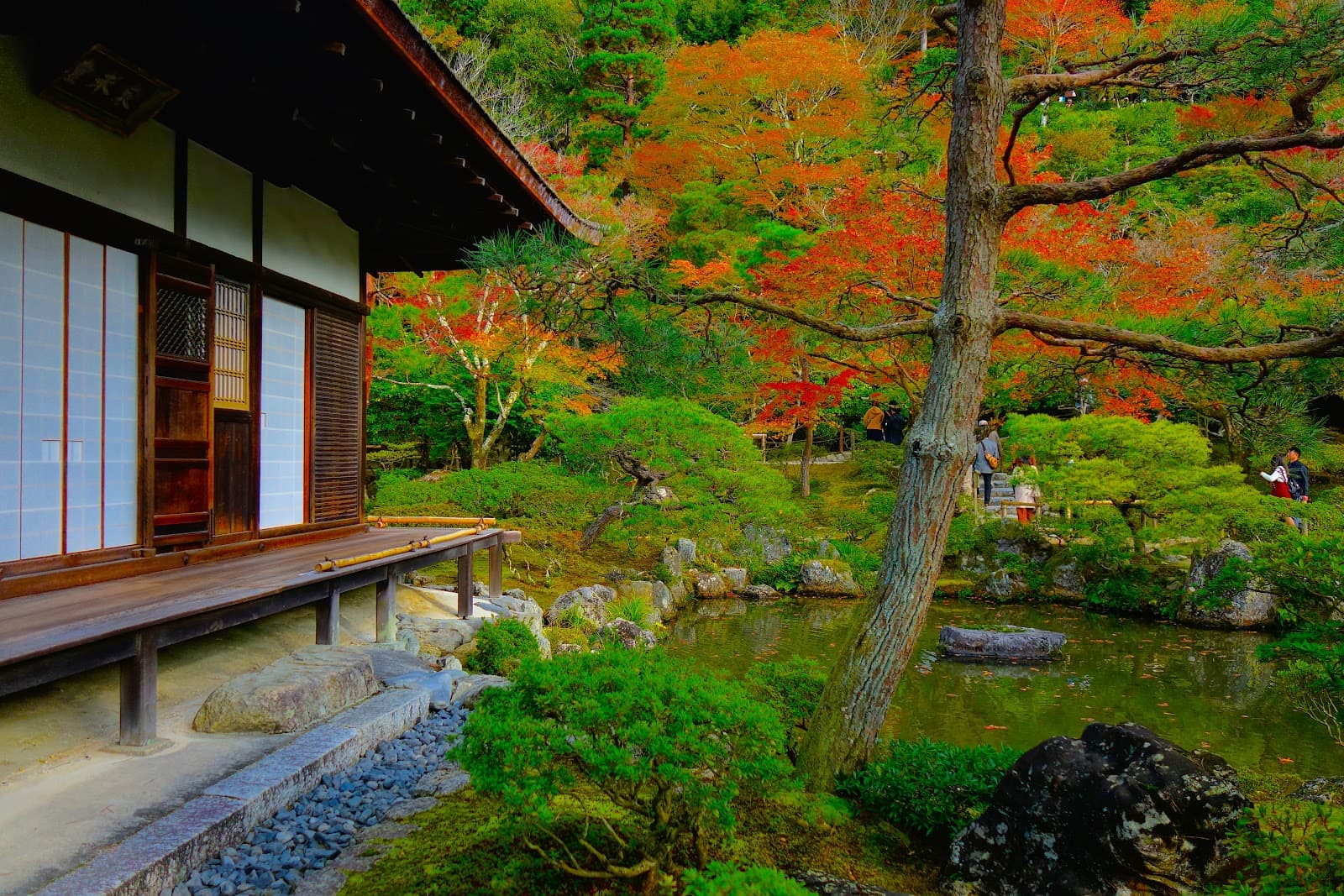
The reverse applies - colours start in the north (and mountains) and move south. Mid-to-late November offers spectacular foliage in Kyoto's temples, particularly Tofukuji and Eikando.
Kyoto
Eikandō Temple
Major Buddhist temple with ancient art, such as a famed statue of Buddha looking over his shoulder.
Open in Maps ↗Structure mountain visits (Hakone, Mount Takao, Kamikochi if you're adventurous) early in your trip if you're travelling late November, as these areas peak before cities.
Summer (June to August)
Avoid late June to mid-July if possible (rainy season), but if you must travel then, structure more indoor activities and covered shopping areas in your Osaka and Tokyo days. Dedicate August travel to higher elevations where possible - the Fuji Five Lakes area, Nikko, or the Japan Alps offer relief from coastal humidity.
Winter (December to February)
If you're not skiing, structure your itinerary to include more indoor cultural experiences, museums, and covered shopping districts. The Osaka-Kyoto-Tokyo route works beautifully, with occasional snow enhancing temple gardens without creating significant transport disruption.
Winter also means earlier sunsets (around 4:30 PM in December), so front-load your outdoor activities to morning and early afternoon.
The Day-by-Day Rhythm
How you structure individual days matters just as much as overall routing.
Start Early, Finish Early
Japan rewards early risers. Major temples like Fushimi Inari in Kyoto or Sensoji in Tokyo transform before 8 AM - peaceful, atmospheric, perfect for photography. Tourist crowds typically arrive 10 AM-3 PM.
Structure your days: early start → major sight by 8 AM → second activity 10 AM-noon → lunch → afternoon shopping or museum → dinner 6-7 PM → evening relaxation.
This rhythm means you're back at your accommodation by 8 PM most nights, with energy to plan the next day or simply unwind. You'll avoid the exhaustion of staying out until midnight daily.
The Art of the Half-Day Activity
Not everything requires a full day. Treat these as half-day activities:
- Nara (from Kyoto): 3-4 hours
- Hakone's major circuit: 4-5 hours
- Tokyo's Tsukiji Outer Market: 2-3 hours
- Osaka's Dotonbori: 2-3 hours evening
- Any single major temple complex: 1-2 hours
By combining two half-day activities with different energies (active morning + relaxed afternoon, or cultural morning + shopping afternoon), you create satisfying days without overcommitting.
Transport Structure: The JR Pass Decision
A 14-day JR Pass costs ¥50,300 (ordinary class). Whether this makes financial sense depends entirely on your routing.
When the Pass Makes Sense
If your itinerary includes:
- Tokyo to Kyoto return (¥13,320 each way = ¥26,640)
- Kyoto to Hiroshima return (¥11,880 each way = ¥23,760)
- Multiple day trips using JR lines
You'll exceed ¥50,300 easily, making the pass worthwhile.
When It Doesn't
If you're staying primarily in Tokyo and Kyoto with minimal long-distance travel, buy individual tickets. A Tokyo-Kyoto round trip plus local transport cards (Suica/Pasmo) will cost less than the pass.
The structure tip: If buying the pass, front-load your long-distance travel. Use activation day for the Tokyo-Kyoto journey, then maximise value with day trips. Don't let it expire whilst you're spending three days walking around a single neighbourhood.
Accommodation Distribution Strategy
Where you sleep shapes your entire experience.
Mix Accommodation Types
Structure variety into your stays:
- Start with a standard hotel in Tokyo (3 nights) - easy, reliable, good for jet lag
- Include one ryokan experience in Hakone or Kinosaki Onsen (1 night) - traditional, expensive, memorable
- Use business hotels for practical stays (2-3 nights) - efficient, affordable, well-located
- Consider a capsule hotel for one night in Osaka or Tokyo - uniquely Japanese, fun for the story
- End with a comfortable hotel in your departure city (1 night) - rest before travel
This variety creates rhythm and prevents accommodation monotony. Budget roughly ¥8,000-12,000 per night for standard hotels, ¥25,000-40,000 per person for quality ryokan (including dinner and breakfast).
Neighbourhood Matters More Than You Think
In Tokyo, choosing between Shinjuku, Shibuya, Ginza, or Asakusa fundamentally changes your daily experience. Each neighbourhood offers different evening atmospheres, food options, and morning vibes.
Structure your Tokyo accommodation by splitting between two neighbourhoods if staying 5+ nights. Perhaps Shinjuku for your first 3 nights (central, great transport links, energetic), then Asakusa for your final 2 nights (traditional, quieter, different food scene).
In Kyoto, stay near Gion or the Higashiyama district to wake up near the temples you'll visit. The 15 minutes saved on morning transport means reaching Fushimi Inari or Kiyomizudera before crowds.
Building in Recovery Time
Jet lag affects most travellers for 3-4 days. Structure accordingly.
Days 1-2: Gentle Introduction
Schedule only one activity daily. Walk neighbourhoods. Find your rhythm. Resist the urge to "maximise" these days - you'll pay for it later.
Good first-day activities:
- Tokyo: Senso-ji Temple and Asakusa wandering
- Kyoto: Nishiki Market and downtown exploration
- Osaka: Osaka Castle and surrounding park
All combine walking, culture, and built-in breaks.
The Mid-Trip Pause
Around day 7-8, schedule your lightest day. If following the Tokyo → Kyoto → Osaka route, this falls naturally in Osaka. Spend it exploring neighbourhoods like Shinsekai, taking a long lunch, visiting one museum, then enjoying an early dinner.
Your body and mind need this reset. Push through, and you'll remember days 9-14 as a blur.
Practical Examples: Three Complete Structures
Structure 1: Culture-Focused (Temples, History, Traditional Arts)
Days 1-4: Tokyo (Asakusa stay) - Senso-ji, Meiji Shrine, one day trip to Nikko, Imperial Palace area, traditional theatre
Days 5-6: Hakone (ryokan stay) - Open Air Museum, Lake Ashi, onsen time
Days 7-11: Kyoto (Higashiyama stay) - Fushimi Inari, Kinkaku-ji, Ginkaku-ji, Arashiyama bamboo grove, day trip to Nara, tea ceremony experience
Days 12-13: Osaka (Namba stay) - Osaka Castle, Dotonbori, food focus
Day 14: Return to Tokyo (airport hotel)
Structure 2: Urban Energy (Cities, Food, Modern Japan)
Days 1-5: Tokyo (split between Shibuya and Shinjuku) - Shibuya crossing, Harajuku, Akihabara, teamLab Borderless, Tsukiji Market, Tokyo Skytree, golden gai evening
Days 6-8: Osaka (Namba stay) - Dotonbori deep dive, Kuromon Market, Universal Studios Japan, street food focus
Days 9-12: Kyoto (downtown stay) - Mix temples with covered markets, Gion district, Nintendo Museum if you're keen, day trip to Nara
Days 13-14: Return to Tokyo (Ginza stay) - Shopping, fine dining, rest before departure
Structure 3: Nature-Balanced (Mix of Urban and Natural)
Days 1-3: Tokyo (Shinjuku stay) - Major highlights, one museum day
Days 4-5: Hakone (ryokan + lakeside hotel) - Circuit route, hiking, onsen
Day 6: Hiroshima (single night) - Peace Memorial, Miyajima day trip
Days 7-10: Kyoto (Higashiyama stay) - Temples, Arashiyama, Philosopher's Path, day trip to Kibune or Kurama
Days 11-12: Osaka (Namba stay) - Urban contrast, food focus
Days 13-14: Return to Tokyo (airport area) - Last shopping, rest
Final Structural Principles
As you finalise your itinerary, apply these checks:
No more than one accommodation change every 2 days - you'll thank yourself when you're not living from a suitcase
Alternate intensity - follow a packed day with a lighter one
Keep one evening completely unplanned per city - for wandering, random restaurants, or rest
Front-load must-sees to days 3-8 - when your energy peaks
Build contingency - weather happens, you might feel unwell, something might captivate you longer than expected
Two weeks in Japan doesn't mean seeing everything. It means seeing some things really well, feeling the rhythm of daily life, and leaving room for the unexpected moments that become your favourite stories.
Structure creates freedom. With your framework in place, you're free to wander within it, adjust when something magical appears, and actually experience Japan rather than just checking boxes on a list. That's when two weeks transforms from a trip into an adventure you'll carry with you for years.