
 By Declan Barry
Temple vs Shrine in Japan: How to Tell Them Apart
You're wandering through Kyoto when you spot a beautiful gate painted vermillion red. Is it a temple or a shrine? You notice people rinsing their hands at a stone basin. Buddhist or Shinto? Understanding the difference between temples and shrines transforms your Japan experience from passive sightseeing to genuine cultural understanding.
Let's clear up the confusion. Temples (寺, tera or ji) are Buddhist. Shrines (神社, jinja) are Shinto. Japan's two main spiritual traditions exist side by side, sometimes quite literally. At Todai-ji in Nara, you'll find shrine buildings within the temple complex. This blending reflects centuries of religious coexistence.
The Quick Visual Guide
Before diving deep, here's your cheat sheet for instant identification:
Shrines have:
- Torii gates (those distinctive vermillion archways)
- Shimenawa (thick twisted rope with white paper strips)
- Komainu (guardian lion-dogs)
- Names ending in -jinja, -jingu, -taisha, or -gu
Temples have:
- Multi-storey pagodas
- Statues of Buddha
- Incense burners
- Names ending in -ji or -dera
Now let's explore why these differences matter and what they mean for your visit.
The Gateway: Torii vs Temple Gates
The entrance tells you everything. Shrines announce themselves with torii gates, those iconic structures you've seen in countless Japan photos. At Fushimi Inari Taisha in Kyoto, 10,000 vermillion torii create tunnels up the mountain. The colour isn't just aesthetic, it represents life force and protection from evil.
Kyoto
Fushimi Inari Taisha
Mountainside Shinto shrine dating from 711 A.D. featuring a path with hundreds of traditional gates.
Open in Maps ↗Torii gates mark the transition from the mundane world to sacred space. You'll find them standing in water (like at Itsukushima Shrine on Miyajima), in forests, even in the middle of cities. Pass through one and you've entered the realm of kami, the Shinto spirits or deities.
Temple gates (山門, sanmon) are architectural structures, often with two storeys and guardian statues inside. At Senso-ji in Tokyo, the massive Kaminarimon (Thunder Gate) features a 700-kilogram paper lantern and fierce deity statues. These gates represent the mountain where enlightenment dwells, even if the temple sits on flat ground.
The contrast? Torii are thresholds. Temple gates are declarations of Buddhist philosophy in wood and stone.
Sacred Structures: Architecture Speaks
Once inside, look up. See a pagoda? You're in a temple. These multi-tiered towers (goju-no-to for five storeys, sanju-no-to for three) originated in India as stupas, structures housing Buddhist relics. At Kofuku-ji in Nara, the five-storey pagoda reaches 50 metres, visible across the city.
Pagodas serve no practical function - you typically can't climb them. They're symbolic, representing the five elements (earth, water, fire, wind, void) in Buddhist cosmology. The central pillar runs from foundation to pinnacle without touching the floors, allowing the structure to sway during earthquakes. Engineering genius wrapped in spiritual meaning.
Shrines lack pagodas. Instead, you'll find honden (main hall) and haiden (worship hall). The honden houses the kami and is often closed to visitors. At Ise Jingu, Shinto's most sacred site, even seeing the honden is impossible - it's hidden behind wooden fences. This concealment reflects Shinto's emphasis on mystery and awe.
The architectural style matters too. Shrines use natural, unpainted wood (like at Ise Jingu, rebuilt every 20 years in cypress) or vermillion-painted timber. The roofs curve gently. Temples embrace grander decoration - gold leaf, intricate carvings, elaborate brackets under the eaves. Compare the modest elegance of Meiji Jingu in Tokyo with the golden opulence of Kinkaku-ji (Golden Pavilion) in Kyoto.
Kyoto
Kinkaku-ji
Historic, tranquil temple with a gold-leaf facade set amid landscaped gardens & a reflecting pond.
Open in Maps ↗Who Lives There: Kami vs Buddha
Step inside the main hall. At a temple, you'll see Buddhist statues - perhaps a large seated Buddha, maybe fierce-looking guardian deities. At Kamakura's Kotoku-in, the 13-metre bronze Buddha sits in meditation, fingers positioned in a symbolic mudra. These aren't just art; they're objects of veneration representing enlightened beings.
Temples house Buddhist clergy who've taken vows. Historically, most remained unmarried and vegetarian. Today's priests often marry and live in temple residences, but they've undergone formal training in Buddhist doctrine and practice.
Shrines serve kami - spirits inhabiting natural phenomena, ancestors, or mythological figures. You won't see statues because kami aren't depicted in physical form. Instead, you might spot a mirror (representing the sun goddess Amaterasu), or simply an empty inner sanctum. The kami's presence is felt, not seen.
Shrine priests (kannushi) wear distinctive white robes and black or coloured hats. Unlike Buddhist monks, they can marry and eat meat. Their role focuses on ritual purity and conducting ceremonies rather than teaching spiritual doctrine. At major shrines like Meiji Jingu, you'll see them performing blessings, weddings, and seasonal rites.
The Worship Experience: Different Rituals
How people pray reveals the tradition. At shrines, the standard practice follows a pattern:
- Purify at the temizuya (water basin) by rinsing left hand, right hand, mouth (pour water into your hand first), then the ladle handle
- Approach the offering box
- Toss a coin (5 or 50 yen coins are lucky - they have holes)
- Bow twice deeply
- Clap twice (to get the kami's attention)
- Bow once more
The hand-clapping distinguishes Shinto worship immediately. At Izumo Taisha, visitors clap four times instead of two - one of several regional variations.
Temple worship differs entirely:
- Purify at the water basin (same as shrines)
- Light incense at the main burner, waving smoke toward yourself (for purification and blessing)
- Approach the altar
- Place hands together in prayer (gassho)
- Bow without clapping
The burning incense creates aromatic clouds at popular temples like Senso-ji. People direct smoke toward body parts needing healing - a bad knee, a tired back. The silence of temple prayer contrasts with shrine clapping.
Names and Numbers: Reading the Signs
The name itself often reveals the answer. Shrines incorporate:
- Jinja (神社): standard shrine - Yasukuni Jinja in Tokyo
- Jingu (神宮): imperial connection - Meiji Jingu
- Taisha (大社): "grand shrine" - Izumo Taisha
- Gu (宮): imperial-related - Tenman-gu shrines honouring Sugawara no Michizane
Temples use:
- Ji (寺): standard temple - Todai-ji, Kiyomizu-dera (same character, different pronunciation)
- Dera (寺): same character as ji - Kinkaku-ji becomes Kinkaku-dera in conversation
- In (院): temple compound - Byodo-in near Kyoto
Japan has approximately 80,000 Shinto shrines and 77,000 Buddhist temples. Kyoto alone claims 1,600 temples and 400 shrines. Tokyo's numbers reverse - more shrines than temples, reflecting the capital's different historical development.
Decorative Details: What to Look For
Shrine markers:
Shimenawa rope marks sacred spaces. You'll see these thick straw ropes with white paper strips (shide) hanging from torii, around sacred trees, on holy rocks. At Izumo Taisha, a massive shimenawa weighs several tonnes. The rope creates a boundary between the profane and sacred.
Komainu guardian pairs flank shrine entrances - one with mouth open (saying "ah"), one closed (saying "un"), representing the beginning and end of all things. Sometimes they're foxes (at Inari shrines), deer (at some Nara shrines), or even mythical creatures.
Sacred sake barrels (kazaridaru) stack near major shrines. These aren't for drinking - they're offerings from breweries. At Meiji Jingu, barrels from across Japan create a colourful wall, some wrapped in straw, displaying brewery names in bold calligraphy.
Temple markers:
Incense burners (jokoro) sit before main halls. Bronze or stone vessels hold burning incense sticks creating fragrant smoke. The smell of temple incense differs from shrine incense - deeper, woodier.
Bells and gongs invite prayer. Large hanging bells require a thick rope to swing the log striker. The deep tone resonates across temple grounds. At some temples like Chion-in in Kyoto, the bell weighs over 70 tonnes - rung by 17 monks working together.
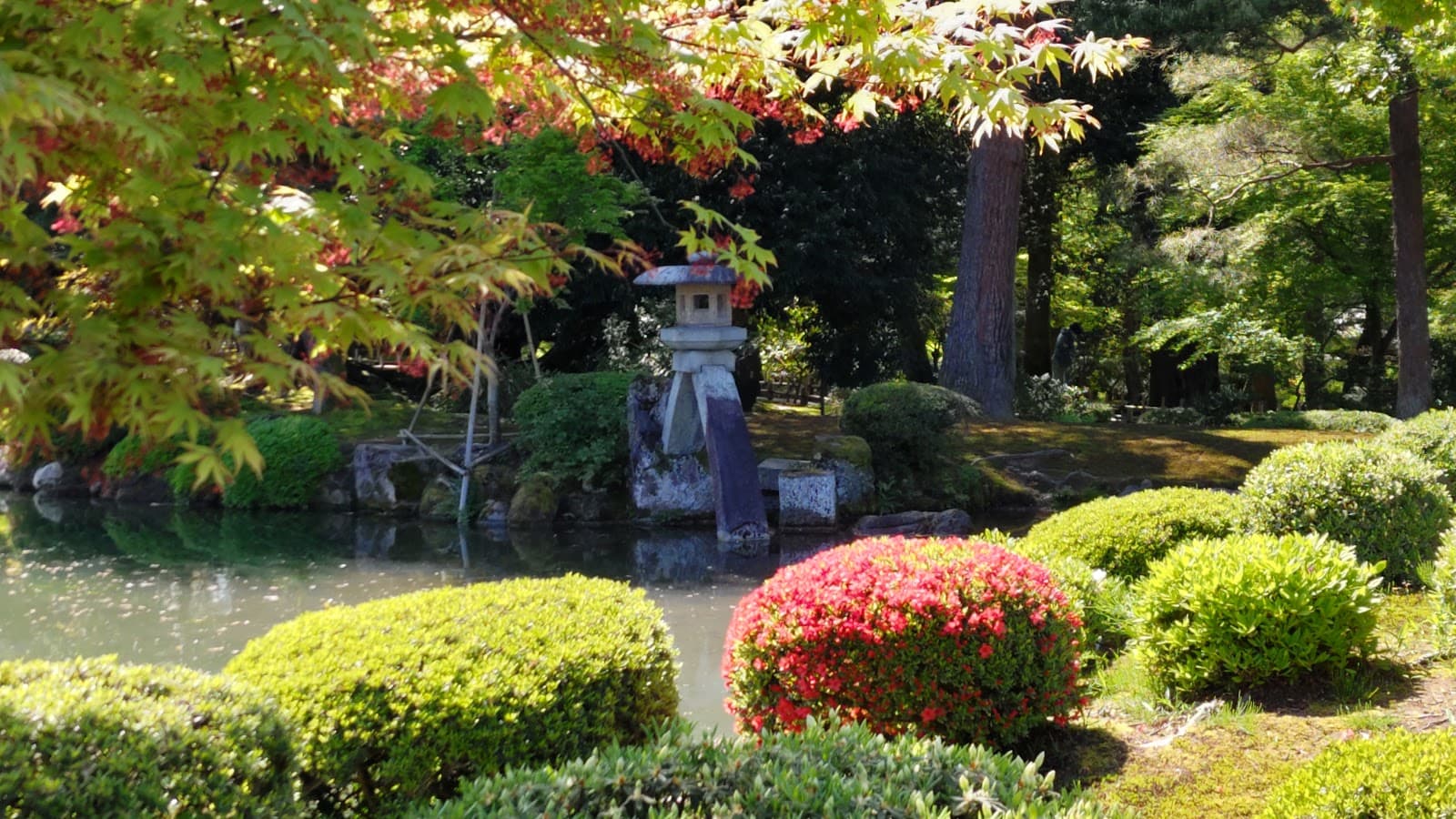
Stone lanterns line temple paths. While shrines have lanterns too, temple versions often bear Buddhist inscriptions or imagery. Hundreds illuminate the approach to Kasuga Taisha in Nara during February and August festivals - wait, that's a shrine. The exception proves how intertwined these traditions became.
Special Features: Gardens and Nature
Zen temples showcase karesansui - dry landscape gardens. Raked gravel represents water, rocks become mountains or islands. At Ryoan-ji in Kyoto, 15 rocks sit in white gravel, arranged so you can never see all 15 simultaneously from any angle. These gardens support Buddhist meditation on emptiness and impermanence.
Kyoto
Ryōan-ji
On the scenic grounds of this 15th-century temple is a famous Zen rock garden & a yudofu restaurant.
Open in Maps ↗Shrine grounds emphasise natural features - ancient trees, sacred forests, mountain streams. The kami inhabit nature, so shrines preserve it. At Nachi Taisha, the shrine's kami is the waterfall itself. Visitors worship the falling water directly.
This nature connection means shrines often occupy stunning locations - mountainsides, forest clearings, beside rivers. Temples can sit anywhere, though Zen temples particularly favour hillside settings with designed views.
Seasonal Celebrations: Different Calendars
Shrines host matsuri - festivals celebrating local kami, agricultural cycles, historical events. These lively affairs feature portable shrines (mikoshi) carried through streets, street food stalls, traditional music. Tokyo's Kanda Matsuri in May sees dozens of mikoshi paraded through central districts, blessed with sake.
Temple events follow the Buddhist calendar. O-bon in August honours ancestors' spirits returning to visit the living. New Year at temples means ringing the bell 108 times (once for each earthly desire in Buddhist teaching). At famous temples like Zenko-ji in Nagano, thousands queue for hours to strike the bell.
Some celebrations blur the lines. Setsubun in February sees both temples and shrines throwing beans to drive out demons - a Buddhist practice adopted by Shinto sites.
Practical Visiting Tips
Money matters: Most temples charge admission - typically ¥300-600 for standard temples, ¥500-800 for famous sites. Kinkaku-ji costs ¥400. Shrines traditionally have free grounds, though some charge for gardens or treasure halls. Meiji Jingu's main grounds are free; the inner garden costs ¥500.
Photography: Interior photography bans are stricter at temples. The Buddhist statues are sacred objects, not art displays. Shrines generally permit photos everywhere except inside the honden (which you can't see anyway). Always check for signs.
Shoes: Remove shoes when entering temple halls with tatami mats and shrine buildings. You'll see shoe racks or lockers. At major sites, staff provide plastic bags for carrying your shoes.
Behaviour: Both demand respectful conduct - quiet voices, modest dress covering shoulders and knees. Temples request you don't point feet toward Buddha statues when sitting. Shrines ask you step over, not on, the raised threshold entering buildings (it's where the kami sits).
When Temples and Shrines Mix
Before 1868, Buddhism and Shinto blended freely. Temple complexes included shrine buildings. Shrine grounds housed Buddhist temples. This shinbutsu-shugo (syncretism) reflected how most Japanese practiced both religions simultaneously - still the norm today.
The Meiji government forcibly separated them in 1868, but some combinations survived. At Nikko Tosho-gu, officially a shrine, Buddhist-style pagodas and Sanskrit letters appear throughout. The gorgeous decoration blends both traditions.
Ordinary Japanese visit shrines for life's happy occasions - births, weddings, business success - and temples for funerals and ancestor memorials. Ask someone their religion, they'll likely say "Buddhist for funerals, Shinto for festivals." The distinction that seems crucial to tourists feels less rigid in daily life.
Putting Knowledge Into Practice
Start in Tokyo. Visit Senso-ji Temple in Asakusa, with its massive gate, incense smoke, and five-storey pagoda. The same day, head to Meiji Jingu, entering through towering torii into forest, seeing shimenawa and shrine architecture. The contrast clarifies everything.
In Kyoto, compare golden Kinkaku-ji Temple with vermillion Fushimi Inari Shrine. In Nara, observe how Kasuga Taisha's thousands of lanterns differ from Todai-ji's giant Buddha statue.
After a few visits, you'll identify temples and shrines instantly. That gate? Torii - shrine. That tower? Pagoda - temple. That rope? Shimenawa - shrine. Those incense clouds? Temple.
Understanding the difference doesn't just help you navigate - it reveals Japan's spiritual landscape, where ancient Shinto reverence for nature coexists with imported Buddhist philosophy, both shaping Japanese culture, art, and daily life for over a thousand years.