
 By Declan Barry
Most travellers on the Tokaido Shinkansen between Tokyo and Kyoto ride straight through Shizuoka and Hamamatsu without a second glance. That is a reasonable choice if you are short on time, but both cities reward a stop: Shizuoka for its castle ruins, hilltop shrines, Fuji views, and the green tea that covers the surrounding hillsides; Hamamatsu for its castle park, Lake Hamana, the surprisingly rich musical-instrument heritage, and two dishes - unagi and gyoza - that locals take very seriously. Neither city is geared to international tourism, which is part of the point. You will not queue for anything.
This guide covers both cities in enough detail to slot one or both into a Tokyo-to-Kyoto journey, with honest notes on what each suits and what to skip.
Getting There and Getting Around
Both cities sit on the JR Tokaido Shinkansen, making them genuinely easy stopovers on the Tokyo-Kyoto corridor.
- Tokyo to Shizuoka: Around 1 hour on the Hikari shinkansen (¥6,560 on a non-reserved seat, or covered by the JR Pass). The Kodama stops here too but takes closer to 1 hr 30 min.
- Shizuoka to Hamamatsu: Around 20-25 minutes on the Hikari or Kodama (around ¥2,530 unreserved).
- Hamamatsu to Nagoya: Around 40-45 minutes on the Hikari (around ¥3,340 unreserved), and Nagoya connects onward to Kyoto in another 35 minutes.
The JR Pass covers all of the above. If you are not using a pass, buying individual tickets is fine - the distances are short and the fares reasonable.
Within Shizuoka, a combination of the city's Shizutetsu bus network and the Shizuoka Railway (a short private line from Shin-Shizuoka Station to Shin-Shimizu) covers most sights. Within Hamamatsu, the Act City area is walkable, and buses reach the castle and Lake Hamana. For Nihondaira and Kunōzan Tōshōgū, a taxi or the Shizutetsu bus from Shizuoka Station is the practical choice - driving is easier but not essential.
Shizuoka
Nihondaira
Elevated observation point granting panoramic views of the surrounding landscape & Mt. Fuji.
Open in Maps ↗Shizuoka
Kunōzan Tōshōgū
Founded in 1617, this scenic Shinto shrine features a notable tomb, annual festivals & a museum.
Open in Maps ↗Shizuoka: What to Do and How to Use Your Time
Sumpu Castle Park
Sumpu (also written Sunpu) was Tokugawa Ieyasu's primary residence after he formally retired from the shogunate in 1605, and he spent the last decade of his life here. What survives today is the moat, the stone walls, two reconstructed gates, and a reconstructed east turret - the original keep burned down in 1635. The park around it is free to enter and pleasant to walk. Entering the reconstructed East Tower (¥200) and Tatsumi Turret (¥200) adds context but is not essential. The museum inside covers Ieyasu's time in the city clearly and in English.
The cherry blossoms in late March to early April are worth timing for if you are passing through then - the moat walls and the trees above them line up well. Outside blossom season, allow around 45-60 minutes.
Shizuoka Sengen Shrine
About 1.5 km north of the castle, Shizuoka Sengen Shrine (4.3★) is a large, ornate complex on a forested hillside that most visitors walking from the castle miss entirely. The main structures date from 1804 and are painted in vivid red and black lacquer. The site also has a hiking trail into the hills behind it - if you want an hour of walking without crowds, start from the shrine's upper precincts. Entrance to the shrine grounds is free.
Shizuoka
Shizuoka Sengen Shrine
Ornate buildings compose this Shinto shrine complex on a hill, a popular locale for hikes & views.
Open in Maps ↗Nihondaira, Nihondaira Yume Terrace and Kunōzan Tōshōgū
These three are best done together as a half-day loop, and they represent the most rewarding way to spend an afternoon in Shizuoka.
Nihondaira is a plateau about 10 km east of the city centre, at roughly 300 metres elevation. The Nihondaira Ropeway (4.1★, ¥700 one way / ¥1,200 return) descends from the plateau to Kunōzan Tōshōgū - a ropeway journey of about four minutes with views over Suruga Bay.
Nihondaira Yume Terrace (4.3★) is a purpose-built observation deck on the plateau with a 360-degree view that takes in Suruga Bay to the south and Mount Fuji to the north when the air is clear. Winter mornings (December to February) give the best Fuji visibility. The observation deck has indoor displays on the plateau's ecology and history. Entry is free.
Shizuoka
Nihondaira Yume Terrace
Hilltop observation deck with views of Suruga Bay & Mount Fuji, plus exhibits on Nihondaira plateau.
Open in Maps ↗Kunōzan Tōshōgū (4.4★) is the shrine built in 1617 to enshrine Tokugawa Ieyasu immediately after his death - before the more famous Nikkō Tōshōgū was completed. The climb up from the base (1,159 stone steps) takes about 20-30 minutes and passes through old-growth forest; most people use the ropeway one way and walk the other. The shrine buildings are decorated with the same carved motifs and gold lacquer as Nikkō but in a coastal, forested setting with far fewer visitors. Entrance to the shrine and museum is ¥500 for adults. The museum holds Ieyasu's personal effects, including Western-made armour and clocks.
To get here from Shizuoka Station, take the Shizutetsu bus bound for Nihondaira (around 40 minutes, ¥520) or a taxi (around 20-25 minutes, around ¥2,500-3,000).
Green Tea Around Shizuoka
Shizuoka Prefecture produces roughly 40% of Japan's green tea, and the slopes around the Abe River valley north of the city are covered in terraced tea fields. You do not need to travel far to see them. Several farms between Shizuoka and Okabe (about 20 km east on the Tokaido Line) offer factory tours and tastings - Makinohara on the plateau south of the city is another concentrated growing area. If you want a structured experience, the Shizuoka City Tourism Association (accessible via the tourist information office at Shizuoka Station's north exit) can point you to current farm-visit options, as arrangements change seasonally. Spring harvest (April to May, first flush called ichibancha) is the premium season, but tea is processed year-round.
For a simpler version, stop into one of the tea specialist shops near Shizuoka Station's north exit - several sell loose-leaf teas by grade with tasting, and you can have a cup of honryoku (the regional style, often more astringent than Kyoto-area gyokuro) for under ¥500.
What to Skip in Shizuoka
Miho no Matsubara - the pine-tree beach listed in some guides as a Fuji viewpoint - is a 30-minute ride from Shizuoka on the JR Tokaido Line to Miho. The view of Fuji over the pines is a famous ukiyo-e composition, but the beach itself is not accessible for swimming, the pine grove is pleasant rather than exceptional, and on cloudy or hazy days (which is most days from June to September) Fuji is invisible. If Fuji views are your main goal, Nihondaira Yume Terrace gives a clearer sightline and is easier to combine with Kunōzan Tōshōgū.
Hamamatsu: What to Do and How to Use Your Time
Hamamatsu Castle and Castle Park
Hamamatsu Castle (4★) sits on a low hill about 15 minutes' walk north of Hamamatsu Station. The current keep is a 1958 ferro-concrete reconstruction, so do not visit expecting original architecture. What it does well is context: the interior history museum covers Tokugawa Ieyasu's years here as a young domain lord (1570-1586), including the battle of Mikatagahara, one of his rare defeats. ¥200 entry for the keep and museum. The surrounding Hamamatsu Castle Park (4★) has koi ponds, manicured paths, and cherry blossoms in late March to early April. Allow 1-1.5 hours for both.
Yamaha INNOVATION ROAD
Hamamatsu is the manufacturing home of Yamaha, Roland, Kawai, and Suzuki. Yamaha INNOVATION ROAD (4.6★) is the highest-rated attraction in the city for good reason. The corporate museum inside Yamaha's headquarters traces the company from its 1887 origins as an organ-repair workshop to its current range of acoustic and digital instruments. The exhibits include rare vintage pianos, an explanation of how reed organs work, and interactive sound installations. Entry is free, but you need to book in advance on the Yamaha website. Allow 1.5-2 hours. Take the Shizutetsu Justline bus from Hamamatsu Station (Yamaha Honsha-mae stop, around 15 minutes).
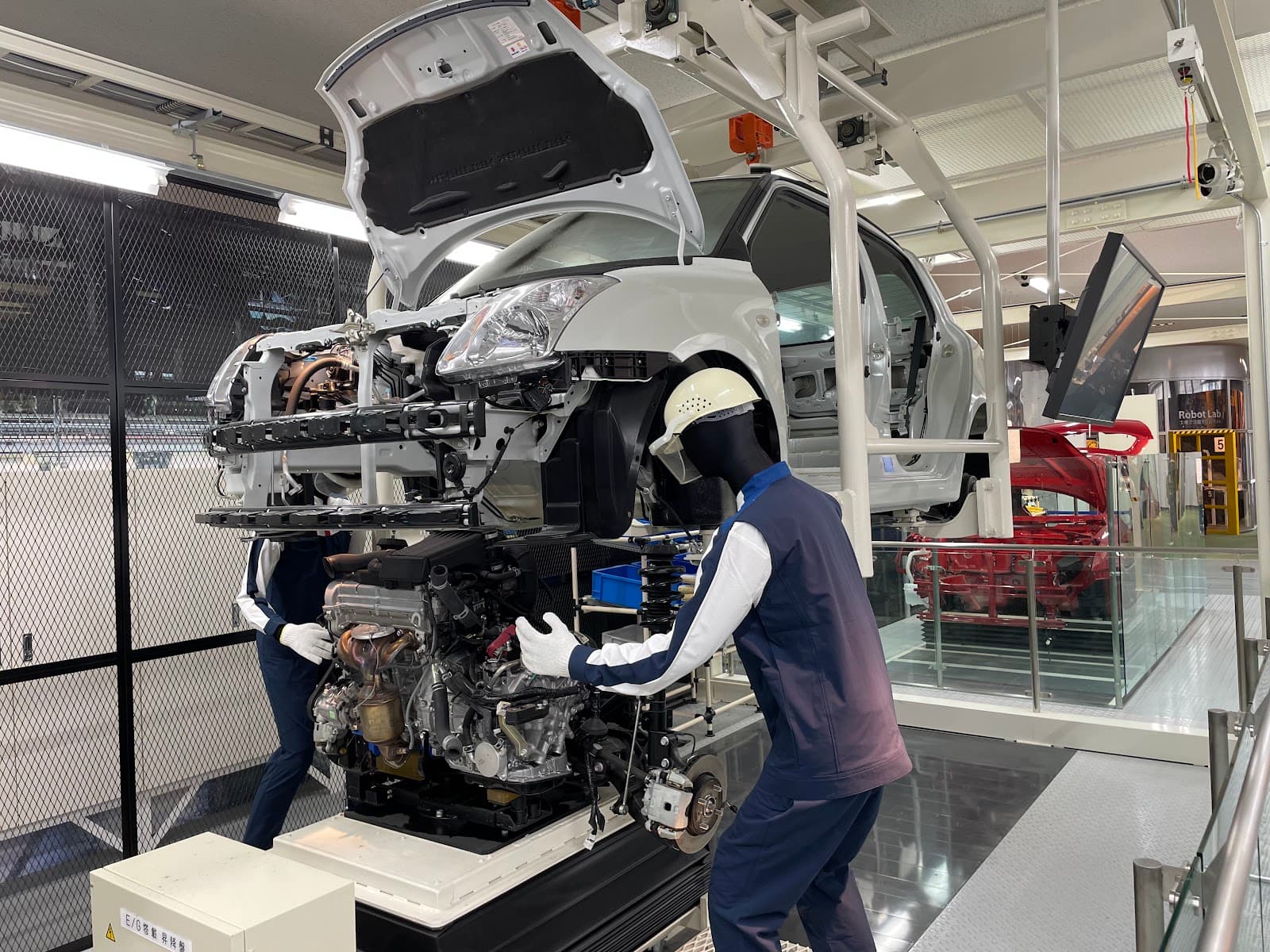
If you have time for a second museum on the same theme, Suzuki Plaza (4.5★) is free to enter and covers Suzuki's arc from textile looms (the original business) through to motorcycles and cars. It is about 15 minutes from Hamamatsu Station on the same bus route. Less polished than Yamaha INNOVATION ROAD but genuinely interesting for the early loom exhibits.
Lake Hamana (Hamanako)
Lake Hamana is a large brackish lake about 10 km west of Hamamatsu Station, connected to the Pacific Ocean by an inlet since the 1498 Meio earthquake reshaped the coastline. It is known for two things: eel farming and sunsets. Around 70% of Hamamatsu's unagi (eel) comes from Lake Hamana's aquaculture operations, and several restaurants on the lake's northern shore serve hitsumabushi-style (Nagoya influence, tea poured over the final portion) as well as the standard Hamamatsu kabayaki preparation.
The Sanaruko Park area on the southern shore (4.1★) is a quiet lakeside recreation area good for an hour's walk. To get to the lake from Hamamatsu Station, take the JR Tokaido Line two stops to Bentenjima Station (around 12 minutes, ¥240) - the station sits right on the lakeside causeway.
Unagi and Gyoza
These are the two dishes to eat in Hamamatsu, and both are cheap by Japanese restaurant standards.
Unagi (eel): Hamamatsu is one of Japan's primary eel-producing cities. An unaju (eel over rice in a lacquered box) will run ¥2,500-4,500 depending on grade. The cluster of unagi restaurants near Hamamatsu Station's north exit includes several that have operated for decades. Expect a wait at lunch. If you want to eat near the lake itself, several restaurants on Route 301 along Hamana's northern shore have tables facing the water.
Gyoza: Hamamatsu's version is larger than the standard pan-fried gyoza, usually served in a ring with a mound of bean sprouts in the centre. A portion of around 10-15 pieces runs ¥500-800. There is a cluster of gyoza shops in the covered Zagoza arcade near the station - most open from around 11:30 and sell out by mid-afternoon.
How to Slot These Into a Tokyo-Kyoto Journey
One stop only: Choose Shizuoka for a broader variety of things to do (castle, shrine, Nihondaira plateau, tea context). Choose Hamamatsu if you are interested in the music-instrument museums or want a simpler, less structured stopover with good food.
One night each: This is the most comfortable structure. Day 1: arrive Shizuoka late morning from Tokyo, walk Sumpu Castle Park and Sengen Shrine in the afternoon, and stay overnight. Day 2: morning half-day at Nihondaira and Kunōzan Tōshōgū, then shinkansen to Hamamatsu by early afternoon. Day 3: Yamaha INNOVATION ROAD and Hamamatsu Castle in the morning, Lake Hamana for lunch, then shinkansen to Kyoto or Nagoya in the afternoon (Hamamatsu to Kyoto is around 1 hr 25 min on the Hikari, ¥6,680).
Shizuoka
Sumpu Castle Park
City park known for spring cherry blossoms, with reconstructed remains of a centuries-old castle.
Open in Maps ↗Quick stopovers: Both cities are realistic as a single long-day stop from Tokyo before continuing to Kyoto. Shizuoka's sights are spread out enough that a 6-hour window feels rushed; Hamamatsu's central sights (castle, Yamaha museum, gyoza) fit into 5-6 hours more comfortably.
When to go: Spring (late March to early April) for castle park blossoms. Winter (December to February) for the clearest Fuji views from Nihondaira. Both cities are pleasant year-round and have no meaningful seasonal closures. Avoid Golden Week (late April to early May) if you want the calm that these cities are best known for.
Practical Notes
- Shizuoka tourist information is at the north exit of Shizuoka Station. English maps and bus guides are available.
- Hamamatsu tourist information is inside the Act City complex attached to Hamamatsu Station.
- IC cards (Suica, Pasmo) work on city buses in both cities.
- Yamaha INNOVATION ROAD requires advance booking - check the English-language Yamaha website before arriving in the city.
- English signage is good at the main attractions in both cities but sparse on local buses.
- Both cities have business hotels within 5 minutes of their shinkansen stations. Expect ¥8,000-14,000 per room per night at standard chains (Toyoko Inn, Dormy Inn, APA).