
 By Declan Barry
Ryokan vs Hotel in Japan: What You Actually Get in Each
Choosing between a ryokan and a hotel isn't just about price. It's about deciding what kind of experience you want after a long day exploring Japan. I've stayed in both dozens of times, and each serves a completely different purpose in your itinerary.
Let me walk you through exactly what you get with each option, so you can make the right choice for your trip.
What a Ryokan Actually Includes
A ryokan is a traditional Japanese inn, but that simple definition doesn't capture what you're actually paying for.
The Room Setup
Your room has tatami mat flooring and very little furniture when you arrive. No beds in sight. The staff lay out futon bedding for you in the evening (usually while you're at dinner) and pack it away in the morning. You sleep directly on thick, comfortable futons placed on the tatami.
Most ryokan rooms include a low table with floor cushions (zabuton), a small alcove (tokonoma) with seasonal decorations, and sliding paper doors (shoji). Yukata cotton robes hang in the wardrobe for you to wear throughout your stay, including to dinner and breakfast.
Rooms typically range from 8 to 12 tatami mats in size. One tatami mat measures roughly 1.65 square metres, so an 8-mat room gives you about 13 square metres of space.
Meals Are Usually Included
Most ryokan rates include two meals: a multi-course kaiseki dinner and a traditional Japanese breakfast. This isn't an optional add-on you can skip to save money. The half-board rate (one night with two meals) is the standard booking.
Kaiseki dinner typically includes 8-12 small courses showcasing seasonal, local ingredients. Expect sashimi, grilled fish, simmered vegetables, rice, miso soup, and a dessert. Dinner is served either in your room or in a private dining area, usually starting between 18:00 and 19:00.
Breakfast follows a similar format with grilled fish, rice, pickles, nori seaweed, tofu, and miso soup. Some ryokan offer Western breakfast options, but you're missing the point if you choose cornflakes over fresh-grilled salmon.
At mid-range ryokan, expect to pay ¥15,000-25,000 per person per night including both meals. Budget ryokan without meals start around ¥8,000-12,000 per person. Luxury options in places like Hakone or Kinosaki Onsen easily reach ¥40,000-80,000 per person.
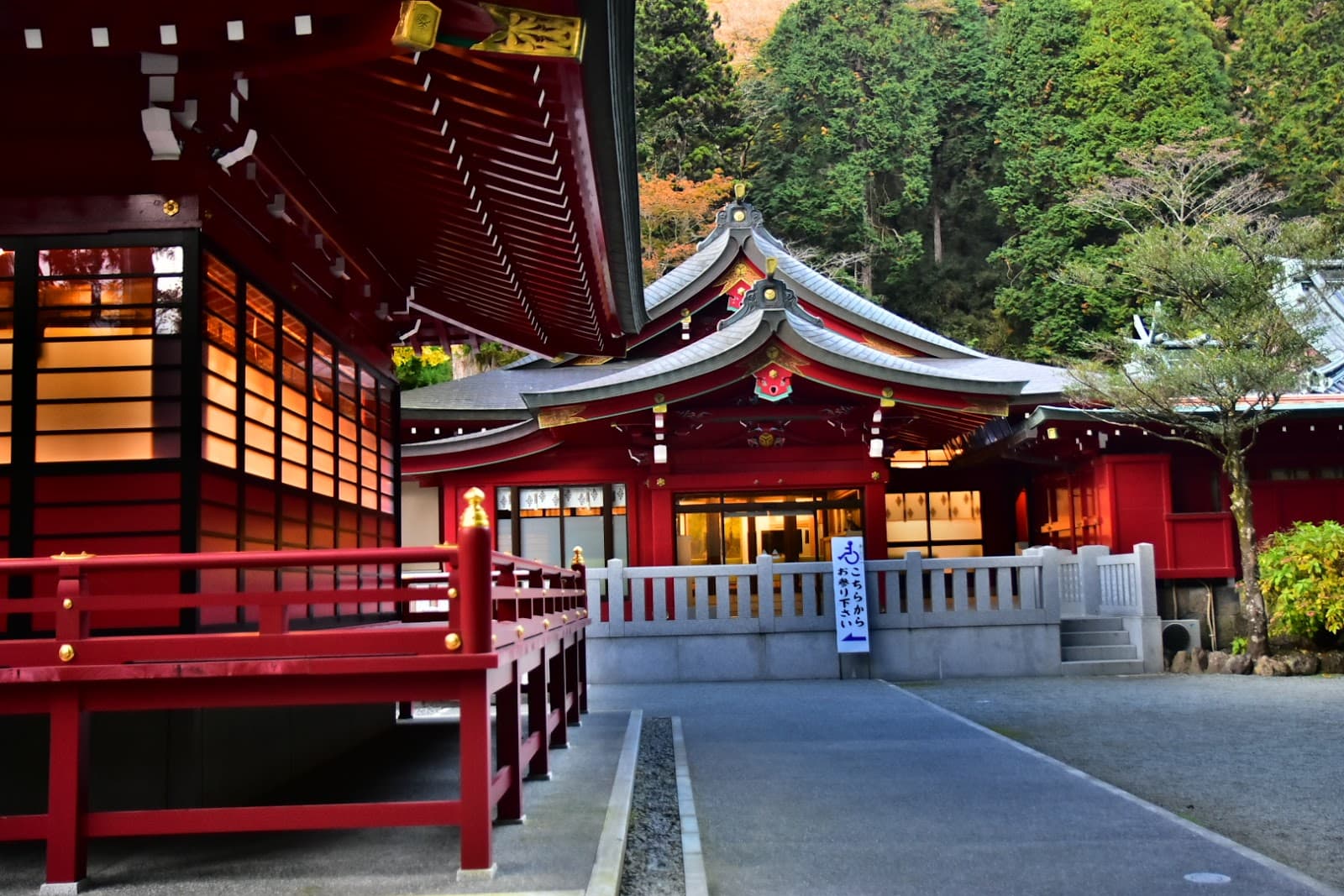
Hakone
Hakone Shrine
Historic Japanese Shinto shrine with a small museum in a verdant lakefront setting.
Open in Maps ↗Hakone
Hakone Park
Former imperial palace complex offering walking paths & an observation platform with scenic views.
Open in Maps ↗Onsen Bathing Facilities
Most traditional ryokan have communal hot spring baths (onsen), though not all. The better establishments feature both indoor and outdoor baths (rotenburo), separated by gender. You bathe completely naked, wash thoroughly at the provided stations before entering the bath, then soak.
Some ryokan offer private family baths you can reserve for 30-45 minutes if you're uncomfortable with communal bathing. Higher-end ryokan include private onsen in certain room types.
Bathing times are usually split: women use certain baths in the morning, men in the evening, then they switch. Check the schedule when you arrive.
The Service Experience
Staff greet you formally at arrival, show you to your room, explain the facilities, and serve tea with a small sweet. They return later to lay out your futon, and again in the morning to pack it away and serve breakfast.
This level of personal service is standard, not special treatment. Staff remember your preferences, adjust dinner timing if you request it, and anticipate needs before you ask.
What a Hotel Actually Includes
Japanese hotels range from international chains to uniquely Japanese business hotels. Here's what you're getting.
The Room Setup
You get a Western-style bed (or two), a desk, chair, television, and an ensuite bathroom with shower and toilet. Business hotel rooms in Tokyo or Osaka typically measure 12-15 square metres for a single, 18-22 square metres for a double.
Tokyo
Tokyo Tower
Reminiscent of the Eiffel Tower, this landmark features observation areas & other attractions.
Open in Maps ↗Osaka
Osaka Castle
Revered castle dating to 1597 & since rebuilt, featuring gardens & a museum with varied exhibits.
Open in Maps ↗The bed stays in place all day. You have privacy and space to spread out your luggage. Most hotels provide pyjamas or nightwear, slippers, and basic toiletries.
Budget business hotels near major stations (Toyoko Inn, Dormy Inn, APA Hotel) charge ¥6,000-10,000 per room per night. Mid-range hotels run ¥12,000-20,000. International luxury hotels in Tokyo start around ¥30,000 per room.
Meals Are Optional
Breakfast might be included, but dinner never is. Hotel breakfast is either Western buffet style (toast, eggs, coffee, fruit) or Japanese set meals (rice, fish, pickles, soup). Many business hotels charge ¥1,000-1,500 extra for breakfast.
You're free to eat wherever you want in the evening. This flexibility matters in cities where you want to explore different neighbourhoods for dinner.
Bathroom Facilities
Your room has a private bathroom. No communal bathing required. Business hotels feature compact unit bathrooms where the entire room is waterproofed - shower, sink, and toilet in one small space.
Some hotel chains (particularly Dormy Inn) include communal onsen-style baths on upper floors as an extra facility. You can use them or skip them entirely.
The Service Experience
Check-in is efficient and quick, usually automated with a front desk available for questions. Staff are professional but not personally attentive. You won't see them again until checkout unless you request something.
This suits travellers who prefer independence. You come and go as you please, no set meal times, no staff entering your room.
Where Each Option Makes Sense
Choose a Ryokan When:
You're spending time in rural or onsen areas. A night at a ryokan in Hakone, Kinosaki Onsen, or Takayama transforms your visit from sightseeing to cultural immersion. The experience is the destination.
You want a break from constant movement. After a week rushing between Kyoto temples and Tokyo neighbourhoods, a ryokan stay forces you to slow down. There's nowhere to rush off to.
You're interested in traditional Japanese hospitality. Staying in a ryokan teaches you proper onsen etiquette, how to sit comfortably on tatami, and what kaiseki dining actually involves.
You don't need to leave for dinner. The included meals mean you can arrive, settle in, bathe, eat, sleep, and depart the next morning without leaving the property.
Choose a Hotel When:
You're based in a city for multiple nights. Hotels in Osaka, Tokyo, Fukuoka or Sapporo give you a comfortable base while keeping accommodation costs down. You'll spend most of your time out exploring anyway.
You want dining flexibility. Hotels let you sample different restaurants each night, try street food, or eat late after evening activities.
You're on a tighter budget. A ¥7,000 business hotel room plus ¥2,000 for convenience store or restaurant meals costs less than ¥15,000 ryokan half-board.
You prefer Western sleeping arrangements. Not everyone sleeps well on futons. If you need a proper mattress and bed frame, hotels deliver that.
You're travelling with large luggage. Ryokan rooms have limited storage space. Hotels provide luggage racks and more floor space.
The Hybrid Approach That Works
Most well-planned Japan itineraries include both. Here's how I'd structure a two-week trip:
Tokyo (4 nights): Business hotel in Shinjuku or Shibuya. You're out from morning until late evening. The room is just for sleeping.
Hakone (1 night): Traditional ryokan with private onsen. This breaks up the sightseeing pace.
Kyoto (4 nights): Mid-range hotel near Kyoto Station. Easy access to temples, restaurants, and day trips.
Takayama (1 night): Ryokan in the old town. The setting and traditional architecture suit the experience.
Osaka (3 nights): Business hotel in Namba or Umeda. Late-night food scene means you want dining flexibility.
This approach gives you two nights of traditional Japanese hospitality without the cost of doing it throughout your entire trip.
Practical Booking Considerations
Ryokan Booking Details
Book ryokan several months ahead, especially for weekends, holidays, and autumn foliage season (October-November). Popular onsen towns like Kusatsu and Gero fill up quickly.
Ryokan rates are usually quoted per person, not per room. Two people staying one night with meals might see a rate listed as "¥18,000 per person" - that's ¥36,000 total.
Some ryokan require Japanese language communication or booking through specialist agencies. English-friendly options are clearly marked on booking sites.
Checkout is typically earlier than hotels - around 10:00 or 10:30. Check-in starts around 15:00 or 16:00.
Hotel Booking Details
Japanese business hotels charge per room, not per person. That ¥8,000 single room becomes a bargain ¥4,000 per person if two friends share.
You can book right up until the day before, or even the same day during off-peak periods. Business hotel chains always have availability somewhere.
Checkout is usually 10:00 or 11:00. Check-in starts around 14:00 or 15:00. Many hotels offer luggage storage if you arrive early.
Common Questions Answered
Can I wear shoes inside a ryokan?
No. You remove shoes at the entrance and wear provided slippers in corridors. Remove slippers before stepping onto tatami in your room. Separate toilet slippers are provided for the bathroom.
Do I have to bathe communally at a ryokan?
Most traditional ryokan expect communal bathing, but many now offer rooms with private onsen or bookable private baths. Check when booking if this concerns you.
Are ryokan suitable for families with children?
Yes, but confirm when booking. Some high-end ryokan prefer adult guests only. Family-friendly ryokan adjust meal portions for children and provide smaller yukata.
Can I skip the included meals at a ryokan?
Rarely. The half-board rate is standard because kitchens prepare your specific meals in advance. A few ryokan offer room-only rates, but they're exceptions.
Do hotels in Japan have double beds?
Most business hotels have single or twin beds. Double beds are less common. If sharing a room, expect two single beds pushed together or separate twins.
Making Your Decision
The choice isn't about which is better. It's about matching accommodation to your daily plans.
Urban exploration days suit hotels. Cultural immersion days suit ryokan. Budget-conscious trips lean toward hotels. Once-in-a-lifetime honeymoons justify splurging on luxury ryokan.
Book at least one night in a ryokan during your trip. The experience teaches you aspects of Japanese culture that temples and museums can't. Just don't feel obligated to stay in ryokan every night when a ¥7,000 business hotel does everything you actually need.
The beauty of Japan's accommodation scene is you don't have to choose one or the other for your entire trip. Most travellers find the sweet spot lies in mixing both, matching each type to what you're doing that day.