
 By Declan Barry
Nijo Castle in Kyoto: The Shogun's Kyoto Residence Explained
Nijo Castle stands as one of Kyoto's most impressive historical sites, offering visitors a rare glimpse into the world of Japan's shoguns. Unlike the mountain-top fortresses you might imagine, this UNESCO World Heritage Site functioned as a palatial residence where the Tokugawa shoguns demonstrated their power whenever they visited Kyoto. Walking through its famous nightingale floors and ornate chambers, you'll understand exactly how Japan's military rulers operated during the Edo period.
Kyoto
Nijō Castle
Built in 1603, this cypress-wood castle with extensive gardens was a home for the shogun Ieyasu.
Open in Maps ↗Understanding Nijo Castle's Historical Significance
Built in 1603 by Tokugawa Ieyasu, the first shogun of the Tokugawa dynasty, Nijo Castle served as the Kyoto residence for Tokugawa shoguns for over 260 years. The timing was deliberate. Ieyasu had just secured military control of Japan, yet the Emperor still resided in Kyoto. By constructing this magnificent castle, Ieyasu sent a clear message about who truly held power.
The castle witnessed two pivotal moments in Japanese history. In 1626, Emperor Go-Mizunoo visited Nijo Castle, where the third shogun Tokugawa Iemitsu staged elaborate entertainment to showcase shogunal authority. Then, in 1867, the fifteenth and final shogun, Tokugawa Yoshinobu, announced his resignation here, ending 700 years of samurai rule and beginning the Meiji Restoration.
Today, Nijo Castle covers approximately 275,000 square metres, making it substantially larger than many visitors expect. Plan at least two hours to explore the grounds properly, though history enthusiasts often spend three or four hours here.
The Ninomaru Palace: Heart of Shogunal Power
The Ninomaru Palace forms the centrepiece of your visit. This National Treasure consists of five connected buildings containing 33 rooms and covering 3,300 square metres. You'll remove your shoes before entering (slippers are provided) and follow a one-way route through increasingly private chambers.
The palace's famous nightingale floors were designed as a security feature. The floorboards chirp melodically when walked upon, making silent movement impossible. Whether this was intentional anti-ninja engineering or simply the result of particular construction methods remains debated, but the effect is unmistakable. Listen carefully as you walk.
Each room served specific functions in the shogunal administration. The Tozamurai-no-Ma (Bodyguards' Chamber) features painted panels of leopards and tigers by the Kano school artists, symbols chosen to intimidate visiting daimyo (feudal lords). Moving deeper into the palace, you'll reach the Ohiroma (Grand Chamber), where the shogun formally received daimyo. The raised platform where the shogun sat placed him physically and symbolically above his vassals.
The most intimate chamber, the Kuroshoin (Black Study), was reserved for the shogun's private meetings with trusted advisors and family members. The artwork here becomes more subtle and refined, reflecting the room's personal nature. Photography is prohibited inside the Ninomaru Palace to preserve the 400-year-old paintings and interiors, so commit the details to memory.
The Gardens: Three Distinct Landscapes
Nijo Castle contains three separate gardens, each designed to complement different buildings and serve different purposes. The Ninomaru Garden, designed by renowned landscape architect Kobori Enshu, surrounds the palace on three sides. This pond garden features carefully placed rocks representing islands, with the central island symbolising the mythical Mount Horai, the Taoist island of immortality. The garden was designed to be viewed from the palace's veranda, where the shogun and his guests would sit.
Walk clockwise around the palace to appreciate how the garden's perspective changes from each viewing point. The designers intended this experience to represent a journey through different landscapes without leaving the veranda.
The Seiryu-en Garden, added in 1965, combines both Japanese and Western landscaping styles. Two traditional Japanese teahouses here, the Waraku-an and Koun-tei, were relocated from other sites in Kyoto. These offer different perspectives on tea ceremony architecture, though they're only open for special events and tea ceremonies that require advance booking.
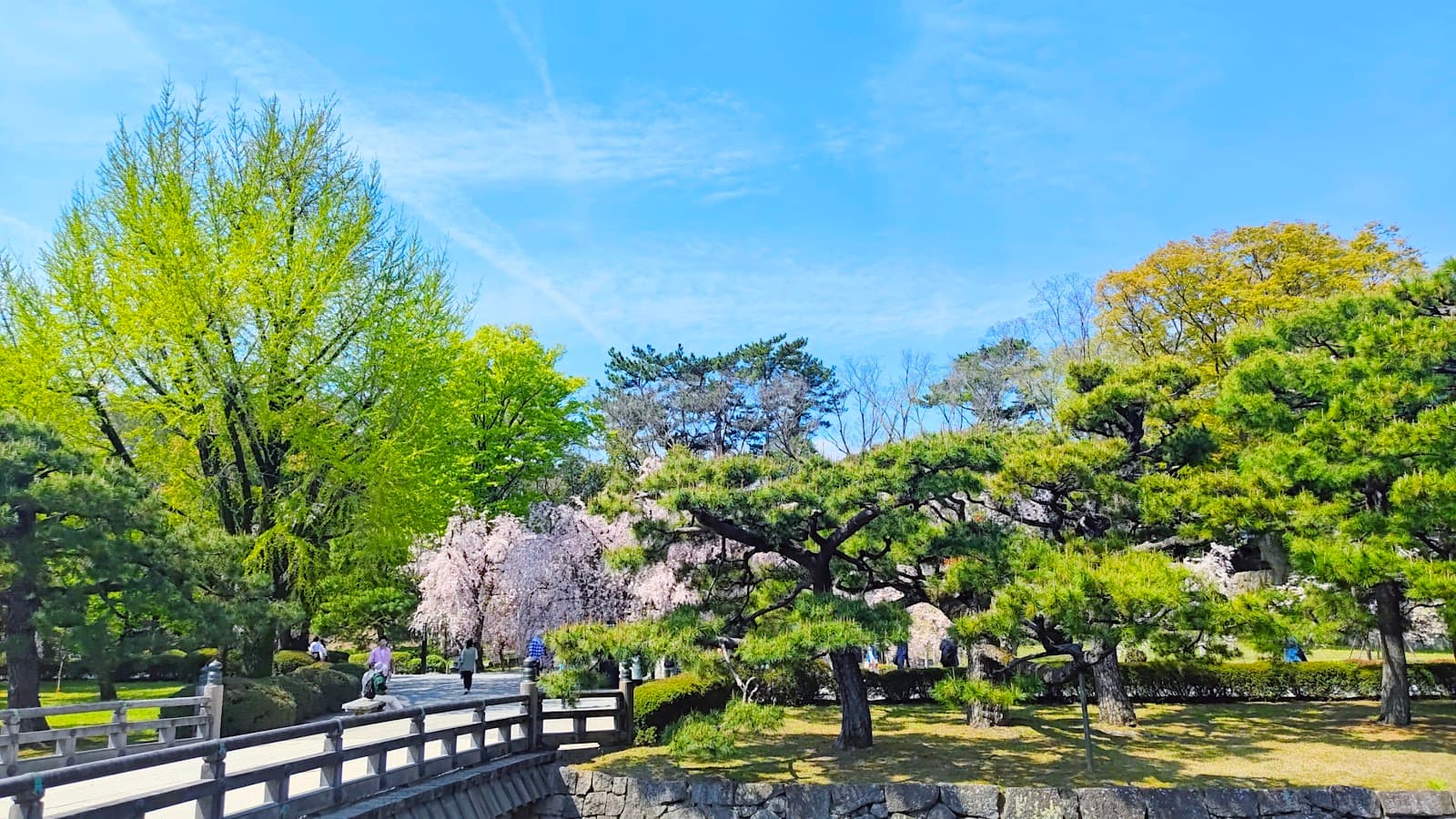
The third garden area, planted with plum and cherry trees, provides seasonal colour throughout spring. Visit in late March for cherry blossoms or mid-February for plum blossoms. Autumn brings momiji (maple) colour to the grounds, peaking in mid to late November.
The Honmaru Palace and Keep Foundations
The Honmaru (inner citadel) sits behind additional fortifications on the castle's west side. The original Honmaru Palace burned down in the 18th century, and the current structure was relocated from the Kyoto Imperial Palace in 1893. The building represents late Edo period imperial architecture rather than shogunal design, offering an interesting architectural contrast. Note that the Honmaru Palace typically opens only during spring and autumn special viewing periods.
Climb the stone foundations where the castle's five-storey keep once stood. Lightning destroyed the original keep in 1750, and it was never rebuilt. From these foundations, you'll enjoy excellent views across the castle grounds and towards the mountains surrounding Kyoto. This vantage point helps you appreciate the castle's scale and strategic positioning.
The Karamon Gate: Artistic Masterpiece
Before entering the Ninomaru Palace, pause at the Karamon Gate. This National Treasure showcases the decorative excess of early Edo period architecture. Every surface features carvings, gilding, or lacquerwork. Look for phoenixes, peonies, pine trees, bamboo, and plum blossoms - all auspicious symbols in Japanese culture.
The gate's name comes from the Chinese-style curved gable (kara means "Chinese" in this context). Originally reserved for Imperial visits, the Karamon Gate now serves as the main entrance to the Ninomaru Palace area. Photography here is permitted and encouraged, particularly during early morning when the low-angled light catches the gold leaf details.
Practical Information for Your Visit
Nijo Castle (Nijo-jo in Japanese) is located at 541 Nijo-jo-cho, Nijo-dori Horikawa Nishi Iru, Nakagyo-ku, approximately 1.2 kilometres northwest of Kyoto Station. The nearest subway station is Nijojo-mae Station on the Tozai Line, with the castle entrance directly outside the station's western exit.
From Kyoto Station, take the Karasuma Line to Karasuma Oike Station, then transfer to the Tozai Line for one stop to Nijojo-mae Station. Journey time is 15 minutes, with a fare of 260 yen. Alternatively, Kyoto City Bus numbers 9, 50, 12, and 101 stop at Nijo-jo-mae bus stop, though buses take 20-30 minutes depending on traffic.
Opening hours are 8:45 AM to 5:00 PM (last entry 4:00 PM), with the Ninomaru Palace closing at 4:00 PM. The castle closes on Tuesdays in January, July, August, and December, plus late December through early January. Always check the official website before visiting, as closure dates vary annually.
Admission costs 1,300 yen for adults, with an additional 500 yen required during special openings of the Honmaru Palace. Audio guides in English cost 500 yen and provide excellent contextual information throughout your visit. Many visitors find the audio guide worthwhile, as English signage, whilst present, is limited.
Best Times to Visit
Arrive at opening time (8:45 AM) to experience the Ninomaru Palace before tour groups arrive. Mid-morning to early afternoon brings crowds, particularly during cherry blossom season (late March to early April) and autumn colour season (mid-November). Weekday mornings outside these peak seasons offer the most peaceful experience.
Winter visits (January-February) mean fewer crowds and, occasionally, snow covering the gardens, creating atmospheric photographs. However, the unheated palace buildings feel genuinely cold. Dress warmly in winter.
Special evening illuminations occur during cherry blossom and autumn foliage seasons, typically with advance booking required. These events showcase the gardens under artistic lighting but don't include palace access.
What to Bring and Wear
Wear comfortable walking shoes you can easily remove, as you'll be slipping shoes on and off repeatedly. The palace provides slippers, but you'll be walking on polished wooden floors in them. Avoid flip-flops or sandals without backs, as these don't work well with the provided slippers.
Bring a camera for the gardens, gates, and exterior architecture. Remember that photography is prohibited inside the Ninomaru Palace. A small backpack or bag helps carry your shoes when walking through the palace (lockers are available at the entrance if needed).
The castle grounds are largely outdoors, so check weather forecasts and bring appropriate protection. Summer (June-August) can be intensely hot and humid. Autumn and spring offer the most comfortable visiting conditions.
Combining Nijo Castle with Nearby Attractions
Nijo Castle sits in central Kyoto, making it easy to combine with other sites. Kyoto Imperial Palace lies 1.5 kilometres east, accessible via a pleasant 20-minute walk through residential streets. The palace grounds are free to enter, though the palace buildings require advance booking for tours.
Kitano Tenmangu Shrine, famous for plum blossoms and monthly antique markets, is 1.7 kilometres northwest. Nishiki Market, Kyoto's famous food market, lies 1.8 kilometres southeast, reachable via bus or a 25-minute walk. Many visitors follow a route of Nijo Castle in the morning, lunch at Nishiki Market, then afternoon exploration of central Kyoto's temples and shopping districts.
Kyoto
Kitano Tenmangu Shrine
Shrine with 10th-century origins featuring annual festivals to mark natural & historical events.
Open in Maps ↗Kyoto
Nishiki Market
400-year-old iconic market studded with stalls offering all manner of Japanese edibles.
Open in Maps ↗Understanding What Makes Nijo Castle Unique
Nijo Castle offers something different from Kyoto's numerous temples and shrines. Here, you're walking through secular power rather than religious devotion. The palace's layout and decoration all served political purposes, designed to impress and, occasionally, intimidate visitors. Understanding this context transforms your visit from simply viewing beautiful rooms to witnessing the stage where Japanese history unfolded.
The castle also demonstrates shogunal priorities. Despite living in Edo (modern Tokyo), the Tokugawa shoguns invested enormous resources in their Kyoto residence. This investment acknowledged the Emperor's continued symbolic importance and the necessity of maintaining a visible presence in Japan's historical capital.
Nijo Castle ultimately witnessed both the establishment and end of Tokugawa power, making it uniquely significant among Japanese castles. Few sites in Japan can claim such bookended historical importance.