
 By Declan Barry
Japanese Numbers for Tourists: Prices, Floors, Times and More
You don't need to speak fluent Japanese to travel confidently through Japan, but knowing how numbers work will transform your experience. From understanding prices at Tsukiji Outer Market to catching the right train at Shinjuku Station, numbers appear everywhere in Japanese daily life. This guide covers the essential number systems you'll encounter, making your trip smoother and more independent.
Basic Japanese Numbers: 1 to 10
The foundation of Japanese numbers is surprisingly straightforward. Master these ten words and you've cracked 90% of the system:
- 1: ichi (いち)
- 2: ni (に)
- 3: san (さん)
- 4: shi/yon (し/よん)
- 5: go (ご)
- 6: roku (ろく)
- 7: shichi/nana (しち/なな)
- 8: hachi (はち)
- 9: kyuu/ku (きゅう/く)
- 10: juu (じゅう)
Notice that 4, 7, and 9 each have two pronunciations. The reason? "Shi" sounds like "death" (死), so "yon" is preferred in many contexts. "Shichi" can be confused with "ichi" and "hachi", so "nana" often replaces it. For 9, "kyuu" is more common in everyday speech.
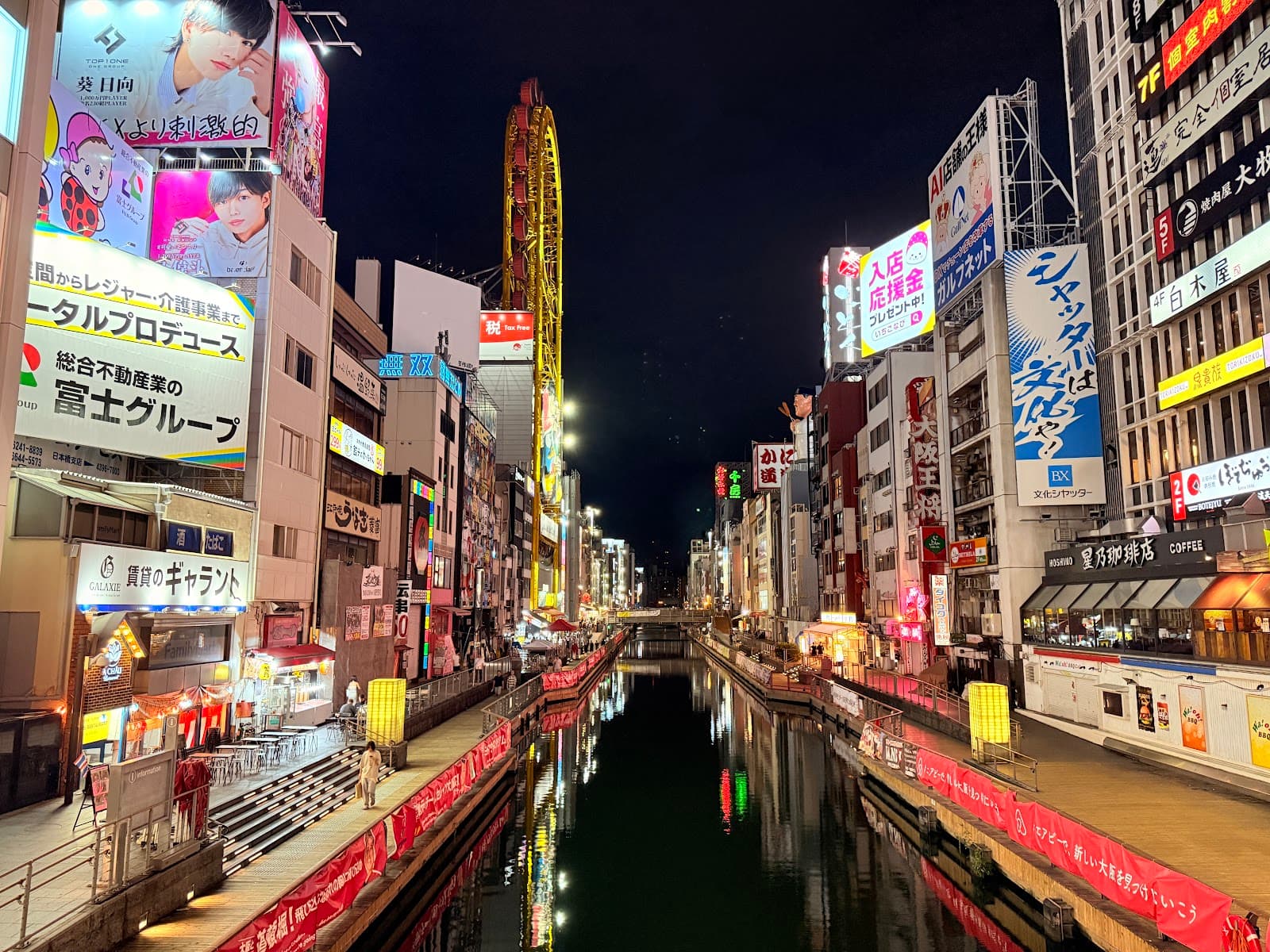
At Lawson or 7-Eleven, the cashier's screen displays your total in Arabic numerals (¥580), but you'll occasionally hear prices spoken aloud at traditional shops in Kyoto's Nishiki Market or at small izakaya in Osaka's Dotonbori district.
Kyoto
Nishiki Market
400-year-old iconic market studded with stalls offering all manner of Japanese edibles.
Open in Maps ↗Osaka
Osaka Castle
Revered castle dating to 1597 & since rebuilt, featuring gardens & a museum with varied exhibits.
Open in Maps ↗Osaka
Dotonbori
Lively entertainment district known for its soaring illuminated billboards, restaurants & theaters.
Open in Maps ↗Building Larger Numbers
Japanese numbers build logically from the basics:
11-19: Add "juu" (10) before the single digit
- 11: juu-ichi (10+1)
- 15: juu-go (10+5)
- 19: juu-kyuu (10+9)
Multiples of 10: Place the multiplier before "juu"
- 20: ni-juu (2×10)
- 50: go-juu (5×10)
- 90: kyuu-juu (9×10)
Combined numbers: String them together
- 23: ni-juu-san (20+3)
- 47: yon-juu-nana (40+7)
- 68: roku-juu-hachi (60+8)
Hundreds and thousands:
- 100: hyaku (ひゃく)
- 1,000: sen (せん)
- 10,000: man (まん)
Japanese uses "man" (万) for 10,000, which differs from English grouping. So 50,000 yen is "go-man en" (5×10,000), not "fifty thousand". This matters when house-hunting or seeing apartment prices - a ¥15万 (juu-go-man) monthly rent means ¥150,000.
Understanding Prices and Money
Japanese prices typically appear in Arabic numerals (¥1,200), making shops easy to navigate. However, understanding spoken prices helps at markets and traditional establishments.
Common prices you'll encounter:
- Convenience store onigiri: ¥120-180 (hyaku-ni-juu en to hyaku-hachi-juu en)
- Ramen bowl: ¥800-1,200 (hap-pyaku en to sen-ni-hyaku en)
- Train ticket (short distance): ¥170-200 (hyaku-nana-juu en to ni-hyaku en)
- Business hotel night: ¥8,000-12,000 (hassen en to ichi-man-ni-sen en)
At Kuromon Market in Osaka, when the fishmonger says "san-zen-go-hyaku en", that's ¥3,500 for your sashimi selection. Understanding this prevents confusion and shows respect for local shopkeepers.
Osaka
Kuromon Market
Spacious market with vendors selling street food, fresh produce & shellfish, plus souvenirs.
Open in Maps ↗Many shops now display prices with tax included (税込, zeikomi), but some traditional stores show pre-tax prices. Japan's consumption tax sits at 10% for most items, 8% for food and beverages consumed off-premises.
Floor Numbering: A Critical Difference
Japanese floor numbering follows the British system, not the American one. The ground floor is the first floor (1F or 一階, ikkai). This matters enormously in department stores like Takashimaya in Nihonbashi or Daimaru in Kyoto.
Floor counting system:
- Ground floor: 1F (ikkai, 一階)
- Second floor: 2F (nikai, 二階)
- Third floor: 3F (sangai, 三階)
- Basement 1: B1F (chika ikkai, 地下一階)
Note the sound changes: "kai" (階) means floor, but combines irregularly:
- 3F: sangai (not "sankai")
- 6F: rokkai (not "rokukai")
- 8F: hakkai or hachikai
- 10F: jukkai or jikkai
At Tokyo Station, when signs direct you to "B1F for Tokyo Ramen Street", you're heading one level underground. Department stores often place food halls (depachika) on B1F - Isetan in Shinjuku has one of Tokyo's finest.
Tokyo
Tokyo Tower
Reminiscent of the Eiffel Tower, this landmark features observation areas & other attractions.
Open in Maps ↗Elevator buttons show numbers: 1, 2, 3, B1, B2. Escalators between Shibuya Station's multiple exits often require navigating several underground levels. Understanding "chika" (地下, underground) plus the floor number prevents getting lost in station complexes like Umeda in Osaka.
Train Platform Numbers
Major stations use numbered platforms, crucial for catching your Shinkansen or local train on time.
At Tokyo Station:
- Shinkansen platforms: 20-23番線 (ni-juu to ni-juu-san bansen)
- Yamanote Line: Platform 4 and 5 (yon-bansen, go-bansen)
The suffix "bansen" (番線) means "platform" or "track". Station announcements say "yon-bansen" for Platform 4, "juu-go-bansen" for Platform 15.
Kyoto Station arranges platforms differently:
- Shinkansen: Platforms 11-14 on the south side
- JR lines: Platforms 0-10 on the north side
Yes, Platform 0 exists at several stations including Kyoto. It's called "zero-bansen" or sometimes "rei-bansen".
Shinjuku Station, Japan's busiest, has over 200 exits. The Yamanote Line alone uses multiple platforms. Checking your platform number in Google Maps or Hyperdia before boarding saves missed connections.
Telling Time in Japanese
Time expressions combine numbers with specific counters:
Hours: Add "ji" (時)
- 1:00: ichi-ji (一時)
- 7:00: shichi-ji (七時)
- 12:00: juu-ni-ji (十二時)
Minutes: Add "fun" or "pun" (分)
- 1 minute: ippun (一分)
- 5 minutes: go-fun (五分)
- 10 minutes: juppun (十分)
- 30 minutes: san-juppun (三十分) or "han" (半, half)
Combined: 3:45 = san-ji yon-juu-go-fun
Train departure boards show times in 24-hour format: 14:23 reads as "juu-yon-ji ni-juu-san-pun". Station announcements use this system, though digital displays make reading times easy.
Duration vs clock time:
- "Ni-jikan" (二時間) = two hours (duration)
- "Ni-ji" (二時) = 2 o'clock (clock time)
When booking restaurants or activities, understanding this distinction matters. "Shichi-ji ni yoyaku" means "reservation at 7 o'clock", not "seven-hour reservation".
Days and Dates
Japanese dates follow the format: year/month/day.
Days of the month: Use basic numbers plus "nichi" (日), with irregular forms:
- 1st: tsuitachi (ついたち)
- 2nd: futsuka (ふつか)
- 3rd: mikka (みっか)
- 4th: yokka (よっか)
- 5th: itsuka (いつか)
- 6th: muika (むいか)
- 7th: nanoka (なのか)
- 8th: youka (ようか)
- 9th: kokonoka (ここのか)
- 10th: tooka (とおか)
- 14th: juu-yokka (十四日)
- 20th: hatsuka (二十日)
- 24th: ni-juu-yokka (二十四日)
Museum tickets, restaurant reservations, and tour bookings all use these forms. When cherry blossom forecasts predict "san-gatsu san-juu-ichi-nichi" (March 31st), you'll understand exactly when to visit Ueno Park or Maruyama Park in Kyoto.
Months: Add "gatsu" (月) to numbers 1-12
- January: ichi-gatsu
- May: go-gatsu
- December: juu-ni-gatsu
Sound changes occur: April (shi-gatsu), July (shichi-gatsu), September (ku-gatsu).
Age and Counter Words
Age uses "sai" (歳): 25 years old = ni-juu-go-sai.
Japanese employs different counters for different objects:
People: "nin" (人) or "mei" (名)
- 1 person: hitori (一人)
- 2 people: futari (二人)
- 3 people: san-nin (三人)
- 5 people: go-nin (五人)
Restaurant staff ask "nan-mei-sama?" (何名様) meaning "how many people?". Hold up fingers if pronunciation feels tricky - staff understand immediately.
Flat objects (tickets, papers): "mai" (枚)
- 2 tickets: ni-mai
Cylindrical objects (bottles, cans): "hon" or "bon" or "pon" (本)
- 1 bottle: ippon
- 3 bottles: san-bon
Small objects: "ko" (個)
- 4 apples: yon-ko
At izakaya, when ordering beer, say "nama ni-hon kudasai" (two draft beers, please) or simply hold up two fingers and point to the beer picture on the menu.
Practical Shopping Scenarios
At Tokyu Hands in Shibuya or Loft in Shinsaibashi, staff might ask "ikutsu?" (how many?). Respond with the appropriate counter:
- Notebooks: "san-satsu" (three books, 三冊)
- Towels: "ni-mai" (two flat items, 二枚)
- Pens: "go-hon" (five cylindrical items, 五本)
However, Japanese speakers understand basic numbers without perfect counter usage. Saying "mittsu" (three things) works universally when you're unsure of the specific counter.
Phone Numbers and Addresses
Japanese phone numbers follow specific patterns:
Tokyo numbers: 03-1234-5678 Osaka numbers: 06-6234-5678 Mobile: 090-1234-5678 or 080-1234-5678
Read digit by digit: zero-san no ichi-ni-san-yon no go-roku-nana-hachi.
Addresses list the largest area first:
- Tokyo-to, Shibuya-ku, Dogenzaka 1-chome 12-3
- Prefecture, ward, district, block, building
The numbers matter for delivery services and finding specific buildings. Google Maps handles this beautifully, but understanding "1-chome 12-3" (1丁目12-3, block 1, sub-area 12, building 3) helps when asking directions.
Sizes and Measurements
Clothing sizes in Japan run smaller than Western sizing:
- S, M, L, XL: Read as "esu", "emu", "eru", "ekusu-eru"
- Shoe sizes: Centimetre-based (23cm, 25cm, 27cm)
At Uniqlo or Muji, UK size 10-12 typically equals Japanese L. Men's UK size 9 shoes equal roughly 27cm Japanese sizing.
Height and weight:
- Height: centimetres (175cm = hyaku-nana-juu-go senchi)
- Weight: kilograms (65kg = roku-juu-go kiro)
Temperature and Weather
Japan uses Celsius exclusively. Weather forecasts and station displays show:
- 5°C: go-do (五度)
- 15°C: juu-go-do (十五度)
- 30°C: san-juu-do (三十度)
Summer temperatures in Kyoto reach 35-38°C (san-juu-go to san-juu-hachi-do). Winter in Sapporo drops to -5°C (minus go-do).
Station and Bus Stop Numbers
Bus stops display numbers prominently:
Kyoto Station bus terminal: Stops A1-D3 (organized alphabetically with numbers) Tokyo Disney Resort: Multiple numbered bus stops
Bus route numbers combine digits: Route 205 = ni-zero-go. Say each number individually rather than "two hundred five".
Emergency and Useful Numbers
Critical numbers to memorise:
- Police: 110 (hyaku-juu or ichi-ichi-zero)
- Fire/Ambulance: 119 (hyaku-juu-kyuu or ichi-ichi-kyuu)
- Tourist Information: Often ends in 0000 (e.g., 03-5000-0000)
Written Numbers: Kanji vs Arabic
You'll encounter three number systems:
Arabic numerals (1, 2, 3): Everywhere, especially prices and stations
Kanji (一, 二, 三): Traditional documents, formal contexts
Complex kanji (壱, 弐, 参): Legal documents, cheques
Restaurant bills and train tickets use Arabic numerals, making everything readable without kanji knowledge. However, recognising basic kanji helps with menu items showing quantities.
Quick Reference for Travel Situations
Buying train tickets at machines:
- Buttons show Arabic numerals
- Fare adjustment machines display ¥170, ¥200, etc.
- Touch the price matching your destination
Restaurant orders:
- Point to menu pictures
- Hold up fingers for quantity
- "Kore, futatsu kudasai" (this one, two please)
Hotel check-in:
- Write your phone number digit by digit
- Reservation number: Read each digit separately
- Room number: ni-zero-ichi (201) or yon-zero-san (403)
Temple/shrine admission:
- Adults: ¥500 (go-hyaku en)
- Students: ¥300 (san-byaku en)
- Children: ¥200 (ni-hyaku en)
Practice Makes Perfect
Numbers surround you constantly in Japan. Practice by:
- Reading prices silently at convenience stores
- Noting platform numbers at stations
- Checking floor numbers in department stores
- Reading restaurant opening times (11:00-22:00)
Within three days, you'll naturally recognise patterns. Within a week, basic numbers feel automatic.
Most importantly, Japanese people appreciate any attempt to use their language. Stumbling over "ni-sen-go-hyaku en" (¥2,500) with a smile beats pointing silently. Staff in Tokyo, Kyoto, Osaka, and beyond respond warmly to travellers making the effort.
Beyond Numbers: Practical Context
Understanding numbers opens doors beyond mere transactions. When a shopkeeper in Takayama's morning market tells you "kore, yon-hyaku en", you're connecting, not just buying. When you correctly find Platform 12 at Kanazawa Station without asking for help, you've achieved genuine independence.
Number fluency also reveals cultural differences: the fourth and ninth floor superstition in some buildings, the importance of exact yen amounts (no tipping culture), and the precision of Japanese timekeeping where trains arrive at 14:23:00, not "around 2:30".
Your journey through Japan becomes richer when you understand the numerical framework underlying daily life. From the seven-minute walk between Gion-Shijo and Kawaramachi stations to the 300-yen sushi plate at Kura Sushi, numbers tell the story of efficient, organised, wonderfully precise Japan.