
 By Declan Barry
Iga-Ueno is not a theme park with actors in costume. It is a small castle town in the mountains of Mie Prefecture where the Iga-ryu tradition of ninjutsu developed during the Sengoku period, and where the physical evidence - the museum, the castle, the training grounds - is still intact and specific enough to justify the trip. A day from Osaka or Nagoya is enough; the train journey itself, partly on a ninja-liveried local railway, sets the tone before you arrive.
Iga
Ueno Park
Iconic recreation area with a zoo, multiple museums & spring cherry blossoms around a walled castle.
Open in Maps ↗Iga
Iga Ueno Castle
A history museum is now housed in this 16th-century Japanese castle known for its high walls.
Open in Maps ↗How Iga Fits the Wider Story
Japan has two historically documented ninja heartlands: Iga (present-day Mie Prefecture) and Koka (Shiga Prefecture, written Koga in older sources). The Iga-ryu and Koka-ryu schools developed largely in parallel from the 15th century, producing specialists in infiltration, intelligence gathering and sabotage who were hired by warring daimyo during the civil wars. Iga's relative isolation - ringed by hills, with no major road through until the modern era - made it easier to keep training secret. The town was never a major commercial or administrative centre, which is partly why so much survives: there was no wave of redevelopment to clear it.
For context on how Iga fits into Japan's broader samurai and castle-town history, see our guide to samurai history across Japan.
Getting There
From Osaka (Uehommachi or Osaka-Namba)
The standard approach is Kintetsu from Osaka-Uehommachi or Kintetsu Osaka-Namba to Iga-Kambe (also romanised Iga Kambe), roughly 65-70 minutes by limited express (tokkyu). The limited express requires a tokkyu supplement of around ¥760 on top of the base fare of roughly ¥1,150; check current fares at the Kintetsu ticket office or online, as supplements shift seasonally. From Iga-Kambe, transfer to the Iga Railway (Iga Tetsudo) for the final 25-minute leg to Ueno-shi Station, which deposits you within walking distance of every main site. Iga Railway base fare to Ueno-shi is ¥460.
Alternatively, Kintetsu runs a direct service on the Osaka Line to Iga-Kambe without a tokkyu supplement if you take a kyuko (express) rather than the limited express; this adds around 20 minutes.
Total journey time: approximately 90-100 minutes door-to-station.
From Nagoya
Take the Kintetsu Osaka Line limited express from近鉄名古屋 (Kintetsu Nagoya) towards Osaka-Uehommachi and change at Tsuge, then take the connecting local service to Iga-Kambe. Total journey time is around 80-90 minutes; base fare approximately ¥1,600 plus tokkyu supplement. The JR option (Kintetsu is faster and more direct here) involves a transfer at Kamo or Iga-Ueno and is less convenient.
The Iga Railway
The 16.6-kilometre Iga Railway line from Iga-Kambe to Ueno-shi runs several of its trains in full ninja livery - dark colouring, shuriken motifs, ninja characters on the interior panels. This is not a gimmick laid on for tourists; it is the regular service. The line is old, the carriages sway pleasantly, and the journey through rice fields and into the town feels like the transition it is. An all-day pass on the Iga Railway costs ¥800 and covers the full line if you want to explore the smaller stops.
What to Do in Iga-Ueno
Iga-ryu Ninja Museum
The Iga-ryu Ninja Museum sits in Ueno Park, a two-minute walk from the castle keep. Entry costs ¥800 for adults (¥500 for children). The core attraction is the trick house - a traditional-style building whose rooms demonstrate the actual concealment and escape mechanisms that feature in historical accounts of ninja residences: rotating walls, hidden trapdoors in floor panels, ladders concealed behind sliding screens. A guide walks you through each room and demonstrates the mechanisms; you can operate some yourself.
Iga
Iga-ryu Ninja Museum
Family-friendly attraction with ninja costumes & weapons on display, plus a fighting demonstration.
Open in Maps ↗The weapons and tools exhibition is housed separately and worth the time. The collection includes shuriken in multiple configurations (not just the throwing stars of popular culture - bo-shuriken, which are straight spikes, were more commonly documented), blowpipes, climbing equipment, and written records of Iga-ryu training principles. The labelling is in Japanese with some English panels.
Ninja performance demonstrations run several times daily (times posted at the entrance; typically four shows between 11:00 and 15:30). These show actual weapons handling and combat technique, not theatrical performance. Budget an additional ¥200 for the shuriken-throwing experience, which takes place in a small practice area beside the museum. You get five throws at a wooden target; the instructor corrects your grip and release. Most adults land none on the first round, which tells you something about how long it actually took to train.
Crowds: school group visits peak on weekday mornings in May and October. Arrive before 10:00 or after 14:00 to avoid the main rush.
Iga Ueno Castle
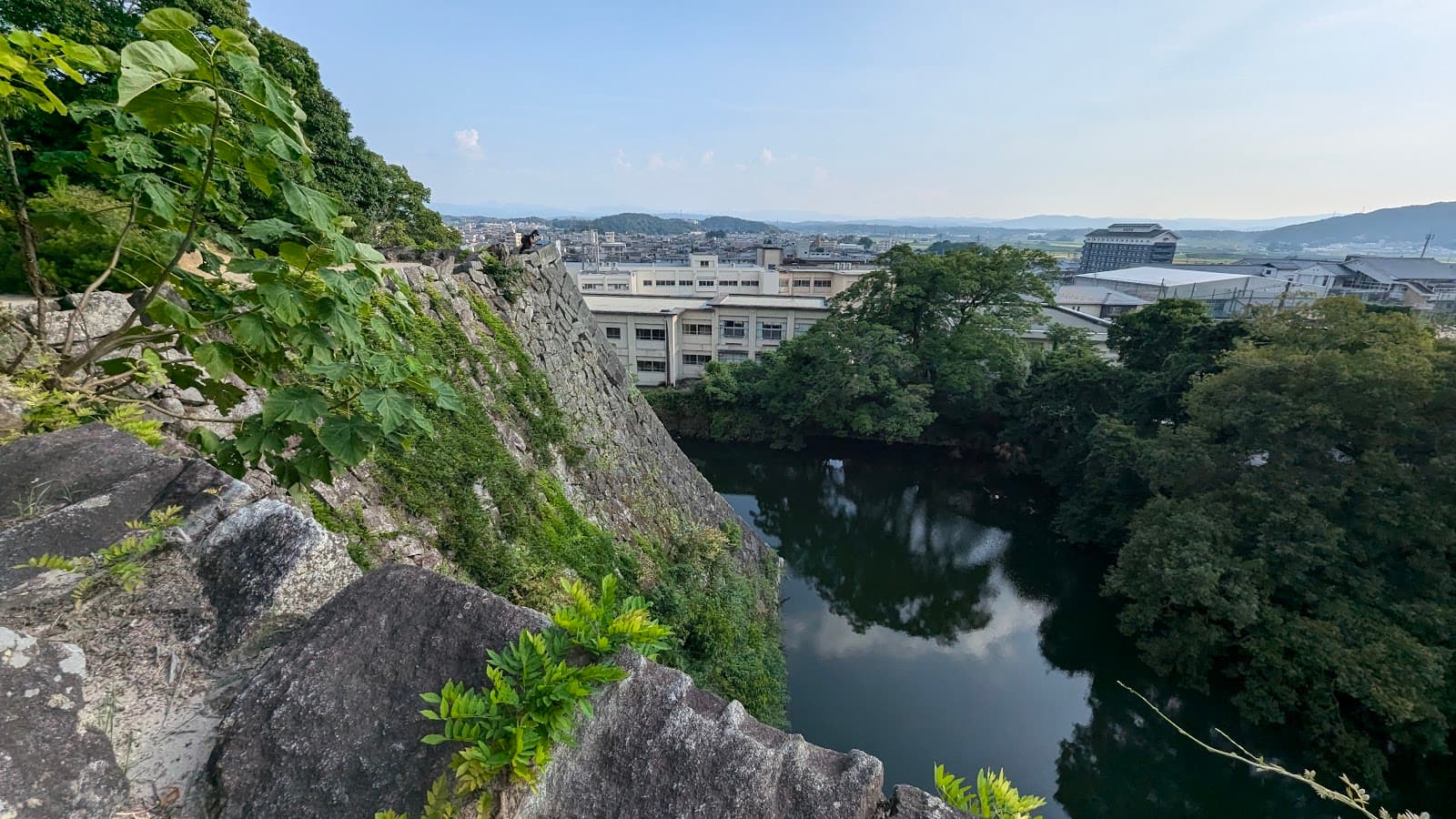
Iga Ueno Castle (also called Hakuho-jo) stands on a raised plateau in Ueno Park, a five-minute walk from the Ninja Museum. The current three-storey wooden keep dates from 1935, rebuilt after the original 1611 structure was destroyed in a storm. The stone walls, however, are original: at 30 metres on the western face, they are among the tallest dry-stone castle walls (nozurazumi style) in Japan. This is the specific thing worth seeing - not the keep itself, which is a reconstruction and relatively modest inside, but the scale and the technique of the walls. Walking the perimeter on the park path gives a clearer sense of the engineering than any photograph does.
The keep now houses a history museum covering the castle's construction under Todo Takatora (the Iga branch of the Todo clan controlled the domain from 1608), the local samurai tradition, and the ninja connection. Signage is primarily in Japanese. Entry to the keep and museum: ¥600 for adults, ¥300 for children.
The park around the castle (Ueno Park itself) is a municipal recreation area with a small zoo, a couple of other museum buildings, and - in late March to mid-April - about 300 cherry trees, making this one of Mie Prefecture's more visited hanami sites. Outside that window it is calm, and the absence of crowds lets you read the castle site at your own pace.
Basho's Birthplace
Matsuo Basho, the haiku poet whose Oku no Hosomichi (Narrow Road to the Deep North) is one of the central texts of Japanese literature, was born in Iga-Ueno in 1644. His birthplace - a small, reconstructed house - is a short walk from Ueno Park, near the Aekuni Shrine. It is free to enter. The adjacent Basho Memorial Museum (Basho Okina Kinenkan) charges ¥300 and holds manuscripts, correspondence, and objects related to his life and travels.
If you know Basho's work, this is a specific and quiet stop; if you don't, the museum's English materials are limited enough that its value depends on coming with some background reading. The site is genuinely low-traffic - the rating and visitor volume at the adjacent Aekuni Shrine (4.2 stars, but relatively few international visitors) suggest that most day-trippers skip this end of town. That makes it the right place to go last, when the museum crowds at the castle have built up.
Aekuni Shrine
Aekuni Shrine is one of the oldest Shinto sites in the Iga basin, with records placing it in the Nara period. The main hall and its surrounding cedars have a quieter atmosphere than the park sites. There is no admission charge. It is worth visiting if you are in the Basho area and have time; it is not worth rerouting for on a short trip.
A Practical One-Day Order
Ueno-shi Station is the logical base. From the station, walk south-west through the old town streets (about 12 minutes on foot) to reach Ueno Park and the cluster of main sites. The practical order that avoids the school-group peak:
- Arrive before 10:00. Go directly to Iga-ryu Ninja Museum and do the trick house tour before the first big school group arrives.
- Catch the 11:00 (or 11:30, check on the day) ninja performance.
- Shuriken throwing.
- Iga Ueno Castle and the wall perimeter walk. The keep museum takes 25-30 minutes.
- Lunch in Ueno Park area - there are a few small restaurants and a park-side food stand; or walk back towards the station where more options exist.
- Afternoon: Basho birthplace and Basho Memorial Museum, then Aekuni Shrine.
- Return to Ueno-shi Station for the Iga Railway back to Iga-Kambe.
This fits comfortably within a 9:30-16:30 window, leaving time for a connecting Kintetsu service back to Osaka or Nagoya before 19:00.
Why Iga Rather Than a Theme Park
Several places in Japan market themselves around ninja culture - Edo Wonderland in Nikko, Toei Kyoto Studio Park, and others. The difference in Iga is material: the museum's trick house is built on documented Iga-ryu architectural principles rather than invented for a set. The weapons collection is real. The castle's stone walls are original construction from 1611. The connection to an actual regional tradition is traceable through documents held in the museum's archive.
That does not mean Iga is purely solemn. The Iga Railway's ninja trains and the shuriken practice area are both clearly commercial. But the underlying substance is specific and verifiable in a way that a purpose-built attraction is not. If you have a particular interest in the Sengoku period, the physical evidence here rewards attention. If you want costumed actors and guaranteed spectacle, the theme park options are more reliable. Both are legitimate choices; they are different trips.
Practical Notes
- Iga-Ueno is a small town. Most attractions are within 15-20 minutes' walk of Ueno-shi Station.
- English signage is present but uneven. The Ninja Museum has the best English coverage; the castle museum less so.
- There is a coin-locker room at Ueno-shi Station for day bags.
- The town's own tourism website (Iga City) lists current museum hours; check before visiting as winter hours can be shorter.
- Iga is not covered by the JR Pass. The Kintetsu portion can be covered by the Kintetsu Rail Pass if you are using one; the Iga Railway is a separate operator and requires a separate fare or the Iga Railway day pass.