
 By Declan Barry
How the Cherry Blossom Forecast Works and How to Use It
Every January, something remarkable happens across Japan. Meteorological agencies begin issuing weekly forecasts predicting when cherry blossoms will bloom in different regions. These aren't casual guesses - they're sophisticated projections based on decades of data, temperature monitoring, and botanical science. For travellers planning a spring trip to Japan, understanding how these forecasts work can transform your experience from disappointing to magical.
Let's demystify the cherry blossom forecast system and show you exactly how to use it for trip planning.
What the Forecasts Actually Predict
Cherry blossom forecasts track two specific dates for each location:
Kaika (開花) - The opening date, when the first blossoms appear on sample trees. This is the official "bloom start" but only represents 5-6 flowers opening on the observation tree.
Mankai (満開) - Full bloom, when approximately 80% of blossoms on the sample tree have opened. This typically occurs 3-7 days after kaika, depending on weather conditions.
For travellers, mankai matters most. This is when parks transform into pink canopies and hanami parties fill every available spot under the trees. The practical viewing window extends from about 3 days before mankai to 4 days after - roughly one week of prime conditions per location.
The Science Behind the Predictions
Cherry blossom forecasting combines historical patterns with real-time temperature data. The process starts in autumn when cherry trees enter dormancy. Here's how it works:
Chilling requirement: Cherry buds need exposure to cold temperatures (below 10°C) for approximately 800-1000 hours during winter. This breaks dormancy and prepares the buds for spring growth. Without sufficient chilling, blooms become irregular or delayed.
Heat accumulation: After the chilling requirement is met (usually by late January or early February), forecasters track cumulative warmth. Cherry buds respond to temperatures above 8-10°C. Meteorologists use degree-day models - essentially adding up all the warmth above threshold temperatures - to predict when accumulated heat will trigger blooming.
Regional variations: Japan's cherry blossom season travels from south to north over approximately ten weeks. Okinawa's blooms peak in late January or early February. Tokyo and Kyoto typically see full bloom in late March or early April. Hokkaido's cherries don't peak until early or mid-May. Altitude matters too - Mount Yoshino's summit blooms about three weeks after its base, creating an extended season within a single location.
Tokyo
Tokyo Tower
Reminiscent of the Eiffel Tower, this landmark features observation areas & other attractions.
Open in Maps ↗Major Forecasting Organisations
Three primary organisations issue cherry blossom forecasts, each with slightly different methodologies:
Weathernews: A private weather company that releases the first forecast each January, with weekly updates through the season. They maintain their own observation network and tend to be slightly aggressive with early-season predictions. Their forecasts cover approximately 1000 locations nationwide.
Weather Map Company: Issues forecasts from early February, updated weekly or bi-weekly. They use a different heat accumulation model and often show more conservative predictions than Weathernews. Coverage includes major cities and popular viewing spots.
Japan Weather Association (JWA): Traditionally the most conservative forecaster, releasing first predictions in mid-February. They prioritise accuracy over early information and adjust predictions cautiously. Their regional breakdowns are particularly detailed for Kansai and Kanto regions.
The Japan Meteorological Agency (JMA) stopped issuing official cherry blossom forecasts in 2010, leaving the field to private companies. However, JMA still announces actual bloom dates when they occur, providing verified data points.
How to Read and Use the Forecasts
When you view a cherry blossom forecast, you'll see predictions for specific cities. Here's how to interpret and apply this information:
Check multiple sources: Forecasts often differ by 3-7 days between organisations, particularly in January and February. By March, predictions typically converge within 2-3 days of each other. Compare at least two sources.
Focus on full bloom dates: While websites often prominently display kaika dates, mankai (full bloom) dates matter more for planning. Add the displayed number of days between opening and full bloom to the kaika prediction.
Build in flexibility: Even accurate forecasts can shift by 3-4 days as the season approaches. If you're booking a specific week, consider booking accommodation with free cancellation until the forecast becomes more certain in March.
Understand regional grouping: Forecasts list major cities, but predictions apply to surrounding areas at similar altitudes. A Kyoto forecast generally works for Osaka and Nara within a day or two. Tokyo's forecast applies reasonably well to Yokohama and Kamakura.
Osaka
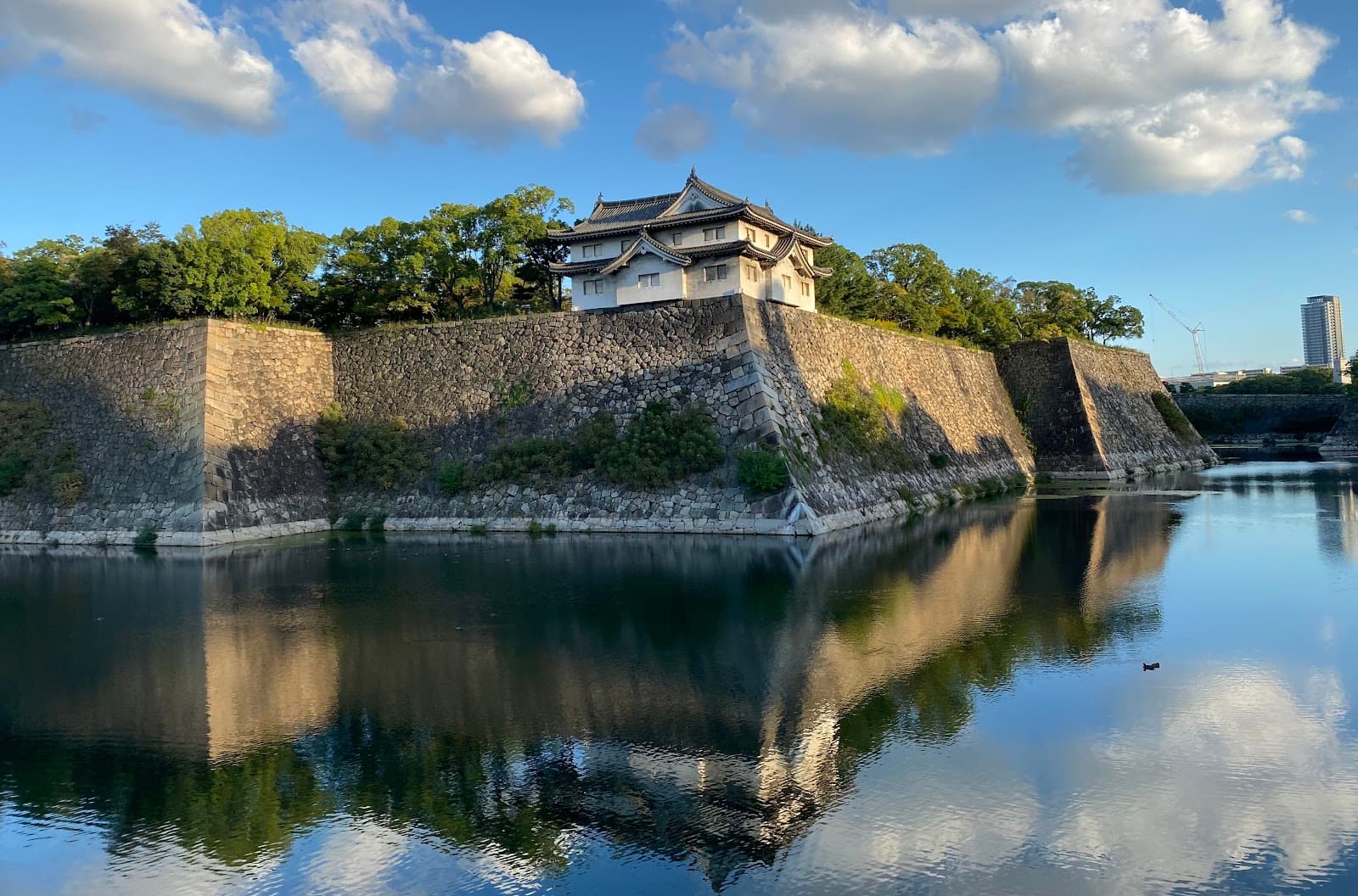
Osaka Castle
Revered castle dating to 1597 & since rebuilt, featuring gardens & a museum with varied exhibits.
Open in Maps ↗Watch for warm spells: A sudden warm period in early March can accelerate blooms by 3-5 days. Conversely, an unexpected cold snap can delay blooms. Updates in the final 10 days before predicted blooming are most reliable.
Practical Trip Planning Strategy
Here's the realistic approach we recommend for travellers:
Book flights early: International flights to Japan sell out for cherry blossom season. Book your flights 4-6 months ahead, targeting the historical average dates (late March for Tokyo/Kyoto, early April for Northern Honshu, early May for Hokkaido).
Wait on accommodation: Hotel prices surge 30-50% during cherry blossom season, and availability tightens. However, Japanese business hotels and some international chains allow free cancellation up to a few days before arrival. Book a flexible option in January, then watch forecasts. If necessary, cancel and rebook for different dates in February or early March.
Consider multiple regions: Japan's ten-week bloom season offers insurance. If Tokyo blooms earlier than expected and you miss peak, Kyoto's cherries typically peak 3-5 days later. If both Kanto and Kansai bloom early, consider pivoting north to Tohoku or west to Shikoku, where blooms typically trail by 1-2 weeks.
Build a 7-10 day trip: This window gives you flexibility to position yourself where conditions are best. With the JR Pass (¥50,000 for 7 days as of 2024), you can move between regions affordably if forecasts shift.
What Happens When Forecasts Miss
Even sophisticated forecasting has limitations. Forecasts occasionally miss by a full week, particularly in years with unusual weather patterns. Here's what to know:
Early blooms: These occur when February and early March are unusually warm. The 2021 season saw Tokyo's earliest bloom on record (14 March), catching many forecasts off guard. Early blooms are harder to predict because small temperature differences in late winter create large variations in heat accumulation.
Late blooms: Cold snaps in late March can delay blooms by 5-10 days. The 2012 season saw significant delays across Honshu. Late blooms are somewhat easier to predict because the delay mechanism (cold weather) is observable in real-time.
Regional anomalies: Microclimates occasionally create localised variations. Urban heat islands mean Tokyo's city centre can bloom 2-3 days before suburban areas. Coastal areas may bloom differently than inland regions at the same latitude.
Alternative Viewing Strategies
If forecasts indicate you'll miss peak bloom, or if you're dealing with an unexpected shift, several alternatives exist:
Early-blooming varieties: Kawazu-zakura, which bloom in February, offer insurance against missing the main season. Kawazu town on the Izu Peninsula hosts Japan's most famous early bloom festival. Tokyo's Shinjuku Gyoen and Rikugien Garden also plant early varieties.
Late-blooming locations: If you arrive after Tokyo's peak, head north. Sendai typically peaks 10-14 days after Tokyo. Hirosaki in Aomori peaks 3-4 weeks after Tokyo. Hokkaido's blooms arrive a full month after Tokyo's.
Mountain regions: Higher elevations bloom later. Mount Yoshino's summit blooms 2-3 weeks after Osaka. The Northern Japan Alps maintain snow while lowland cherries bloom, then see their own cherry season in late April.
Night illuminations: Many parks illuminate cherry trees after dark during bloom season. Illuminations continue even as daytime petals begin falling, extending the viewing window by 2-3 days.
Reading Historical Patterns
Long-term data reveals useful patterns. Tokyo's average bloom date has shifted earlier by approximately 5 days over the past century due to warming temperatures and urban heat island effects. However, year-to-year variation remains significant:
2023: Tokyo kaika 14 March, mankai 22 March (very early) 2022: Tokyo kaika 20 March, mankai 27 March (slightly early) 2021: Tokyo kaika 14 March, mankai 22 March (record early) 2020: Tokyo kaika 14 March, mankai 22 March (very early) 2019: Tokyo kaika 21 March, mankai 27 March (average)
Kyoto shows similar patterns but typically peaks 3-7 days after Tokyo. Osaka falls between Tokyo and Kyoto. This regional progression is remarkably consistent, even when absolute dates shift.
Using Forecasts on the Ground
Once you're in Japan, continue monitoring forecasts and actual bloom reports:
Follow local reports: Japanese news programmes provide daily bloom updates showing percentage of flowers open at famous locations. NHK World broadcasts English updates.
Check observation trees: Major cities have official observation trees where meteorologists track bloom progress. These trees are marked and easily accessible. Seeing buds on observation trees gives you a 5-7 day heads-up before full bloom.
Use real-time apps: Weathernews operates an app where users submit bloom photos. This crowdsourced data shows which specific parks are at peak on any given day.
Ask hotel staff: Front desk staff at hotels track bloom conditions closely and can recommend currently-peaking locations. They're often more accurate than formal forecasts for their immediate area.
The Bottom Line for Travellers
Cherry blossom forecasting is sophisticated but imperfect. Forecasts become reliable about 10-14 days before blooming, with earlier predictions serving as rough guidelines. The practical approach combines historical averages for initial planning, flexible booking for accommodation, and real-time adjustments based on March forecasts.
Expect forecasts to shift by 3-5 days as the season approaches. Build flexibility into your plans through moveable accommodation, the JR Pass, or a longer trip spanning multiple regions. Japan's cherry blossom season is spectacular - even if you're a few days early or late, you'll still find blooming trees somewhere in the country.
The cherry blossom forecast isn't a crystal ball, but it's an invaluable planning tool developed through decades of careful observation. Use it wisely, stay flexible, and trust that Japan's cherry trees will put on a show you won't forget.