
 By Declan Barry
Higashiyama: Kyoto's Preserved Temple Corridor Explained
Higashiyama, Kyoto's eastern district, feels like stepping into a different century. This sloping neighbourhood stretches from Yasaka Shrine in the north to Kiyomizu-dera in the south, preserving wooden machiya townhouses, stone-paved lanes, and some of Japan's most significant temples. Unlike many Japanese cities rebuilt after the Second World War, Higashiyama survived intact, offering genuine Edo-period streetscapes where geisha still hurry between appointments and temple bells mark the passing hours.
Kyoto
Yasaka Shrine
This Shinto shrine was erected in 656 A.D. & is home to one of the most famous festivals in Japan.
Open in Maps ↗Kyoto
Kiyomizu-dera
Iconic Buddhist temple on Mount Otowa known for the scenic views afforded from its sizable veranda.
Open in Maps ↗The district gets its name from the Higashiyama mountain range that rises behind it. These wooded hills have sheltered temples and aristocratic retreats since the 8th century, creating a concentration of cultural sites unmatched anywhere in Japan.
Understanding Higashiyama's Layout
Higashiyama follows the gentle slope between the Kamo River and the eastern mountains. The main temple corridor runs roughly north-south for about 2 kilometres, though winding lanes and hillside paths extend the walking distance considerably.
The neighbourhood divides into three distinct sections. Northern Higashiyama centres on Nanzen-ji Temple and the Philosopher's Path, quieter and more contemplative. Central Higashiyama, from Chion-in to Maruyama Park, balances major temples with traditional shopping streets. Southern Higashiyama, dominated by Kiyomizu-dera, sees the heaviest crowds but rewards visitors with spectacular views and the district's most atmospheric lanes.
Kyoto
Nanzen-ji
Stately Buddhist temple complex with a Zen garden, forested grounds & walking paths.
Open in Maps ↗Kyoto
Maruyama Park
Popular green space with an outdoor music hall, bronze statues & colorful, seasonal cherry blossoms.
Open in Maps ↗Most visitors enter from Gion, crossing Higashioji-dori at Yasaka Shrine, or from Kiyomizu-Gojo Station on the Keihan Line. The Keihan station puts you at the southern entrance, requiring an uphill walk to Kiyomizu-dera. Entering from Gion lets you work south, descending gradually - the easier route if you plan a full day's exploration.
The Major Temples
Kiyomizu-dera
Kiyomizu-dera crowns a hillside above southern Higashiyama, famous for its massive wooden terrace jutting 13 metres above the slope. Built in 778 without a single nail, the main hall underwent major restoration between 2017 and 2020 - the scaffolding's now gone, revealing refreshed vermillion paintwork.
The temple complex sprawls across multiple levels. Most visitors photograph the main hall from Okuno-in Hall across the ravine, where maples frame the terrace spectacularly in November. The Otowa Waterfall beneath the terrace splits into three streams, each supposedly granting different benefits: longevity, academic success, or love. Queue with students and elderly visitors to catch water in metal cups on long poles - though temple priests cheekily note that trying to drink from all three negates the benefit.
Entry costs ¥400. The temple opens at 6:00, crucial information for photographers wanting the terrace empty. By 9:00, tour groups arrive in force.
Kōdai-ji
Kōdai-ji, established in 1606 by Nene (the widow of Toyotomi Hideyoshi), offers a more intimate temple experience. The gardens, designed by tea master Kobori Enshu, demonstrate karesansui (dry landscape) principles beautifully - white gravel raked into patterns representing water, rocks positioned to suggest islands or mountains.
The temple's autumn illuminations transform the grounds each November and December, projecting digital art onto the garden's pond. Some purists dismiss this as gimmicky, but the reflections in still water create genuinely striking images. Evening entry during illumination periods costs ¥600, worth it if you can tolerate crowds.
Regular entry is ¥600, gardens open 9:00-17:00 (extended during special illuminations).
Chion-in
Chion-in, headquarters of Jōdo-shū Buddhism, impresses through sheer scale. The Sanmon gate, built in 1619, stands 24 metres tall - Japan's largest temple gate. Climbing the steep stone steps beneath it, you understand how Edo-period architects created awe through proportion.
The main hall, currently under restoration until 2027, remains partially accessible. The complex's nightingale floors, designed to chirp when walked upon as security against intruders, work perfectly. Step lightly on the dark wooden corridors; the planks sing regardless.
Entry to the grounds is free. Special areas including the gardens cost ¥500. The morning service at 6:00 (doors open 5:40) lets you hear the massive temple bell, cast in 1636 and requiring 17 monks to ring it.
Yasaka Shrine
Technically in Gion but functioning as Higashiyama's northern gateway, Yasaka Shrine glows vermillion against surrounding greenery. Unlike temples, shrines charge no admission - pass through freely at any hour.
The shrine hosts Gion Matsuri, Japan's most famous festival, throughout July. The main shrine buildings, reconstructed in 1654, demonstrate gongen-zukuri architecture where main hall and worship hall share a single roof. Night visits reveal the structures dramatically lit, popular with couples and photographers.
The Preserved Streets
Ninenzaka and Sannenzaka
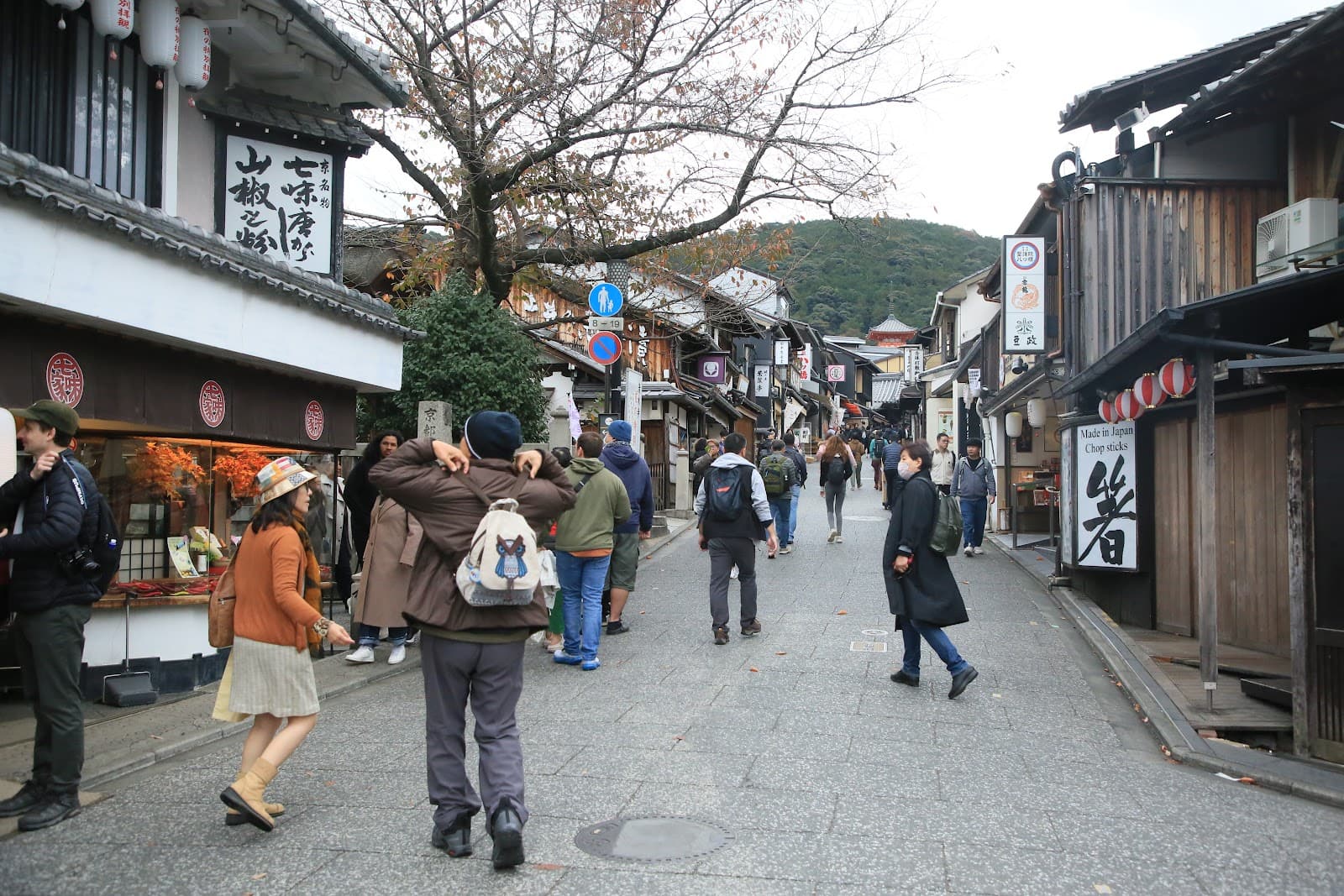
These sloping stone-paved lanes connecting Kiyomizu-dera to Kōdai-ji preserve Edo-period streetscapes so successfully that the government designated them Preservation Districts for Groups of Traditional Buildings - essentially, living museums where development is strictly controlled.
Ninenzaka (also called Ninen-zaka) means "two-year slope," named for construction in 808 during Emperor Heizei's second year. Sannenzaka follows similar logic from 810. Local legend claims falling on these slopes dooms you to die within two or three years respectively - watch your footing, especially after rain.
Kyoto
Ninenzaka
Charming pedestrian thoroughfare known for its classic architecture, teahouses & cherry blossoms.
Open in Maps ↗Kyoto
Sannenzaka
Bustling pedestrian street on a hill lined with souvenir stalls & traditional Japanese architecture.
Open in Maps ↗Today both lanes line up machiya townhouses converted to shops selling Kyoto crafts: Kiyomizu pottery, folding fans, textile goods, matcha sweets. Prices target tourists but quality generally exceeds airport souvenir levels. Several traditional teahouses offer amazake (sweet fermented rice drink) or matcha with traditional sweets - expect ¥800-1,200 for a set.
Ishibei-koji
Ishibei-koji, a narrow flagstone lane running between Nene-no-Michi and Kodai-ji, might be Kyoto's most photographed alley. Earthen walls topped with kawara tiles line both sides, interrupted by traditional wooden gates marking entrances to exclusive ryotei restaurants and ochaya teahouses.
The lane stretches barely 100 metres but exemplifies everything visitors imagine about old Kyoto. Visit early morning (before 8:00) or late afternoon for photographs - midday sees tour groups photographing each other in rented kimono, making solitary shots impossible.
Several high-end restaurants operate behind those wooden gates. Reservations require Japanese-speaking intermediaries and budgets exceeding ¥30,000 per person, but wandering the public lane costs nothing.
Nene-no-Michi
This broad pedestrian street connecting Kodai-ji to Yasaka Shrine takes its name from Nene, Toyotomi Hideyoshi's widow who spent her final years at Kodai-ji. Compared to Ninenzaka's tourist intensity, Nene-no-Michi feels almost relaxed.
The street's width - unusual for Higashiyama - comes from Meiji-era modernisation that spared this route. Stone lanterns line both sides, lit each evening. Several quality craft shops operate here, including Asahiyaki pottery specialists and traditional umbrella makers. Prices run higher than Ninenzaka but reflect genuine craft quality.
Practical Walking Routes
The Classic Southern Loop (3-4 hours)
Start at Kiyomizu-Gojo Station. Walk uphill through residential streets (15 minutes) to Kiyomizu-dera. After exploring the temple (60-90 minutes), descend via Sannenzaka and Ninenzaka, browsing shops and stopping for matcha. Continue to Kodai-ji (45 minutes including walk and visit), then stroll through Nene-no-Michi to Maruyama Park. Rest at Yasaka Shrine before returning to Gion.
This route covers roughly 3.5 kilometres with moderate climbing. Wear comfortable shoes - stone steps and slopes challenge fashion footwear.
The Northern Extension (5-6 hours)
From Yasaka Shrine, walk north through Maruyama Park to Chion-in (20 minutes). After visiting Chion-in, continue north to Nanzen-ji Temple, Kyoto's most important Zen temple (30 minutes walk). The massive Sanmon gate here rivals Chion-in's for impressive proportions.
Nanzen-ji's subtemple Tenju-an contains exquisite gardens (¥500 entry). The temple's brick aqueduct, built in 1890 to carry water from Lake Biwa, creates surprisingly photogenic scenery - Meiji-era industrial architecture against Zen temple grounds.
From Nanzen-ji, the Philosopher's Path leads north along a canal for 2 kilometres to Ginkaku-ji (Silver Pavilion). Cherry trees overhang the path, creating spectacular tunnels of blossom in early April. Walking the full route adds 90 minutes to your day.
The Quiet Morning Walk (2 hours)
Beat crowds by starting at 6:00 when Kiyomizu-dera opens. The morning air smells of incense and breakfast cooking in nearby houses. Photograph the terrace empty, visit the Otowa Waterfall, then descend through Sannenzaka and Ninenzaka before shops open.
By 8:00, position yourself at Ishibei-koji for photographs in soft morning light. End at a kissaten (traditional coffee shop) around Gion for breakfast - several open by 7:30, serving thick toast and strong coffee.
Seasonal Considerations
Spring (Late March to Early May)
Cherry blossoms peak around 1-7 April in Higashiyama, though dates shift yearly. Maruyama Park's massive weeping cherry draws huge crowds for hanami (blossom viewing), particularly evening when illuminated. Arrive by 16:00 to secure viewing spots.
The Philosopher's Path sees comparable crowds during cherry season. Weekday mornings before 8:00 offer the best chance of peaceful viewing.
Temperatures range 10-20°C. Layers work better than heavy coats.
Summer (June to August)
Rainy season (tsuyu) runs mid-June through mid-July, bringing humidity and frequent showers. The upside: fewer tourists and lush greenery. Temple gardens look particularly vibrant after rain.
July and August turn brutally hot, regularly exceeding 35°C with oppressive humidity. Morning visits (before 10:00) or evening strolls (after 17:00) beat the heat. Hydration matters - vending machines appear every few blocks.
Autumn (September to November)
Autumn foliage peaks mid-November to early December, transforming Higashiyama into a scroll painting. Kiyomizu-dera's maples glow orange against the temple's vermillion. Kodai-ji's illuminations enhance the spectacle.
Expect extreme crowds during peak colour. Weekends see gridlock on popular streets. Visit Tuesday through Thursday if possible, arriving before 8:00.
Temperatures range 10-20°C. Mornings feel crisp; afternoons pleasant.
Winter (December to February)
Winter brings Higashiyama's quietest season. Occasional snow transforms temples into monochrome paintings - worth building schedule flexibility to catch if forecasts suggest flurries.
New Year (1-3 January) reverses the quiet as locals visit shrines for hatsumode (first shrine visit). Yasaka Shrine particularly swarms. Avoid these dates unless experiencing hatsumode interests you.
Temperatures drop to 2-10°C. Dress warmly for hillside temples where wind cuts through valleys.
Food and Rest Stops
Higashiyama's traditional atmosphere extends to dining. Several options suit different budgets and timeframes.
Kasagi-ya, operating since 1914 near the base of Sannenzaka, serves simple but excellent soba and udon (¥900-1,400). The thick udon in hot dashi broth revives cold, tired temple walkers perfectly.
For matcha and wagashi (traditional sweets), Kagizen Yoshifusa near Yasaka Shrine maintains Edo-period recipes. A matcha set costs ¥1,300, served in a minimalist interior that feels worlds away from tourist streets outside.
Maruyama Park contains several casual options including yatai (food stalls) during cherry blossom season. The park itself makes an excellent picnic spot year-round - konbini near Gion stock onigiri, sandwiches, and drinks.
Getting There and Around
From Kyoto Station, bus 100 or 206 reaches Gojo-zaka stop (15 minutes, ¥230) near Kiyomizu-dera's approach. Buses run every 10 minutes but pack tightly during peak seasons.
The Keihan Line offers a less crowded alternative. Take the train to Kiyomizu-Gojo Station (¥210 from Gion-Shijo), then walk 15 minutes uphill to Kiyomizu-dera.
Within Higashiyama, walk. The district's lanes don't accommodate buses well, and taxis can't navigate narrow streets. The entire temple corridor covers maybe 2.5 kilometres north-south - manageable on foot with rest breaks.
What to Skip
Not every temple deserves your time. Entoku-in, Kodai-ji's subtemple, charges ¥500 for gardens that don't match the main temple's quality. Unless you're a serious garden enthusiast, skip it.
The Kyoto Ryozen Gokoku Shrine, a Meiji-period war memorial, lacks the architectural or historical significance of nearby sites. The observation deck offers decent views but nothing you can't see from Kiyomizu-dera's terrace.
Many shops along Ninenzaka and Sannenzaka stock identical souvenirs at inflated prices. The same Kiyomizu pottery costs 30% less at specialist shops in downtown Kyoto. Buy here only if something genuinely appeals - not from obligation.
Making the Most of Your Visit
Higashiyama rewards slow exploration. Rush through, and you'll return with temple photographs identical to everyone else's. Linger in gardens, sit in temple halls during services, duck into quiet side streets when main lanes feel overwhelming.
The neighbourhood's magic lies in details: moss patterns on stone walls, the specific green of temple roof oxidation, how afternoon light angles through wooden temple lattices. Photography captures scenes, but memory preserves atmosphere.
Start early. The 6:00 temple opening isn't sadistic scheduling - it's an invitation to experience Higashiyama as it was, before mass tourism, when temples existed for contemplation rather than Instagram.
Dress appropriately. Many temples require shoe removal. Socks without holes matter. Comfortable walking shoes beat fashionable footwear on stone steps and slopes.
Bring cash. Many smaller shops and temple admission gates don't accept cards. ATMs appear at konbini throughout the district.
Most importantly, build flexibility into your schedule. If a particular temple garden captivates you, stay. If crowds overwhelm, duck into quiet side streets. The itinerary exists to serve your experience, not vice versa.
Higashiyama preserves not just buildings but an entire way of experiencing urban space - pedestrian-scaled, neighbourhood-focused, where daily life and cultural heritage interweave naturally. This integration, more than any individual temple, makes the district irreplaceable.