
 By Declan Barry
Enoshima and Mount Takao are the two easiest natural escapes from central Tokyo, and neither requires a full day. Enoshima gives you a shrine-threaded island, sea caves, and the best shirasu rice on the Shonan coast in roughly four hours. Mount Takao gives you a forested mountain, a 1,200-year-old temple, and a bowl of tororo soba in about the same time. Done together, they make one of the most satisfying paired itineraries in the Kanto region.
Mount Takao
Mount Takao
Foliage-covered, 599-meter-tall peak with a funicular railway, hiking trails & a Buddhist temple.
Open in Maps ↗Why pair these two?
They sit in opposite directions from Tokyo - Enoshima to the south-west on the Shonan coast, Mount Takao to the west in the Hachioji hills - so you would not do both on the same day. The logic for pairing them in a single guide is simpler: both are around 60-90 minutes from central Tokyo, both suit a morning-plus-lunch format that leaves your afternoon free, and they appeal to the same traveller who wants outdoors and culture without a complicated journey. Use this guide to plan them on separate days; if you only have time for one, the section-by-section breakdown will tell you which fits your trip better.
For a wider look at how these and other options compare by journey time, see our day trips from Tokyo by travel time guide.
Enoshima: shrine island and sea caves
Getting there
From Shinjuku Station, take the Odakyu Enoshima Line (the Romancecar is not necessary - a regular express is fine) to Katase-Enoshima Station. Journey time is around 65-70 minutes on a rapid express; the fare is approximately ¥590 one way. Alternatively, take the JR Shonan-Shinjuku Line from Shinjuku to Ofuna, change to the Enoden (Enoshima Electric Railway), and ride to Enoshima Station - total journey around 70 minutes, roughly ¥790. The Odakyu route is simpler for most visitors.
Odakyu sells a combined day pass called the "Enoshima-Kamakura Freepass" for around ¥1,520 from Shinjuku. It covers unlimited Odakyu travel to the area plus the Enoden all day, and it pays for itself quickly if you plan to ride the Enoden even once.
What to see - and in what order
Cross the 600-metre Benzaiten Bridge on foot (free, about 10 minutes) and you are on the island. The main Nakamise-dori street is busy from 10 am onwards; if you want photos without tour groups, aim to arrive before 9:30 am.
Enoshima Shrine Hetsumiya (free to enter the shrine grounds; a ticket into the inner garden and Sea Candle costs ¥500) is the collective name for the island's three-part shrine complex. Start here. The path climbs through torii gates past market stalls selling dried fish and salt-taffy, and the views over Sagami Bay begin to open up as you ascend. The three sub-shrines - Hetsumiya, Nakatsumiya, and Enoshima Shrine Okutsumiya - are spaced along a single uphill route, so you visit them naturally without backtracking. The Okutsumiya is the most rewarding stop: look up inside for the famous Edo-period ceiling painting of a glaring turtle, which most visitors walk straight past.
Enoshima
Enoshima Shrine Hetsumiya
A mountaintop complex consisting of 3 ancient shrines, scenic grounds & expansive vistas.
Open in Maps ↗Enoshima
Enoshima Shrine Okutsumiya
Hilltop Shinto shrine noted for its Edo-period drawing of a glaring turtle on the ceiling.
Open in Maps ↗Enoshima Sea Candle sits at the top of the Samuel Cocking Garden (included in the ¥500 garden ticket above). The lighthouse observation deck adds another ¥300, but the 360-degree view of the bay - and, on a clear winter morning, Mount Fuji above the Izu Peninsula - justifies it. On hazy summer days, skip the extra charge and enjoy the garden instead. The Enoshima Samuel Cocking Garden itself is a pleasant Meiji-era mix of tropical plants and Western-influenced landscaping, and it blooms with roses in May and winter illuminations from November.
Enoshima
Enoshima Sea Candle
Spectacular modernistic lighthouse, built in 2003 & offering wide views over Sagami Bay.
Open in Maps ↗Enoshima
Enoshima Samuel Cocking Garden
Meiji-era garden with Japanese & Western influences & seasonal blooms, illuminated on winter nights.
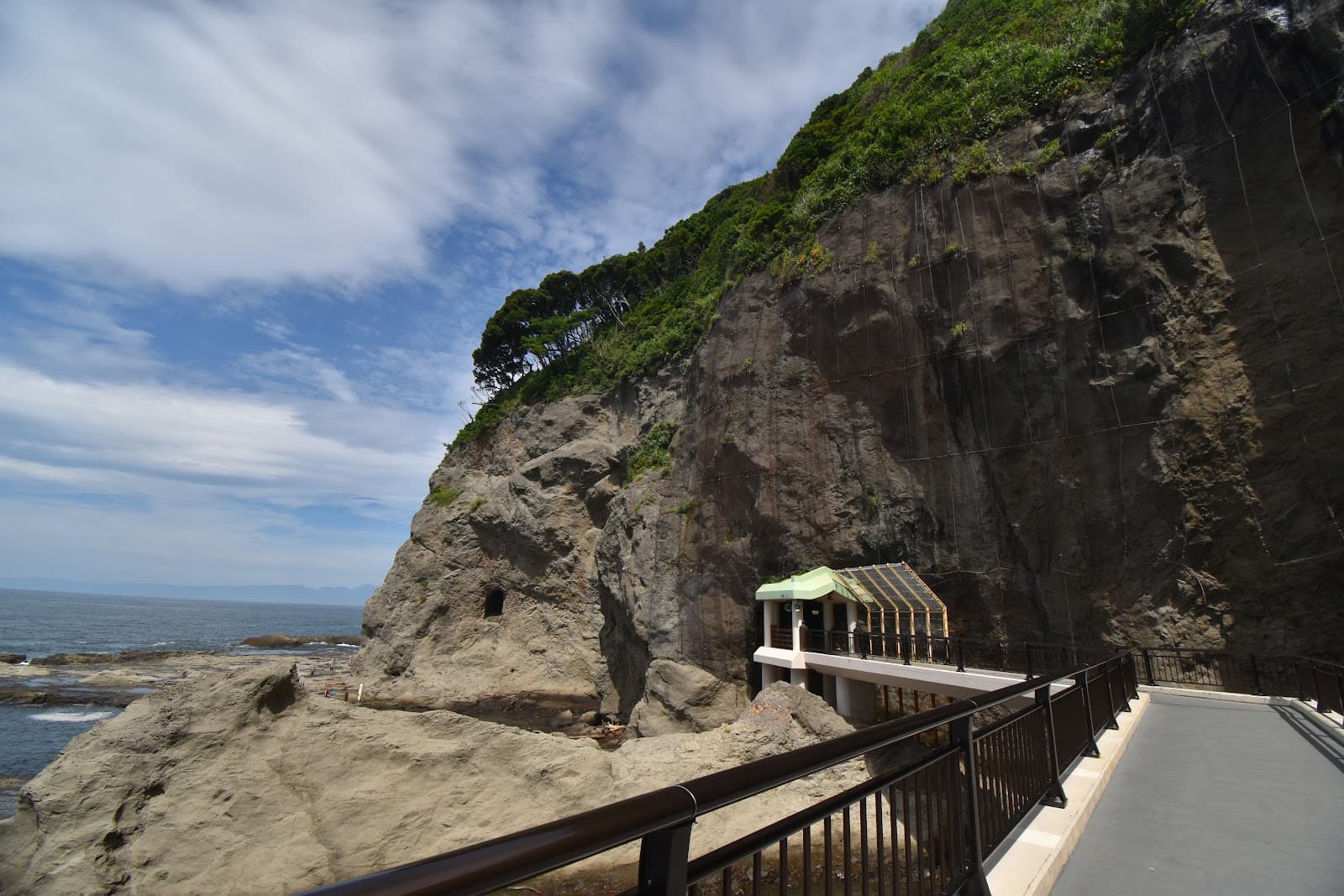
Open in Maps ↗Enoshima Iwaya Cave is at the far western tip of the island, a 10-minute walk downhill from the garden (entrance ¥500). Two wave-cut chambers run about 150 metres into the cliff, lined with stone Buddhas and a small inner shrine. Bring the small rental candles (included in the entrance fee) - they are not theatrical prop, the second cave is genuinely dark. The caves close at 17:00 (last entry 16:30); check the Enoshima Tourism Association website for any seasonal changes before you go.
Enoshima
Enoshima Iwaya Cave
Wave-cut caves once used for Buddhist religious practice, with stone statues & a small shrine.
Open in Maps ↗Eating: shirasu
Shirasu - tiny whitebait caught fresh in Sagami Bay - is the Enoshima dish. The local speciality is kamaage shirasu-don: a bowl of warm rice topped with a pile of soft, freshly boiled shirasu, served with grated daikon and soy sauce. Most restaurants on Nakamise-dori offer it; a reliable choice is to look for places displaying the "fresh shirasu today" (本日の生しらす) board outside, which means the raw version is also available. Raw shirasu (nama shirasu) has a clean, oceanic flavour, but it is not served every day - it depends on the morning catch. Expect to pay ¥1,200-¥1,800 for a don. Avoid the first two or three restaurants right at the bridge entrance; they are the busiest and marginally pricier. Walk five minutes further up the street for the same quality with shorter queues.
Note: raw shirasu is not available on Mondays (the fishing fleet rests) or when the sea is rough.
Practical notes for Enoshima
The island is very small - roughly 700 metres across. A comfortable circuit of all the above takes about 3.5 to 4 hours including lunch. The one honest caveat: summer weekends (late July to August) are extremely crowded. The Nakamise-dori narrows to a single-file shuffle by noon on a Saturday in August. Go on a weekday if at all possible, or visit in autumn or early spring when the crowds thin and the light over the bay is better. The island is flat near the entrance but steeply stepped further in - it is not suitable for pushchairs once you pass the first shrine gate.
Mount Takao: forested trails and a mountain temple
Getting there
From Shinjuku Station, take the Keio Line Ltd Express to Takaosanguchi Station. The journey takes around 47-50 minutes and costs approximately ¥430. Trains run roughly every 10-15 minutes throughout the day. This is one of the most convenient mountain approaches anywhere near a major city - you step off the train and the trailhead is a two-minute walk.
If you are coming from Tokyo Station or the east side of the city, the JR Chuo Line to Takao Station (around 55 minutes, ¥770) followed by the Keio Line one stop to Takaosanguchi is also perfectly reasonable.
Choosing your route
Mount Takao has eight numbered trails. For a half-day visit, Trail 1 is the clear choice. It is paved all the way, well-signposted, and runs directly past the key attractions. From Takaosanguchi Station to the 599-metre summit takes about 90 minutes at a comfortable pace on Trail 1.
Alternatively, take the Takaosan Cable Car (funicular) from Kiyotaki Station - a 3-minute walk from the trailhead - up to the Kiyotakisan Station, cutting the climb by about 30 minutes. The funicular costs ¥490 one way, ¥950 return. It is worth taking at least one way if you have limited time or find steep paths tiring. Check the current schedule on the Takaosanguchi Station board, as the funicular has a last descent time in the late afternoon.
What to see
TAKAO 599 MUSEUM is right at the base of the mountain, open 8:00-17:00 (free entry). The exhibits on Takao's insects, birds, and plant life are genuinely good, and the outdoor terrace faces straight up the forested slope. Spend 20-30 minutes here before you climb; it gives context to what you will see on the trail.
Halfway up Trail 1, you reach Takaosan Yakuōin Yūkiji Temple. This is the spiritual heart of the mountain - founded in 744 CE under Emperor Shomu's orders and still an active pilgrimage site. The main hall and multi-tiered gate are impressive in themselves, but look specifically for the tengu statues: the long-nosed, red-faced figures that are the mountain's guardian deities, placed at the gate and around the main precinct. Photography is welcome in the precincts. Entry is free.
The summit itself (599 metres) has a wide observation platform and, on clear days, a direct line of sight to Mount Fuji to the west. The best visibility is typically in the cool months: November through March. Summer brings haze that often obscures the Fuji view entirely.
For autumn foliage specifics - the best trail sections, peak timing, and the crowds that come with it - see our dedicated Autumn Leaves Hike at Mount Takao guide rather than duplicating it here.
Eating: tororo soba
Mount Takao's local speciality is tororo soba: cold or hot buckwheat noodles topped with grated nagaimo (mountain yam), which turns into a thick, slightly gelatinous paste when grated. The combination sounds unusual but works - the earthy soba against the mild, creamy yam. Several restaurants serve it on the trail and near the summit; Sagamiya, a well-known restaurant just below the Yakuōin gate, is one of the most established options, with sets from around ¥1,100. If you descend by Trail 1, there are additional soba shops near the cable car base.
Tip: come down by 13:30 on weekdays if you want a table without a wait. On autumn weekends, queues at popular soba restaurants can stretch to 30-40 minutes.
After the mountain: Keio Takaosan Onsen Gokurakuyu
Directly adjacent to Takaosanguchi Station - you can see the building from the platform - is Keio Takaosan Onsen Gokurakuyu, a hot spring spa with indoor and outdoor baths. Entry costs ¥1,000 on weekdays, ¥1,200 at weekends and public holidays (prices correct as of early 2024; check the official site for current rates). Soaking after a morning hike is a logical end to the visit and genuinely relaxing. Towels are available for hire. The spa opens at 8:00, which also means you could visit before the hike if you want a quiet morning soak.
Practical notes for Mount Takao
Mount Takao is one of the most visited mountains in the world by annual footfall - numbers often cited around 2.5 million per year. Do not let that put you off: the mountain is large enough that Trail 1 feels manageable even on busy weekends, and Trails 4 and 6 are noticeably quieter for those who want a more natural feel. The one time to genuinely plan carefully is mid-November koyo (autumn leaves) season, when the car park fills before 9 am and Trail 1 is shoulder-to-shoulder. Arrive by 8:30 or go midweek.
The trail is accessible year-round. Snow falls occasionally in January and February; the funicular keeps running, but check conditions at the station before attempting Trail 1 on foot after overnight snowfall.
How to combine each with a Tokyo morning or afternoon
Enoshima + Tokyo morning: Leave Shinjuku no later than 9:00 to reach the island before the Nakamise crowds build. You will be back in Shinjuku by 14:00-14:30, leaving a full afternoon for Tokyo. A half-day in Shimokitazawa (20 minutes from Shinjuku on the Odakyu Line - minimal extra travel) or an evening in Shibuya works well.
Mount Takao + Tokyo afternoon: Takao is the easier early-start, because Takaosanguchi is a direct 50-minute ride from Shinjuku with no changes. Leave at 8:00, summit by 10:00, lunch and onsen by 13:00, back in Shinjuku by 14:00. That gives a full afternoon free in the city.
Reverse order (afternoon to Takao): The mountain stays open and the funicular runs until around 18:00 (last descent varies by season). An afternoon departure from Shinjuku at 13:00 leaves enough time to visit the temple and summit before dark in summer, though this is tight in winter when it gets dark before 17:00.
Kamakura add-on for Enoshima days: Kamakura is a 25-minute Enoden ride from Enoshima Station. If you want to extend the day, Kamakura's Kōtoku-in (the Great Buddha, admission ¥300) and Hase-dera temple (admission ¥400) are both within walking distance of Hase Station, two stops from Enoshima. This turns the half-day into a full day; budget 6-7 hours on the ground for both islands and Kamakura together.
Which one should you choose?
Choose Enoshima if: you want sea air, seafood, and Shinto culture; you are travelling with someone who finds long hikes tiring; you want a more photogenic Instagram-style morning; or you are already planning a Kamakura day and can combine them.
Choose Mount Takao if: you want a proper walk in woodland; you are interested in mountain Buddhism and tengu folklore; you want the option to finish with an onsen; or you are visiting in autumn and want to see koyo foliage (see our full autumn leaves guide for timing).
Both are worth doing on separate days if you have the time. Neither will disappoint.