
 By Declan Barry
Arashiyama: Beyond the Bamboo Grove
Arashiyama sits on Kyoto's western edge, where forested hills meet the Katsura River and centuries-old temples nestle into mountainsides. Most visitors arrive for the Instagram-famous bamboo grove, snap their photos, and leave within an hour. That's a mistake. The bamboo path takes perhaps ten minutes to walk. The real Arashiyama - temples with moss gardens, river views that change with the seasons, mountain trails, traditional sweet shops - rewards those who venture beyond the grove's exit.
Kyoto
Arashiyama
Scenic location showcasing a host of monkeys, plus a bamboo forest & water vistas.
Open in Maps ↗I've watched tourists queue for bamboo photos while monks sweep temple courtyards fifty metres away in perfect silence. The district deserves a full day. Here's how to experience it properly.
Getting to Arashiyama
Three rail lines serve Arashiyama, and your choice affects where you start exploring.
The JR Sagano Line from Kyoto Station reaches JR Saga-Arashiyama Station in 15 minutes (¥240). You'll arrive on the district's northern edge, perfect for starting at Tenryū-ji Temple and working south.
Kyoto
Tenryu-ji
This venerable Zen temple at the foot of mountains features teahouses & serene, expansive gardens.
Open in Maps ↗The Keifuku Arashiyama Line (Randen) tram from central Kyoto terminates at Arashiyama Station, right beside the bamboo grove. The wooden tram itself feels like stepping into old Kyoto. One-way fare: ¥250.
The Hankyu Arashiyama Line from Kawaramachi or Karasuma stations stops at Hankyu Arashiyama Station, south of the Katsura River. Cross Togetsukyō Bridge on foot for dramatic arrival views. Fare from central Kyoto: ¥230.
I recommend the JR line for first-time visitors. You'll flow naturally through the district from north to south, ending at the bridge for sunset.
The Bamboo Grove: Timing Matters
The Arashiyama Bamboo Grove (formally part of the approach to Nonomiya Shrine) opens 24 hours. That's your advantage. Arrive before 8:00am and you'll have the path nearly to yourself. The bamboo stalks create natural sound baffles - even birdsong seems muffled - and early morning light filters through the canopy in soft green columns.
By 10:00am, tour groups arrive. By 11:00am, the path becomes a shuffling queue. Late afternoon sees another surge. Evening after 6:00pm brings back the quiet, though you'll need good low-light camera settings.
The grove itself is a 400-metre path. Bamboo stalks rise 20 metres overhead, so dense they block the sky. Signs request silence and prohibit touching the bamboo (the oils from hands damage the protective coating). Side paths branch off - take them. They're less crowded and equally atmospheric.
When you exit the northern end, resist the urge to leave. You've seen perhaps 5% of Arashiyama.
Tenryū-ji Temple: Worth Every Yen
Tenryū-ji Temple (¥500 for gardens, ¥800 including temple buildings) belongs to Kyoto's five great Zen temples. The garden predates the bamboo grove's fame by 700 years. Abbot Musō Soseki designed it in 1339, incorporating the Arashiyama mountains as "borrowed scenery" - they become part of the garden's composition.
The main pond reflects the mountains and changes character with seasons. Cherry blossoms in April (peak: early to mid-April), iris in June, autumn colours from mid-November to early December. Even in summer's green season, the garden's structure - stone arrangements, pine shapes, the way paths direct your gaze - reveals why Zen aesthetics influenced Japanese design for centuries.
Walk the covered walkways slowly. They're designed so each turning point frames a new view. The temple buildings themselves (if you pay the additional ¥300) contain subtle ceiling paintings and demonstrate traditional construction methods. Photography is permitted in gardens, prohibited inside buildings.
The temple's exit leads directly to the bamboo grove's entrance - this is where most visitors start, which is why they miss the garden's best viewing angles. Entering from the main gate (from JR Saga-Arashiyama Station direction) gives you the intended approach.
Okochi Sansō Villa: The Hidden Masterpiece
At the bamboo grove's northern end, a small sign points to Ōkōchi Sansō Villa. Entrance costs ¥1,000 - expensive by Kyoto standards - but includes matcha tea and a sweet. Go anyway.
Kyoto
Okochi Sanso Garden
Elegant, tranquil Japanese gardens with scenic views & a tea house serving matcha & sweets.
Open in Maps ↗This was the mountain villa of silent film actor Ōkōchi Denjirō, who spent 30 years (1934-1962) creating his ideal garden. Multiple levels cascade down the hillside. Bamboo groves (yes, more bamboo, but different species and differently arranged), maples, ponds, tea houses, viewing platforms - each turn reveals new combinations.
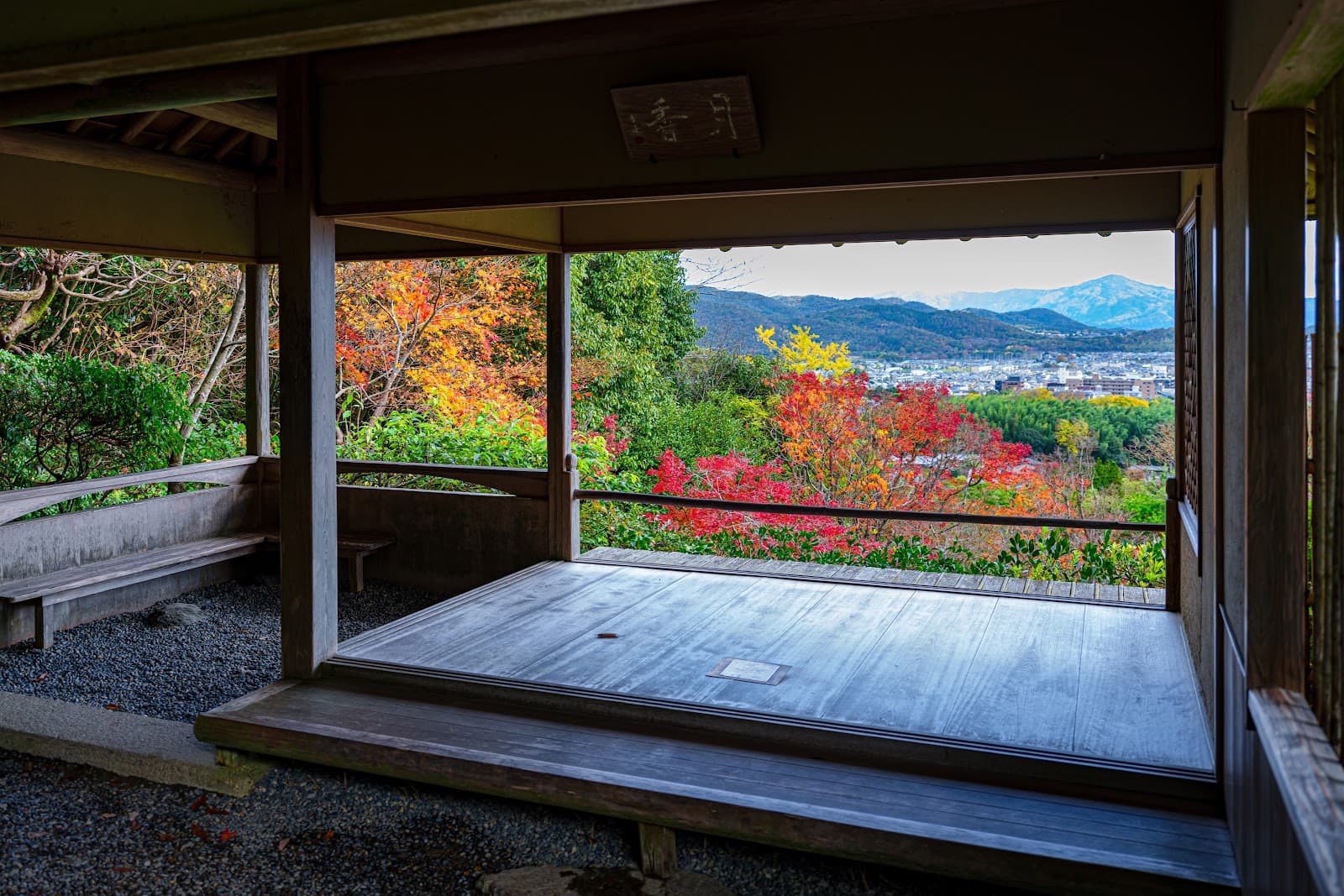
The highest point offers views across Kyoto. On clear days, you can trace the city grid to the mountains beyond. The villa's buildings showcase early 20th-century craftsmanship - carved transoms, specific woods chosen for each room's purpose, sliding doors painted by period artists.
Tea is served in a dedicated hall overlooking the garden. The sweet changes seasonally (cherry blossom motifs in spring, chestnut in autumn). Take your time here. The ¥1,000 fee filters crowds effectively - you might share the garden with a dozen people, not hundreds.
The Riverside Path and Togetsukyō Bridge
From Tenryū-ji's main gate, walk south through narrow streets toward the Katsura River. Traditional shops sell yatsuhashi (cinnamon-sugar rice crackers), matcha soft cream, and bamboo crafts. These streets existed to serve pilgrims and nobility visiting Arashiyama's temples - the tourist infrastructure is centuries old, just updated for modern tastes.
Togetsukyō Bridge ("Moon Crossing Bridge") spans 155 metres. The current structure dates from the 1930s but deliberately maintains the wooden-bridge appearance of the original 836 CE crossing. Mountains form the backdrop in every direction. In April, cherry blossoms line the northern bank. In November, the mountainsides turn gold and scarlet.
The bridge itself is free to cross, and crossing is worthwhile. The southern bank offers views back to the temples and bamboo grove, framed by the river and mountains. Several traditional restaurants occupy riverside buildings - floor seating, river views, kaiseki menus featuring seasonal Kyoto vegetables. Expect ¥3,000-¥8,000 per person for lunch.
River boats operate year-round (¥1,300 for 30 minutes), poled by boatmen in traditional dress. It's touristy but pleasant, especially in summer when the river provides cooling breezes.
Monkey Park Iwatayama: The Unexpected Highlight
South of Togetsukyō Bridge, a path climbs Mount Arashiyama to Iwatayama Monkey Park (¥600). The 20-minute uphill walk deters many visitors. Persist.
At the summit, 120 Japanese macaques roam freely in their natural habitat. You're the one in the enclosure - a building where you can purchase food (¥100 per bag) and feed monkeys through mesh screens. The reversal of typical zoo dynamics is intentional and thought-provoking.
The monkeys ignore humans unless you're holding food. Watch them groom each other, play, argue over social hierarchy. Baby monkeys (born in spring) cling to mothers and tumble about learning social behaviours. Staff provide English explanations of troop dynamics and individual monkey personalities.
The view from the summit rivals anything in Kyoto - the entire Arashiyama district below, the city spreading east, mountains in every direction. Bring water, especially in summer. The climb is genuine exercise.
Temples on the Quiet Side
North of Tenryū-ji, three temples see a fraction of Arashiyama's visitors but equal its famous sites in beauty and significance.
Nison-in Temple (¥500) contains two principal Buddha statues in its main hall - unusual in Japanese Buddhism, which typically enshrines one central figure. The autumn colours here peak in late November, when maple leaves cover the approach stairs in scarlet drifts. The temple's hillside position provides views across western Kyoto.
Giō-ji Temple (¥300) is tiny - a thatched-roof hall surrounded by moss garden. The moss is the point. Thick, luminous green, covering the ground between maples and stone lanterns. Rain improves it. The temple commemorates Giō, a 12th-century dancer who became a nun after losing an emperor's favour - the whole complex breathes quiet melancholy and beauty.
Adashino Nenbutsu-ji Temple (¥500) contains 8,000 stone statues representing souls of the forgotten dead. Families who couldn't afford proper burials placed stones here over centuries. The effect is haunting - thousands of weathered figures in rows, most features eroded, all anonymous. Not cheerful, but moving. The temple's location at Arashiyama's northern edge means most visitors never arrive.
These three temples lie within 15 minutes' walk of each other, in the hills north of the bamboo grove. Allow two hours to visit all three properly.
Seasonal Considerations
Arashiyama transforms with seasons more dramatically than central Kyoto.
Spring (late March to mid-April) brings cherry blossoms along the river and in temple gardens. Peak bloom usually occurs in the first week of April. Crowds intensify considerably - weekend trains fill completely.
Summer (June to August) is hot and humid. The bamboo grove stays relatively cool, and the riverside provides breezes. Hydrate constantly. Cormorant fishing demonstrations occur on the Katsura River in July and August (¥2,000, bookings required).
Autumn (mid-November to early December) is Arashiyama's peak season. The maple-covered mountainsides justify the crowds. Illuminations run at several temples in late November (separate admission, usually ¥600-¥800). Book accommodation months ahead if visiting in peak autumn.
Winter (January to February) is cold but beautiful. Snow occasionally dusts the mountains and bamboo. Crowds disappear. Temple gardens take on spare, Zen-painting aesthetics. Dress warmly - Kyoto's winter is damp-cold that penetrates layers.
Practical Tips
Start early. An 8:00am arrival means empty bamboo groves, your choice of photo spots, and the ability to visit temples as they open.
Wear comfortable walking shoes. Arashiyama involves hills, uneven paths, and several kilometres of walking even for a moderate visit.
Bring cash. Many smaller temples and shops don't accept cards. ATMs exist at the train stations.
Rent a bicycle from shops near any station (¥500-¥1,000 per day). The district is perfect for cycling, with dedicated paths along the river and through residential areas. This gives you access to more distant temples without the effort of walking.
Arashiyama works as a half-day trip from central Kyoto, but a full day lets you see beyond the famous spots. The district's magic isn't in the bamboo grove - though that's lovely. It's in the way temples, gardens, mountains, and river combine into a landscape that's been inspiring artists and monks for over a thousand years.
When you're standing in Tenryū-ji's garden at sunrise, or watching macaques play on the mountain, or walking riverside paths in November's colour, you'll understand why Kyoto's aristocracy chose this place for their villas and retreats. The bamboo grove is just the introduction. Stay for the whole story.