
 By Declan Barry
The Arashiyama Bamboo Grove: Managing Expectations and Timing Your Visit
The Arashiyama Bamboo Grove appears in virtually every Japan itinerary, and photographs of towering green stalks have become synonymous with Kyoto itself. But the reality of visiting this 400-metre path differs significantly from those serene images you've seen online. Understanding what to expect, and when to go, transforms a potentially frustrating experience into something genuinely memorable.
Kyoto
Arashiyama
Scenic location showcasing a host of monkeys, plus a bamboo forest & water vistas.
Open in Maps ↗What the Bamboo Grove Actually Is
The official name is Sagano Bamboo Forest, though most visitors know it as the Arashiyama Bamboo Grove. It's a walking path through cultivated bamboo, maintained by the local government, stretching from just outside Tenryū-ji Temple's north gate to the grounds of Ōkōchi Sansō Villa. The entire walk takes 10-15 minutes at a leisurely pace.
Kyoto
Tenryu-ji
This venerable Zen temple at the foot of mountains features teahouses & serene, expansive gardens.
Open in Maps ↗Kyoto
Okochi Sanso Garden
Elegant, tranquil Japanese gardens with scenic views & a tea house serving matcha & sweets.
Open in Maps ↗That's the first reality check: this isn't a forest where you'll spend hours wandering. It's a short, straight path. Beautiful? Absolutely. Extensive? No. Many first-time visitors express surprise at how quickly the walk ends. If you're expecting an expansive bamboo wilderness, adjust those expectations now.
The bamboo itself reaches heights of 10-15 metres, and the density creates that famous tunnel effect in photographs. The stalks sway and creak in the wind, producing an almost musical sound that no photograph captures. On the right morning, with mist threading through the groves and that distinctive rustling overhead, it genuinely feels otherworldly.
The Crowd Reality
Here's the uncomfortable truth: between 10:00 and 16:00, the bamboo grove resembles a very slow-moving queue more than a peaceful nature walk. During peak seasons (cherry blossom in late March to early April, autumn colours in November, and the summer holiday period in August), you'll be shoulder-to-shoulder with other visitors. That ethereal, solitary photograph you've envisioned? Nearly impossible during these hours.
The path width accommodates perhaps five people side-by-side comfortably, but you'll often find twenty trying to fit. Rickshaws navigate through the crowds, requiring everyone to press against the bamboo barriers. Tour groups stop for explanations. Selfie sticks materialize. It's not unpleasant, exactly, but it's decidedly not tranquil.
This crowding isn't the fault of poor planning or overtourism alone. The grove's fame, its proximity to central Kyoto (15 minutes from Kyoto Station by train), and its free access combine to make it one of Japan's most-visited natural attractions. Approximately 10-15 million people visit Arashiyama annually, and most walk this path.
When to Visit: The Critical Hours
If you want that serene bamboo experience, timing matters more than any other factor. Here's the breakdown:
Early morning (06:30-08:00): This is your window. The path officially opens at sunrise, though no gates physically restrict access. By 07:00 in most seasons, you'll share the grove with perhaps a dozen other people, mostly serious photographers and locals walking to Ōkōchi Sansō. The light filters through the bamboo at interesting angles. You can actually hear birds over human voices.
Arriving early requires staying in Kyoto and prioritizing this over sleep, but the difference is substantial. Take the first train to Saga-Arashiyama Station (JR line) or Arashiyama Station (Keifuku line), arriving around 06:45-07:00.
Late afternoon (17:00-18:00): As the day-tripping tour groups depart, crowds thin noticeably. The light becomes warmer and more golden, particularly beautiful in autumn. This works well if you're spending the full day in Arashiyama, seeing other sites first.
After dark (winter only): From mid-December through February, the Arashiyama Hanatouro illumination event lights the bamboo grove after sunset. The bamboo glows against the night sky, creating an entirely different atmosphere. Crowds return for this event, but the darkness and lighting create a more forgiving environment for photography. The event runs roughly 17:00-20:30, with specific dates varying yearly.
Times to avoid: Any time between 10:00 and 16:00, especially weekends and holidays. The crowds peak between 11:00 and 14:00. If you can only visit during these hours, manage your expectations accordingly and focus on enjoying the experience rather than capturing that perfect, empty photograph.
Seasonal Considerations
Unlike cherry blossoms or autumn leaves, bamboo looks essentially the same year-round. It's evergreen, maintaining that vivid colour through all seasons. However, each season brings different visiting conditions:
Spring (March-May): Peak tourist season due to cherry blossoms. The bamboo grove itself doesn't blossom, but Arashiyama's many cherry trees draw enormous crowds. Late March through early April sees the worst congestion. Late spring (May) is actually lovely - smaller crowds, pleasant temperatures, and fresh green leaves on surrounding deciduous trees.
Summer (June-August): The bamboo provides natural shade, making the path noticeably cooler than surrounding areas. July and August bring humidity and occasional afternoon thunderstorms. The rainy season (typically mid-June to mid-July) means fewer crowds but carry an umbrella. August holidays bring crowds again.
Autumn (September-November): November is extraordinarily busy due to autumn colours in surrounding temples. The maple trees near the grove entrance create stunning red-and-green contrasts in photographs. Early autumn (September-October) offers moderate crowds and comfortable temperatures.
Winter (December-February): This is your secret window. Crowds drop significantly except during the illumination event. Cold temperatures (typically 2-10°C) keep many visitors away, but the bamboo looks identical to any other season. Dress warmly, arrive early, and you might have 10-15 minutes of near-solitude. Snow is rare but transforms the grove into something magical when it occurs.
Getting There and Navigating the Area
Arashiyama sits in western Kyoto, reachable by three different train lines:
JR Sagano Line: From Kyoto Station to Saga-Arashiyama Station (15 minutes, ¥240). This is the quickest option for most visitors. From the station, walk south across the river and follow signs (about 10 minutes to the grove entrance).
Keifuku Randen Line: This scenic tram runs from central Kyoto (various starting points) to Arashiyama Station. The ride itself offers pretty views, particularly in spring and autumn. The station sits closer to the main shopping street. From here, it's a 5-minute walk to the grove.
Hankyu Line: From Kyoto's Kawaramachi area to Arashiyama Station (25 minutes, ¥220). This station is south of the river, requiring a slightly longer walk but passing through pleasant streets.
The bamboo grove sits behind (north of) Tenryū-ji Temple. Most visitors approach from the temple's north gate, but you can also walk from the south, starting near Nonomiya Shrine. The path is well-signposted in English, Japanese, and Chinese.
What Else to See in Arashiyama
Given the grove's brief nature, plan at least 2-3 hours for the wider Arashiyama area:
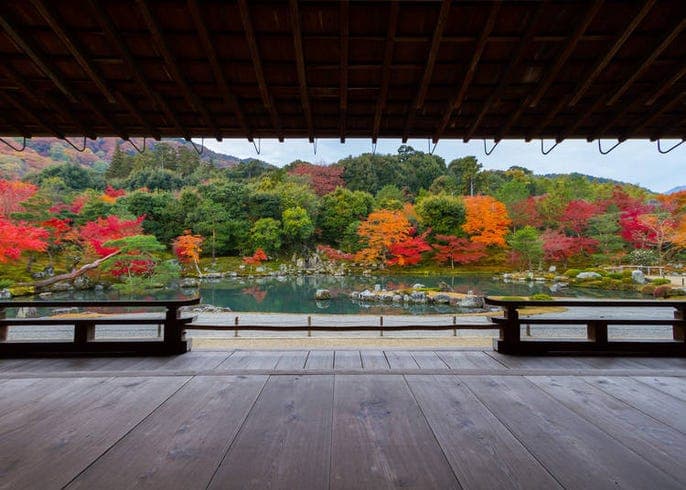
Tenryū-ji Temple: The bamboo grove literally starts at this temple's back gate. The temple itself, a UNESCO World Heritage site, features a stunning borrowed-scenery garden designed by Musō Soseki in 1339. Entry costs ¥500 for the garden (¥800 including the buildings). Worth visiting before or after the grove.
Ōkōchi Sansō Villa: At the far end of the bamboo path, this actor's former villa offers expansive gardens and mountain views. Entry (¥1,000) includes matcha tea and a sweet. The gardens provide a tranquil contrast to the crowded path, and you'll get elevated views over the bamboo from certain terraces.
Monkey Park Iwatayama: If you've energy remaining, climb the hillside opposite Togetsukyo Bridge to this monkey sanctuary. The 20-minute uphill walk rewards you with views over Kyoto and close encounters with Japanese macaques. Entry costs ¥550.
Togetsukyo Bridge: This iconic bridge crossing the Katsura River defines Arashiyama's landscape. The view changes beautifully with seasons, framed by mountains. Free to cross, and the surrounding area offers numerous restaurants and traditional shops.
Practical Advice for Your Visit
Bring appropriate footwear. The path surface is generally smooth, but tree roots create occasional uneven sections. Standard trainers or walking shoes work fine.
Photography tips: In crowds, shoot upward at the bamboo canopy to exclude other visitors. A wide-angle lens captures the tunnel effect. Early morning mist photographs require arriving by 07:00 in humid months. Overcast days often produce better lighting than harsh sunshine, which creates difficult contrasts.
The path is wheelchair and pushchair accessible, though the crowds can make navigation challenging during peak hours. Some gentler alternatives exist via nearby streets running parallel.
No cafés or toilets exist within the grove itself. Use facilities at Tenryū-ji before starting (near the entrance) or at Ōkōchi Sansō at the far end. The main Arashiyama shopping street, five minutes' walk south, offers numerous restaurants and convenience stores.
Mobile signal strength varies. Three major carriers (NTT Docomo, SoftBank, au) generally maintain coverage, but don't rely on constant connectivity for navigation.
Making Peace with Reality
The Arashiyama Bamboo Grove won't provide three hours of solitary nature immersion. It's a brief, beautiful walk that you'll likely share with others. Once you accept this, you can appreciate what it actually offers: a genuine sensory experience of bamboo at scale, the visual drama of those towering stalks, and that distinctive sound as wind moves through the forest.
The quest for the "perfect" empty photograph can detract from simply experiencing the place. If you arrive during busy hours, put the camera away for a few minutes. Listen to the bamboo. Notice how the light filters through. Smell the subtle, fresh scent of bamboo shoots. These sensory experiences exist regardless of crowd size.
For those willing to wake early or visit in winter, near-solitude remains possible. The grove at 07:00 on a February morning genuinely feels like something from another world. But even at 13:00 in April, surrounded by hundreds of other visitors, those bamboo stalks still soar overhead, still sway and creak, still create that unmistakable tunnel of green.
Manage your expectations, time your visit thoughtfully, and you'll find the Arashiyama Bamboo Grove lives up to its reputation - just perhaps not in exactly the way those serene photographs suggested.