
 By Declan Barry
Accessible Travel in Japan: What Exists and What Does Not
Japan presents a fascinating paradox for travellers with mobility challenges. You'll find some of the world's most sophisticated accessibility features alongside surprising gaps. Modern infrastructure coexists with centuries-old temples perched on mountainsides. Understanding what works, what doesn't, and how to navigate both will transform your Japanese adventure from potentially frustrating to genuinely manageable.
This guide covers the reality on the ground - the excellent, the challenging, and the workarounds you'll need.
Transport: Where Japan Excels
Trains and Metro Systems
Japan's rail network offers impressive accessibility in major cities. Every station on the Tokyo Metro and Toei Subway lines now has lifts. Osaka, Kyoto, Nagoya, Fukuoka, and Sapporo have followed suit with near-complete lift coverage on their metro systems.
Osaka
Osaka Castle
Revered castle dating to 1597 & since rebuilt, featuring gardens & a museum with varied exhibits.
Open in Maps ↗Shinkansen trains provide dedicated wheelchair spaces in Car 11 or Car 7 (depending on the train type). Book these through a JR ticket office at least two days ahead - you cannot reserve wheelchair spaces online or through ticket machines. Station staff will arrange a portable ramp for boarding. The spaces are generous, and accessible toilets sit nearby within the same carriage.
Local JR lines vary more. Major stations like Tokyo, Shinjuku, Osaka, and Kyoto have multiple lifts and clear signage. Smaller stations might have only one lift, or occasionally none at all. The JR East website shows which stations have lift access, though it's only in Japanese. Staff at major stations can print accessibility information for your route.
Gap-filling plates appear automatically at many stations when trains arrive, bridging the space between platform and carriage. Where they don't, station staff provide portable plates on request. Don't hesitate to ask - staff expect this and respond efficiently.
Taxis: A Mixed Bag
Standard taxis cannot accommodate wheelchairs. Japan's taxi fleet uses sedan cars with narrow doors and limited boot space.
Accessible taxis exist in major cities but require advance booking. In Tokyo, companies like Nihon Kotsu and Km Group operate wheelchair-accessible vehicles. Book at least 24 hours ahead, ideally 48 hours. Your hotel concierge can arrange this, or use the WILLER accessible taxi app (English interface available).
Expect to pay standard meter rates plus a small booking fee. These taxis use ramps or lifts and secure wheelchairs properly. Drivers have training in assisting passengers, though English proficiency varies.
In Kyoto, accessible taxis are scarcer. Yasaka Taxi operates a small fleet - book through your accommodation. Osaka has better coverage through companies like Kokusai Kogyo and MK Taxi.
Kyoto
Yasaka Shrine
This Shinto shrine was erected in 656 A.D. & is home to one of the most famous festivals in Japan.
Open in Maps ↗Buses: Generally Challenging
Local buses present difficulties. Many lack low floors or ramps. Even buses marked as "barrier-free" often have steep ramps and tight interior spaces. Drivers may not have experience assisting wheelchair users.
Highway buses between cities are improving. Some routes now offer wheelchair-accessible coaches, particularly on the Tokyo-Osaka and Tokyo-Kyoto routes. Willer Express operates several accessible highway buses, bookable online with at least 7 days' notice.
Tourist buses and hop-on-hop-off services in Kyoto and Tokyo rarely accommodate wheelchairs. Private tour companies like Accessible Japan Tours offer adapted vehicles and knowledgeable guides.
Accommodation: Know Before You Book
Hotels: Variable Standards
Major international chains (Hilton, Hyatt, Marriott, InterContinental) maintain good accessibility standards. Expect proper wheelchair access, adapted bathrooms with roll-in showers, grab bars, and emergency pull cords.
Japanese business hotels vary dramatically. Modern chains like Hotel Gracery, Sotetsu Fresa Inn, and Daiwa Roynet typically have one or two accessible rooms per property. Book directly and specify your needs - third-party booking sites often don't show accessibility features accurately.
Bathrooms are the critical factor. Many "accessible" rooms have step-in baths rather than roll-in showers. Confirm the bathroom setup before booking. Ask specifically: "Does the accessible room have a roll-in shower or a bath with a step?" Request photos if possible.
Ryokan (traditional inns) rarely work for wheelchair users. Tatami mat rooms, floor seating, communal baths, and steps throughout make access nearly impossible. A handful of modern ryokan have adapted rooms - Kinugawa Onsen's Kinugawa Park Hotel and Hakone's Yumoto Fujiya Hotel offer examples.
Location Matters
Choose accommodation near major stations with known lift access. In Tokyo, areas like Shinjuku, Shibuya, and Tokyo Station offer the most accessible options. In Kyoto, stay near Kyoto Station rather than Gion or Arashiyama, where streets are narrower and less accessible.
Kyoto
Arashiyama
Scenic location showcasing a host of monkeys, plus a bamboo forest & water vistas.
Open in Maps ↗Attractions: The Reality Check
Temples and Shrines
This is where accessible travel in Japan faces its biggest challenges. Most temples and shrines were built centuries ago on elevated sites, accessed by stone steps. Wheelchair access is impossible at landmarks like Fushimi Inari Taisha (10,000 torii gates on a mountain path), Kiyomizu-dera (steep approach), and most of Nara's temples.
Kyoto
Fushimi Inari Taisha
Mountainside Shinto shrine dating from 711 A.D. featuring a path with hundreds of traditional gates.
Open in Maps ↗Kyoto
Kiyomizu-dera
Iconic Buddhist temple on Mount Otowa known for the scenic views afforded from its sizable veranda.
Open in Maps ↗Some major sites offer alternatives. Sensō-ji in Tokyo has ramp access to the main hall. Meiji Jingu provides a paved path from the main entrance to the shrine buildings - it's long (about 10 minutes) but flat and wheelchair-friendly. Tōdai-ji in Nara has a mostly accessible route to see the Great Buddha, though the path includes some gravel sections.
Many secondary buildings, gardens, and inner areas remain inaccessible even at sites with main hall access. Accept that you'll experience these landmarks differently from guidebook descriptions. Research specific accessibility before travelling - the Japan Accessible Tourism Center provides detailed site assessments.
Modern Attractions
Museums, aquariums, and contemporary attractions generally excel. Tokyo's National Museum, Osaka Aquarium Kaiyukan, teamLab Borderless (now in Azabudai Hills), and the Hiroshima Peace Memorial Museum all provide excellent wheelchair access with adapted toilets throughout.
Observation decks - Tokyo Skytree, Osaka's Abeno Harukas, Tokyo Tower - are fully accessible. Shopping centres and department stores have lifts and accessible facilities on every floor.
Theme parks deserve special mention. Tokyo Disneyland and DisneySea offer outstanding accessibility, with adapted attractions, wheelchair rentals, and assistance throughout. Universal Studios Japan in Osaka matches this standard. Both provide detailed accessibility guides on their English websites.
Streets and Pavements: Urban Realities
Where It Works
Tokyo's major districts (Shibuya, Shinjuku, Ginza, Marunouchi) have smooth pavements with dropped kerbs at crossings. Osaka's Namba and Umeda areas are similarly well-maintained.
Covered shopping arcades in cities like Osaka (Shinsaibashi), Nagoya (Ōsu), and Fukuoka (Tenjin) provide flat, weather-protected routes through shopping districts.
Where It Doesn't
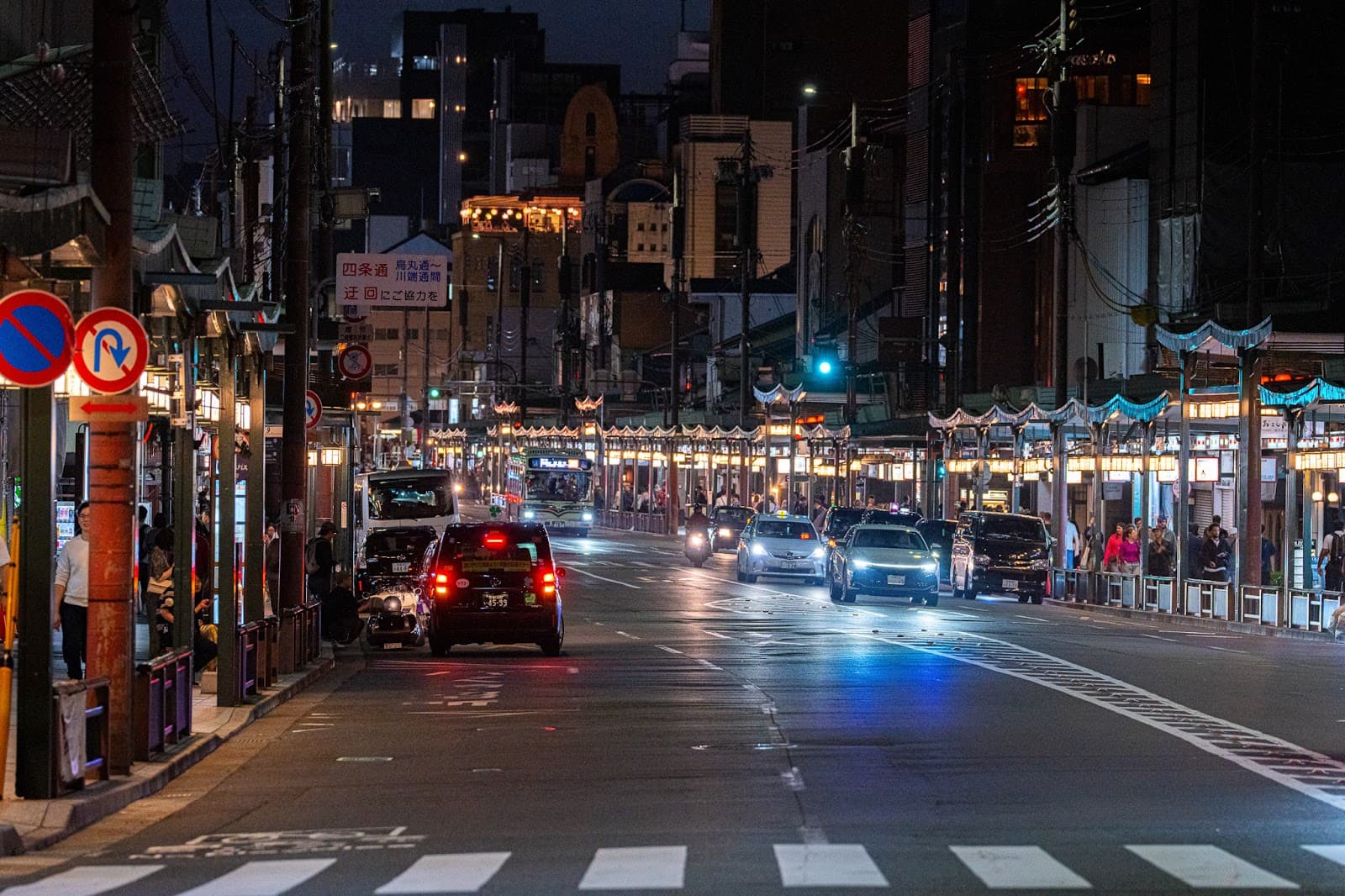
Kyoto's tourist areas present significant challenges. Gion's streets are narrow, uneven, and cobbled in places. Arashiyama has steep hills and unpaved areas. The Philosopher's Path, while beautiful, uses narrow gravel tracks.
Older residential areas across all cities often lack dropped kerbs. Side streets may have steps, drainage channels, or significant camber.
Rain creates additional hazards - Japanese streets can become very slippery. Many areas use polished stone that becomes treacherous when wet.
Toilets: Generally Excellent
Japan's public toilet infrastructure impresses. Most major stations, department stores, tourist sites, and parks have accessible toilets marked with the international wheelchair symbol. These "multipurpose toilets" typically include space for wheelchairs, grab bars, emergency call buttons, and baby-changing facilities.
They're usually clean and well-maintained. In Tokyo and Osaka, nearly every station has at least one accessible toilet. Smaller cities and towns have fewer, but convenience stores (Family Mart, Lawson, 7-Eleven) increasingly provide accessible facilities - ask at the counter.
Onsen (hot spring baths) rarely accommodate wheelchair users. The cultural practice of bathing with others in communal pools, combined with steps, slippery surfaces, and lack of adaptive equipment, makes them largely inaccessible. Some modern spa facilities offer private bathing rooms with equipment - research thoroughly before visiting.
Communication and Assistance
Language barriers affect accessibility. Most accessibility features lack English signage. Station staff in major cities have basic English, but explaining specific needs can prove difficult.
Carry a card explaining your requirements in Japanese. Your hotel can prepare this. Include phrases like "車椅子を使用しています" (I use a wheelchair) and "エレベーターはどこですか" (Where is the lift?).
Japanese people generally want to help but may seem hesitant due to language concerns. Being direct and specific works better than subtle requests. Point to what you need, use simple English words, or show your translation card.
Station staff will stop trains briefly if you need extra time boarding. Don't feel rushed - safety takes priority over schedule.
Practical Planning Strategies
Before You Travel
Contact the Japan Accessible Tourism Center (English support available). They provide route planning, accommodation recommendations, and site-specific accessibility information.
Book all accessible accommodation and transport before arriving. Japan's accessible options are limited - waiting until arrival means settling for suboptimal choices.
Consider hiring a local accessibility specialist for your first few days. Companies like Accessible Japan Tours offer guided introductions to transport systems, helping you build confidence before exploring independently.
Daily Route Planning
Plan each day around accessibility, not just sights. Choose three accessible attractions rather than six partially accessible ones. Quality over quantity reduces stress.
Allow extra time for everything. What takes 30 minutes for walking tourists might take 60 minutes when navigating lifts, finding accessible routes, and managing assistance.
Identify accessible restaurants before you're hungry. Many traditional restaurants have steps, narrow doorways, or raised seating areas. Modern shopping centres reliably offer accessible dining options.
Equipment and Supplies
Bring any specialized equipment you need. Wheelchair repair services exist in major cities, but finding specific parts takes time.
Power wheelchair users should carry adapters - Japan uses 100V power (North American plugs fit, but check voltage compatibility).
Consider a lightweight manual wheelchair as backup, even if you primarily use a power chair. Some locations (traditional areas, narrow shops) work better with manual chairs.
What to Expect Realistically
Accessible travel in Japan succeeds best when you adjust expectations. You won't see every temple's inner sanctum or walk every atmospheric alleyway. You will, however, experience efficient transport, clean facilities, considerate assistance, and excellent modern infrastructure.
Some travellers find Japan's accessibility gaps frustrating after experiencing its modern efficiency elsewhere. Others appreciate the working solutions that do exist, recognising that retrofitting centuries-old infrastructure presents genuine challenges.
Success comes from thorough planning, flexibility when plans change, and focusing on what works rather than what doesn't. Japan rewards preparation - the more you research specific routes and venues, the smoother your journey.
The country's accessibility continues improving. New regulations require public facilities to meet accessibility standards. More operators understand international expectations. Each year brings better solutions.
Approach Japan as it is - neither universally accessible nor impossibly difficult, but requiring informed planning and realistic expectations. Done thoughtfully, accessible travel in Japan offers remarkable experiences. The key lies in knowing what exists, what doesn't, and how to navigate both with confidence.