
 By Declan Barry
What to Eat in Fukuoka: Tonkotsu Ramen, Mentaiko and the Yatai Stalls
Fukuoka sits at the crossroads of Japanese food culture, where centuries of trade with Korea and China have shaped a distinctive local cuisine. This city on Kyushu's northern coast doesn't just serve good food - it's genuinely obsessed with it. Walk through Tenjin or Hakata Station at lunchtime and you'll see queues snaking from restaurant doors, locals debating the merits of different ramen shops, and yatai stalls setting up for their evening service.
Fukuoka
Fukuoka Tower
Modern skyscraper with an observation deck for panoramic city & bay views, plus dining & a lounge.
Open in Maps ↗The city's signature dishes have earned national recognition, but they taste entirely different when you eat them here. Tonkotsu ramen was born in Fukuoka, mentaiko (spicy cod roe) reaches its peak in local morning markets, and the yatai food stall culture continues to thrive when it's disappeared from most other Japanese cities. This guide walks you through what makes Fukuoka's food scene special and where to find the dishes that define it.
Tonkotsu Ramen: The Soul of Fukuoka
Fukuoka invented tonkotsu ramen, and locals take this responsibility seriously. The creamy, milky-white pork bone broth you'll find here differs markedly from versions elsewhere in Japan. Proper Hakata-style tonkotsu cooks pork bones for 12 to 18 hours at a rolling boil, breaking down collagen and marrow into a thick, emulsified soup that coats your spoon.
The noodles matter just as much as the broth. Hakata ramen uses ultra-thin, straight noodles that cook in under a minute. When you order, the server will ask how firm you want them - the local preference runs to kata (firm) or even barikata (very firm), with just a slight bite at the centre. This isn't just tradition; thin, firm noodles cut through the rich broth better than soft ones.
You'll also encounter kaedama, a uniquely Fukuoka practice. Order it after finishing your first portion of noodles, and the kitchen brings a fresh serving to add to your remaining broth. It costs around ¥100-150, and most locals order at least one. The system makes sense: the broth is precious, and finishing just the noodles first means your second serving stays perfectly firm.
Where to Try It
Ichiran operates 24 hours in multiple locations across Fukuoka, including near Tenjin Station and Canal City. Their solo booth system (you sit in partitions) might feel odd at first, but it lets you focus entirely on the bowl. You customise everything via a paper form - broth richness, garlic level, noodle firmness, spring onion amount. The Hakata branch near the river includes a museum showing how tonkotsu ramen developed.
ShinShin, near Tenjin underground shopping centre, draws enormous lunchtime queues but moves quickly. Their version includes a subtle sweetness in the broth and generous chashu (braised pork slices). Expect to wait 20-30 minutes during peak hours. Opens at 11:00 daily.
For a less touristy experience, head to Hakata Issou in the Gofukumachi area. This local favourite uses particularly thick broth and includes crispy fried garlic chips. The shop fills with regulars by 12:30, and they often sell out of broth by 14:00 on weekends. Closed Wednesdays.
Mentaiko: Spicy Cod Roe Done Right
Mentaiko appears on tables across Japan, but Fukuoka produces the original and best version. The city's proximity to Korea influenced this dish - mentaiko adapts Korean myeongnan jeot (salted pollock roe) using Japanese ingredients and techniques. Fukuoka makers cure Alaska pollock roe in a mixture that typically includes chilli, sake, and kelp, then age it for several days.
The result ranges from mildly spicy to genuinely fiery, depending on the producer. Quality mentaiko has distinct, intact roe sacs with a slight pop when you bite them. It should taste of the sea first, then chilli, then umami depth. Poor versions taste only of salt and heat.
You'll find mentaiko served several ways in Fukuoka. The simplest is straight over hot rice - the heat slightly melts the roe, creating a creamy coating. Pasta with mentaiko and butter has become a Fukuoka staple, blending the roe's saltiness with dairy richness. Many restaurants also offer mentaiko as a topping for other dishes or served with sake as an appetiser.
Where to Try It
Fukuya operates several shops around Fukuoka, including a large store near Hakata Station's Deitos food hall. They've produced mentaiko since 1949 and offer free samples of different spice levels. You can buy vacuum-packed portions (around ¥800-1,500 depending on size) that last several days outside the fridge - perfect for taking home.
Yanagibashi Rengo Market, a covered market ten minutes' walk from Nakasu-Kawabata Station, has multiple mentaiko vendors who'll prepare fresh portions while you wait. The prices run slightly lower than tourist areas, and you can compare different makers' styles. The market opens at 08:00; arrive before 10:00 for the best selection.
For mentaiko in restaurant form, Chikae in Daimyo specialises in mentaiko-topped dishes. Their signature offering combines fresh mentaiko with rice cooked in a stone pot, creating crispy bits at the bottom. They also serve excellent mentaiko pasta. Lunch sets cost around ¥1,200-1,500.
Yatai: Fukuoka's Street Food Stalls
Fukuoka maintains one of Japan's last thriving yatai cultures. These mobile food stalls set up each evening along the Naka River and in areas around Tenjin and Nakasu, serving simple dishes and drinks from tiny kitchens. Most cities eliminated yatai decades ago due to regulations, but Fukuoka preserved around 100 licensed stalls as part of the city's identity.
A typical yatai seats 8-12 people on stools around a counter, often under a canvas roof. The experience peaks in cooler months (October through April), when the stalls provide cosy warmth against the evening chill. Summer brings different pleasures - sitting along the river with a cold beer and grilled chicken skewers as the sun sets.
Yatai menus vary by stall, but most serve oden (vegetables and fish cakes in broth), yakitori (grilled chicken skewers), ramen, gyoza, and drinks. Ordering works informally - point at what looks good, or ask the owner for recommendations. Prices stay reasonable: most dishes cost ¥300-600, beers around ¥400-500. You'll typically spend ¥2,000-3,000 for food and a few drinks.
Where to Find Them
The Nakasu riverfront hosts the highest concentration of yatai. Walk along the river between Nakasu-Kawabata and Tenjin-Minami stations from about 18:30 onwards to see them setting up. The stalls fill quickly by 19:30 on weekends. Look for locals sitting down - that's usually a sign of good quality and fair prices.
Yamanaka-san's yatai near Watanabe-dori has operated for decades and welcomes tourists with basic English and a patient attitude. They serve excellent oden and make their own gyoza daily. The owner will explain dishes if you ask. Opens around 18:30, closed Sundays.
Tenjin area yatai cluster near Watanabe-dori Avenue and the police station. These tend to be slightly more tourist-friendly, with picture menus and English-speaking staff. The trade-off is sometimes higher prices and less authentic atmosphere, though the food quality remains solid.
Motsunabe: Offal Hot Pot
Motsunabe (beef or pork offal hot pot) exemplifies Fukuoka's preference for bold, rich flavours. This dish cooks intestines, tripe, and other organ meats in a soy or miso-based broth with cabbage, garlic chives, and chillies. When done properly, the offal becomes tender and slightly chewy, absorbing the soup's flavour whilst adding its own richness.
Don't let the organ meat put you off if you're hesitant. Fukuoka chefs prepare motsunabe with obsessive care, cleaning and pre-cooking the offal to remove any unpleasant flavours. What remains tastes deeply savoury without gaminess. The dish works best in autumn and winter, when you need something warming after walking through the city.
Most motsunabe restaurants operate on a course system. You'll start with appetisers, then the hot pot arrives on a portable burner. The server shows you how to add ingredients in sequence - garlic chives first, then cabbage, then the offal. After finishing the meat and vegetables, you add noodles or rice to the remaining broth for a final course.
Where to Try It
Yamaya in Hakata Station's dining floor serves quality motsunabe in English-menu-friendly surroundings. Their set courses start around ¥2,500 per person and include appetisers, the hot pot, and finishing noodles. Useful if you're jetlagged or pressed for time - you can walk directly from the shinkansen platform.
Oyama in the Daimyo neighbourhood has served motsunabe since 1965. They offer both soy and miso-based broths; the miso version includes a subtle sweetness that balances the offal's richness. Expect to spend ¥3,500-4,500 per person. Reservations recommended, especially on weekends. Some English spoken.
Mizutaki: Chicken Hot Pot
Mizutaki represents the gentler side of Fukuoka's food culture. This chicken hot pot simmers whole chicken pieces in water (hence the name) with minimal seasoning, creating a delicate, milky broth from the chicken's collagen and fat. You dip the cooked chicken and vegetables in ponzu (citrus soy sauce) or yuzu kosho (citrus chilli paste).
The dish originated in Fukuoka during the Meiji period, adapting Chinese chicken soups to Japanese tastes. Unlike motsunabe's bold flavours, mizutaki focuses on ingredient quality and subtle seasoning. High-end restaurants use specific chicken breeds and age their ponzu for months.
Mizutaki works wonderfully in any season, though locals particularly enjoy it in winter. The hot pot provides warmth without the heaviness of ramen or motsunabe, making it suitable for lighter appetites or before a night out in Nakasu.
Where to Try It
Hakata Hanamidori operates several locations around Fukuoka, with a large branch in Tenjin. Their mizutaki set (around ¥3,800 per person) includes appetisers, the hot pot, and their signature chicken meatballs. The quality stays consistent, and they have English menus. Good for first-time visitors to Fukuoka who want reliable quality.
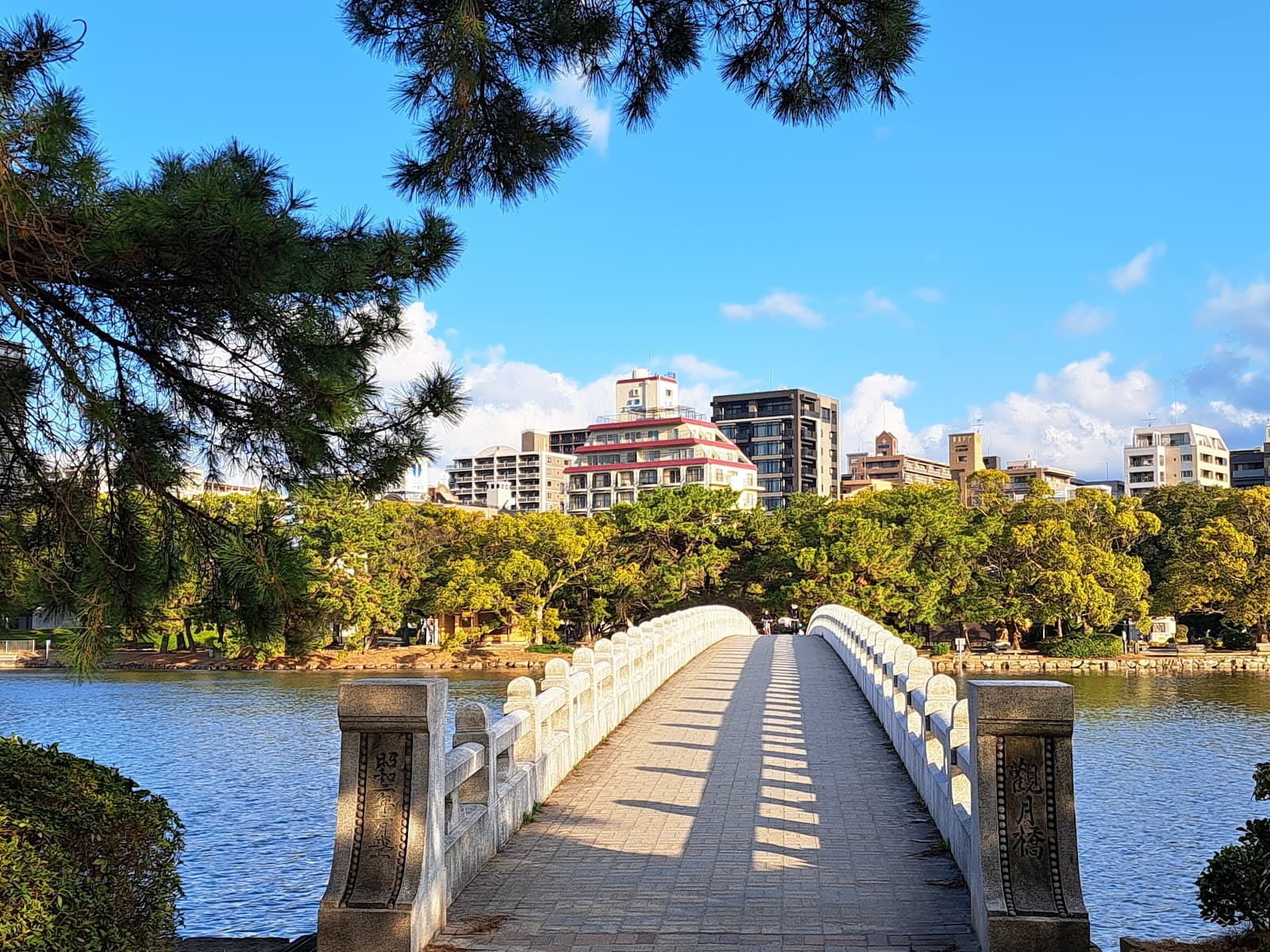
Suigetsu near Ohori Park has served mizutaki since 1923. They occupy a traditional Japanese building with private rooms and garden views. The chicken comes from their own suppliers, and the ponzu recipe hasn't changed in decades. Expect to spend ¥6,000-8,000 per person. Reservations essential. Limited English, but staff work hard to explain dishes.
Fukuoka
Ohori Park
City park featuring a large lake, waterfront exercise paths, boat rentals & a coffee shop.
Open in Maps ↗Practical Information
Most Fukuoka restaurants stop serving last orders between 21:00 and 22:00, earlier than Tokyo or Osaka. The yatai stalls run later, usually until midnight or 01:00. If you're arriving on an evening shinkansen, plan accordingly.
Many popular spots don't accept reservations or credit cards. Carry cash - most meals cost ¥1,000-2,000 per person at casual places, ¥3,000-5,000 at mid-range restaurants.
The Deitos food hall in Hakata Station basement provides an excellent introduction to Fukuoka food if you're short on time. Multiple vendors serve ramen, mentaiko, and other specialities in a clean, well-organised setting. Open until 23:00 daily.
JRD Food Street, a newer development near Hakata Station, has become popular with locals. The covered alley contains about 20 small restaurants serving everything from yakitori to craft beer. Livelier than Deitos, with more atmosphere.
Fukuoka's food culture rewards exploration and repeat visits. Don't feel obligated to see everything in one trip. Pick a few dishes that interest you, take your time with them, and save the rest for your next visit. The city's restaurants will still be here, still serving the same dishes to the same exacting standards.