
 By Declan Barry
Tokyo for First-Time Visitors: What to Actually Expect
Tokyo isn't what most people imagine before they arrive. The world's largest metropolitan area defies easy description, and that disconnect between expectation and reality can make or break your first visit. This guide cuts through the mythology to tell you what Tokyo actually feels like on the ground.
Tokyo
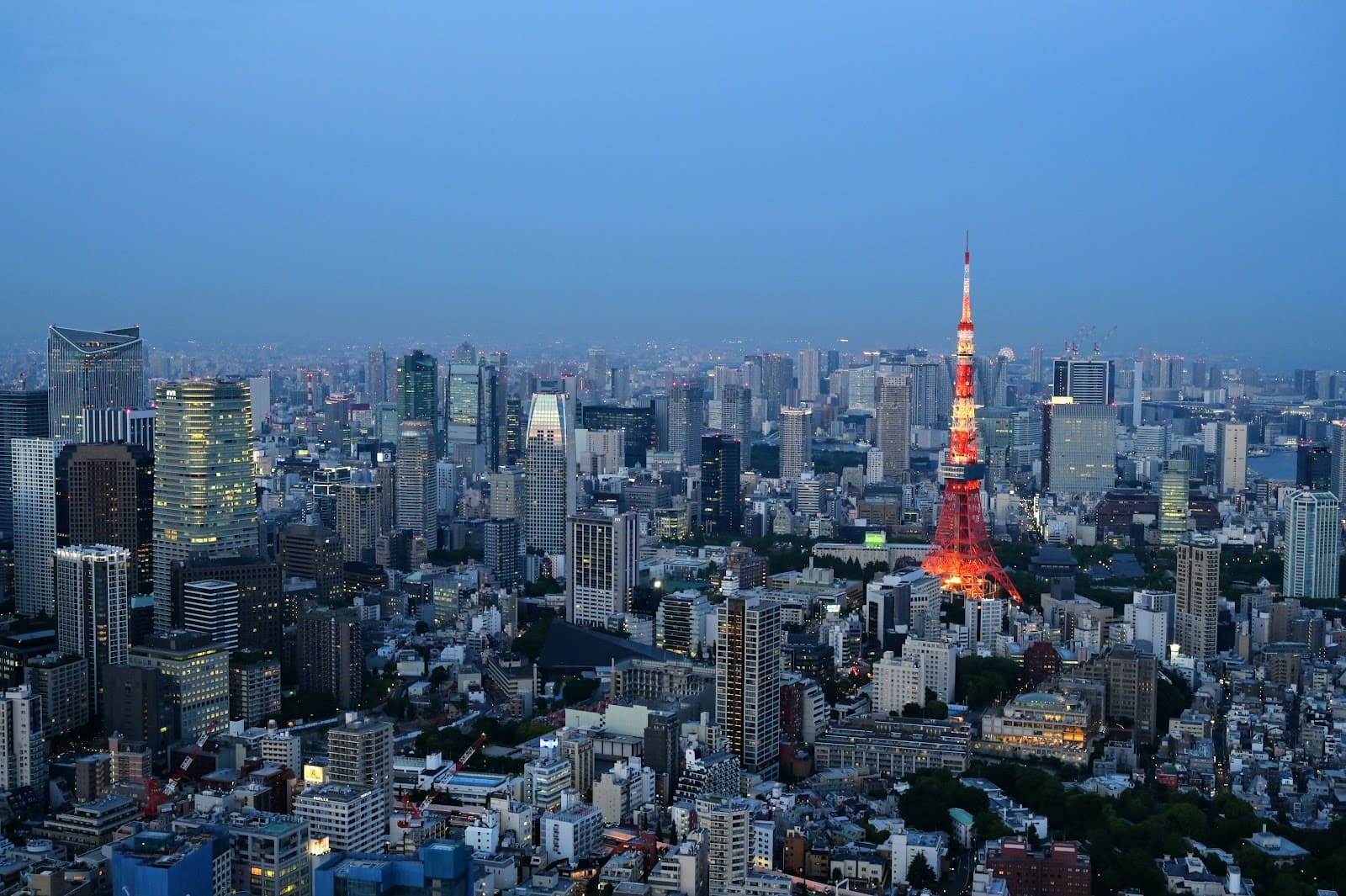
Tokyo Tower
Reminiscent of the Eiffel Tower, this landmark features observation areas & other attractions.
Open in Maps ↗The Size Won't Overwhelm You (Because It's Not Like Other Big Cities)
Tokyo sprawls across 2,194 square kilometres with 14 million people in the city proper and 37 million in the greater metro area. Those numbers sound terrifying, but here's what first-time visitors consistently discover: Tokyo doesn't feel overwhelming because it functions as a collection of distinct neighbourhoods, each with its own train station hub.
You won't experience Tokyo as one enormous entity. Instead, you'll hop between specific areas: Shibuya for one afternoon, Asakusa the next morning, Harajuku after that. The Yamanote Line - the green circle line connecting major stations - turns Tokyo into a necklace of separate experiences rather than one massive sprawl.
Most first-time visitors comfortably navigate 5-8 neighbourhoods during a week-long stay. That's not scratching the surface, that's experiencing Tokyo the way residents do: one district at a time.
Your Hotel Will Be Smaller Than You're Used To
That ¥12,000-per-night business hotel room in Shinjuku will measure 14-18 square metres. Your ¥8,000 capsule hotel in Akihabara provides a sleeping pod 1 metre high by 2 metres long. Even upmarket hotels rarely exceed 25 square metres for standard rooms.
This isn't corner-cutting - it's simply Tokyo. Space costs money here, and hotels allocate that space where it matters: spotlessly clean bathrooms, excellent beds, climate control that actually works, and locations within walking distance of major stations.
First-time visitors initially baulk at room photos, then realise these spaces function perfectly well. You're not spending daylight hours in your hotel anyway. You're out exploring, and your room serves as a comfortable, quiet base for sleeping and showering.
Practical tip: Choose hotels within 500 metres of a Yamanote Line station. The convenience outweighs an extra few square metres of floor space.
Train Stations Aren't Confusing, They're Just Big
Shinjuku Station - the world's busiest - serves 3.6 million passengers daily. First-time visitors often cite station navigation as their primary pre-arrival anxiety. Here's the reality: Tokyo stations aren't complicated, they're just enormous shopping centres with trains underneath.
Every major station uses the same logic. Train platforms sit at the bottom, usually several levels down. Ticket gates create a dividing line between the fare-paid and non-paid areas. Above ground, you'll find numbered exits - often 30 or more at major hubs like Tokyo Station or Ikebukuro.
Your first Shinjuku Station experience will take 10 minutes to navigate. Your second will take 4 minutes. By day three, you'll walk these stations on autopilot.
The Google Maps app provides real-time directions including which train car to board for convenient transfers. That alone eliminates most station stress.
English Signage Exists Where It Matters
All train stations display English alongside Japanese. Every train announcement includes English. Restaurant menus in tourist-heavy areas (Shibuya, Shinjuku, Asakusa) feature English descriptions or at minimum, photos of every dish.
Outside tourist zones, English becomes scarce but not absent. Convenience stores use picture-heavy packaging. Vending machines show product photos. Train ticket machines offer English-language options.
The language barrier creates genuine challenges in specific situations: explaining dietary requirements, asking for directions in residential neighbourhoods, or shopping in local supermarkets. But for the core activities - trains, major attractions, popular restaurants - English support suffices for first-time visitors.
Translation apps bridge most remaining gaps. Point your phone camera at any menu, and Google Translate renders it into English in real-time.
Cash Still Matters More Than You Expect
Tokyo is not a cashless city. Many restaurants, especially smaller establishments, accept cash only. Neighbourhood shops, local cafes, shrine donation boxes, some taxi drivers, ticket machines, and temple admission fees all require physical yen.
Expect to withdraw ¥20,000-30,000 weekly from 7-Eleven or post office ATMs (these reliably accept foreign cards). Credit cards work at hotels, department stores, major restaurants, and convenience store chains. IC cards like Suica (preloaded train cards) cover most transport and many vending machines.
But that amazing ramen shop in Nakano? Cash. The tempura counter in Asakusa's backstreets? Cash. The vintage clothing store in Shimokitazawa? Possibly cash only.
First-time visitors who arrive expecting to tap their phone for everything spend their first afternoon hunting for working ATMs. Don't be that person.
The Food Is Better and Cheaper Than Your Home Country's Japanese Restaurants
A proper sushi breakfast at Tsukiji Outer Market costs ¥3,000. A excellent bowl of ramen in Ikebukuro runs ¥950. Conveyor belt sushi in Shibuya charges ¥100 per plate. Michelin-starred restaurants offer lunch sets for ¥3,500.
Tokyo's food delivers consistent quality at prices that make eating out three meals daily financially reasonable. First-time visitors expecting expensive dining discover that neighbourhood restaurants targeting local workers prioritise value over margins.
The quality gap between Tokyo and international Japanese restaurants exists because ingredient access changes everything. Fish sold at Tokyo's markets that morning appears on lunch plates by noon. Rice comes from local farms. Seasonal vegetables follow actual Japanese growing seasons, not airfreight schedules.
You'll eat better in Tokyo not because chefs are necessarily more skilled (though many are), but because the entire supply chain optimises for freshness and seasonality.
Walking Happens More Than You Think
Tokyo's train system famously goes everywhere, yet you'll still walk 15,000-20,000 steps daily. Stations aren't always close to your actual destination. Temples sit up hillsides. Shopping districts sprawl across multiple blocks. Many of Tokyo's most interesting neighbourhoods reveal themselves through walking, not training.
Shimokitazawa's vintage shops cluster along narrow lanes connecting multiple stations. Yanaka's old Tokyo atmosphere requires wandering residential streets. Even Shibuya - centred on that famous crossing - spreads across an area requiring genuine walking to properly explore.
Comfortable walking shoes aren't a suggestion, they're essential equipment. Those stylish-but-stiff shoes you packed? They'll give you blisters by day two.
Crowds Exist But Concentrate at Specific Times and Places
Shibuya Crossing at 8:30am on a Tuesday: packed. The same crossing at 11am: manageable. Meiji Shrine at 10am on Saturday: crowded. The same shrine at 4pm on Wednesday: peaceful.
Tokyo's crowds pulse in predictable patterns. Morning and evening rush hours (7:30-9am and 5:30-7pm) pack trains uncomfortably full. Weekends bring crowds to shopping districts. Lunch hours (12-1pm) fill restaurants.
First-time visitors who adjust timing by even 30 minutes experience completely different crowd levels. Visit Senso-ji Temple at 7am rather than 11am, and you'll photograph the main hall without fifty people in every shot. Eat lunch at 11:30am or 1:30pm rather than noon, and that ramen shop has empty seats.
The Cleanliness Is Real, But So Is the Lack of Bins
Tokyo is genuinely, remarkably clean. Streets lack litter. Trains don't smell. Public spaces stay spotless. This isn't exaggeration or selective observation - Tokyo maintains cleaning standards that surprise even visitors from other clean cities.
The catch: public rubbish bins essentially don't exist outside train stations and convenience stores. Historical reasons involving a 1995 terrorism incident led to bin removal, and the policy stuck.
First-time visitors initially struggle with this. You buy a drink from a vending machine and finish it while walking. Now what? The solution: convenience stores accept rubbish even from non-customers. Alternatively, carry a small plastic bag for rubbish until you find proper disposal.
The system works because locals plan around it. You will too, usually by day two.
Quiet Isn't Just Polite, It's Enforced by Social Pressure
Phones don't ring on trains - they're set to silent mode. Conversations happen in hushed tones. Eating while walking is uncommon (except in specific festival or street food contexts). Loud behaviour draws stares.
This isn't hostility toward foreigners, it's standard expectation for everyone. First-time visitors often feel self-conscious about violating unspoken rules they didn't know existed. The actual standard is simpler than it seems: match the volume of people around you.
On trains, that means quiet conversations or silence. In restaurants, normal speaking voices. In residential streets after 9pm, quieter voices. You'll notice the ambient sound level drops significantly compared to other major cities. Matching that level constitutes good manners.
Convenience Stores Are Actually Convenient
Family Mart, 7-Eleven, and Lawson stock properly good food. Not just edible snacks, but actual meals: fresh sandwiches, rice balls, salads, seasonal hot foods, decent coffee. These aren't service stations selling crisps - they're legitimate food sources.
Convenience stores also provide: ATMs accepting foreign cards, clean toilets (not all, but many), ticket printing services, postal services, bill payment, photocopying, and seasonal limited-edition products worth buying.
First-time visitors initially dismiss konbini as emergency options, then discover locals shop there by choice. A ¥350 convenience store breakfast (rice ball, coffee, fruit) isn't settling for less, it's choosing efficient quality.
Safety Is Not Exaggerated
Tokyo consistently ranks as one of the world's safest major cities, and that reputation reflects daily reality. Women travel alone on trains at midnight. Phones sit unattended on cafe tables. Lost wallets return with cash intact.
This doesn't mean zero crime exists - it doesn't - but violent crime rates sit remarkably low. Pickpocketing happens rarely. Tourist scams are uncommon. Walking through any neighbourhood at any hour generally poses minimal risk.
First-time visitors from cities requiring constant awareness find Tokyo's safety genuinely disorienting at first. That unattended bag on the station platform? Nobody's stealing it. The phone left visible in your jacket pocket? Almost certainly safe. This reliability lets you relax in ways other major cities don't permit.
Seasonal Weather Matters More Than Expected
Tokyo's climate swings from humid summers (June through September) where 35°C days combine with 70% humidity, to genuinely cold winters (December through February) where temperatures regularly drop to 5°C. Spring cherry blossoms (late March to early April) bring perfect weather and massive crowds. Autumn (October to November) delivers comfortable temperatures and excellent visibility.
First-time visitors underestimate summer humidity. That forecast showing 32°C in July feels like 38°C because of moisture-heavy air. Autumn and spring offer significantly more comfortable sightseeing conditions.
Winter provides the best balance: fewer crowds, clear skies for viewing Mount Fuji, comfortable indoor heating, and no rain-related disruptions. Most first-time visitors default to cherry blossom season, but January through February often provides better actual experiences despite lacking the famous pink trees.
What First-Time Visitors Get Wrong
The biggest misconception: Tokyo is futuristic. Reality: Tokyo mixes cutting-edge technology with deeply traditional systems. Yes, toilets have more buttons than your TV remote. But you'll also hand-write your name on paper forms, and many businesses still use fax machines.
Second misconception: Everything requires extensive planning. Reality: Tokyo rewards spontaneity. The train system makes impromptu destination changes effortless. Restaurants rarely require reservations outside high-end establishments. Most attractions accept walk-in visitors.
Third misconception: A week isn't enough time. Reality: A week provides excellent Tokyo exposure. You won't see everything - nobody does - but you'll experience the city's essential character across multiple neighbourhoods. Two weeks is luxury, not necessity.
What Actually Makes Tokyo Special
Tokyo's defining characteristic isn't size, technology, or food quality - it's functional density. The city packs extraordinary variety into accessible spaces. World-class museums sit two train stops from anime shops, which sit three stops from ancient temples, which sit five stops from ultramodern shopping centres.
This density means discovery happens constantly. You'll stumble upon excellent coffee shops in residential Nakameguro. Find incredible vintage clothing in commercial-looking Shimokitazawa. Discover peaceful shrine gardens in busy Harajuku.
First-time visitors often plan to "see Tokyo", then discover Tokyo isn't something you see - it's something you explore, one surprise at a time. That's the actual Tokyo experience, and it's better than whatever you're imagining now.