
 By Declan Barry
Shinsekai: Osaka's Retro Downtown and Kushi-Katsu Culture
Step into Shinsekai and you'll feel like you've travelled back to Osaka's Showa era. This wonderfully retro neighbourhood, with its iconic Tsutenkaku Tower piercing the sky and neon signs glowing at every turn, offers an authentic slice of old-town Osaka that's increasingly rare in modern Japan. More than just a tourist attraction, Shinsekai is where locals come for affordable comfort food, especially the neighbourhood's signature dish: kushi-katsu, deep-fried skewers eaten with a strict no-double-dipping rule.
Osaka
Shinsekai
Bustling, colorful district created in 1912 with a 103-m tower, restaurants & souvenir shops.
Open in Maps ↗Osaka
Shinsekai Market
Cheery, old-school covered shopping street lined with food, clothing & souvenir vendors.
Open in Maps ↗Osaka
Osaka Castle
Revered castle dating to 1597 & since rebuilt, featuring gardens & a museum with varied exhibits.
Open in Maps ↗Osaka
Tsutenkaku
Famous for its neon lights, this landmark features an observation deck open to the public.
Open in Maps ↗Understanding Shinsekai's history
Shinsekai, which translates to "New World", was developed in 1912 following the National Industrial Exhibition. The neighbourhood was designed with two distinct areas: the northern section modelled after Paris, and the southern section inspired by Coney Island in New York. The original Tsutenkaku Tower, built in 1912, symbolised Osaka's modernisation and ambition.
The area thrived until World War II, when the original tower was dismantled for its steel. Post-war Shinsekai fell into decline, developing a somewhat rough reputation. However, the 1956 reconstruction of Tsutenkaku Tower sparked gradual renewal. Today, whilst retaining its working-class character and delightfully shabby-chic aesthetic, Shinsekai has become one of Osaka's most photographed neighbourhoods, beloved for its authenticity and exceptional food scene.
The area's revival hasn't polished away its character. You'll still find elderly locals playing shogi in the small parks, pachinko parlours with their distinctive clattering sounds, and traditional bathhouses (sento) serving neighbourhood residents. This genuine lived-in quality makes Shinsekai special compared to more sanitised tourist districts.
Getting to Shinsekai
Shinsekai sits in Osaka's Naniwa Ward, just south of Tennoji. The neighbourhood is exceptionally well-connected:
Osaka
Tennoji Park
Landscaped city park offering lawns, flowerbeds, paved areas, fountains & cafes.
Open in Maps ↗Nearest stations:
- Dobutsuen-mae Station (Midosuji Line and Sakaisuji Line) - the most convenient, placing you right at the entrance
- Ebisucho Station (Sakaisuji Line) - a five-minute walk to the eastern side
- Shin-Imamiya Station (JR Loop Line, Nankai Main Line) - eight minutes on foot
- Tennoji Station (JR, subway, Kintetsu) - fifteen minutes' walk through Tennoji Park
From Osaka/Umeda Station, take the Midosuji Line south to Dobutsuen-mae (around 15 minutes, ¥280). From Namba, it's just three stops south on the same line (six minutes, ¥230).
Navigating the neighbourhood
Shinsekai is compact and best explored on foot. The main area covers roughly 400 metres from north to south and 300 metres east to west - easily walkable in 20 minutes, though you'll want several hours to properly explore.
The neighbourhood has three main areas:
Janjan Yokocho - The covered arcade running east-west is Shinsekai's spine. This narrow alley packed with kushi-katsu restaurants, standing bars, and retro game centres embodies the district's atmosphere. The name comes from the shamisen music that once echoed through the arcade.
The Tsutenkaku area - The blocks surrounding the tower contain a mix of restaurants, souvenir shops, and quirky attractions. Look up to appreciate the dense tangle of neon signs and advertising banners creating a canyon effect.
The northern edges - Where Shinsekai blends into Tennoji, you'll find the neighbourhood's traditional bathhouses, local shops, and small shrines that serve residents rather than visitors.
Most restaurants and attractions cluster along the main streets, but don't hesitate to explore the side alleys where you'll discover tiny standing bars and neighbourhood shops.
Tsutenkaku Tower: the neighbourhood's symbol
The 103-metre Tsutenkaku Tower dominates Shinsekai's skyline. Whilst not Osaka's tallest structure, it's arguably the city's most beloved landmark.
The observation deck at 91 metres (¥900 for adults, open 10:00-20:00 daily) provides excellent views across southern Osaka, stretching to Osaka Bay on clear days. The tower contains a small museum about Shinsekai's history on lower floors, and you'll encounter Billiken, the smiling good-luck deity whose statue has become synonymous with the neighbourhood. Rubbing Billiken's feet supposedly brings good fortune - the golden patina on the statue's feet shows how many visitors have tried their luck.
The tower is especially photogenic after dark when its LED lights illuminate in changing colours. The surrounding streets glow with neon, creating that classic Blade Runner-esque aesthetic that photographers love.
Practical tip: The view from street level, looking up at the tower framed by retro signage, often makes better photographs than the view from the top. Save the entrance fee if you're not particularly interested in views and spend it on more kushi-katsu instead.
Understanding kushi-katsu culture
Kushi-katsu are skewered and deep-fried foods - meat, seafood, and vegetables coated in breadcrumbs and fried until golden. What makes Shinsekai's kushi-katsu special is the communal sauce-dipping culture and the sheer variety available.
The golden rule: never double-dip your kushi-katsu in the communal sauce. Every table has a pot of Worcestershire-based sauce. Dip your skewer once before eating, or use the provided cabbage leaves to scoop sauce onto already-bitten skewers. Breaking this rule is genuinely taboo, not mere tourist guidance.
Typical skewers include:
- Beef (various cuts)
- Pork
- Chicken
- Prawns
- Quail eggs
- Lotus root
- Asparagus wrapped in pork
- Mochi (crispy outside, molten inside)
- Cheese
- Various mushrooms
Prices range from ¥100-300 per skewer. Most diners order 10-15 skewers plus rice or cabbage on the side. Budget ¥2,000-3,000 per person for a satisfying meal with drinks.
Where to eat kushi-katsu
Kushikatsu Daruma - The most famous chain, with several branches in Shinsekai. The main shop near Tsutenkaku often has queues, but service is efficient. Daruma offers an English menu and serves around 40 different skewers. The set menus (¥1,800-2,500) provide good variety for first-timers. Expect to wait 15-30 minutes during peak dinner hours (18:00-20:00).
Yokozuna - Less touristy than Daruma, with excellent quality and slightly lower prices. The atmosphere feels more local, and the chef personally recommends seasonal specials. Located in Janjan Yokocho's eastern section.
Tennoji Kushikatsu Yairo - Known for creative variations like avocado kushi-katsu and camembert cheese. Slightly upmarket compared to traditional shops, with prices around ¥200-400 per skewer, but the quality justifies the cost.
Standing bars in Janjan Yokocho - For the most authentic experience, try the tiny standing-only bars where locals drink and snack. Most don't have English menus, but pointing at what other customers are eating works perfectly. Expect to pay ¥1,000-1,500 for drinks and several skewers.
Ordering strategy: Start with standard items (beef, pork, prawn) to understand the baseline, then experiment with unusual offerings. Pace yourself - the skewers are small but filling, and the joy lies in trying variety rather than gorging on quantities.
Beyond kushi-katsu: other Shinsekai foods
Whilst kushi-katsu dominates, Shinsekai offers other Osaka specialities:
Doteyaki - Beef tendons and offal simmered in sweet miso sauce, traditionally eaten at standing bars with sake or beer. This working-class favourite pairs perfectly with alcohol.
Horumon-yaki - Grilled offal, especially popular at small yakitori-style restaurants. More common in the streets around Shin-Imamiya Station.
Traditional sweets - Several shops sell warabi-mochi, dango, and other Japanese sweets. Perfect for dessert after savoury skewers.
The neighbourhood also has numerous cheap drinking establishments. A large bottle of beer typically costs ¥500-700, and highballs (whisky and soda) around ¥400. Many places operate as tachinomi-ya (standing bars) where locals stop for quick drinks after work.
Other attractions and activities
Spa World - This massive onsen complex near Tsutenkaku offers themed baths from different countries (European zone, Asian zone) across multiple floors. Entry costs ¥1,500 for three hours. The facility includes saunas, relaxation areas, and restaurants. Open 24 hours, it's popular with late-night visitors and those needing economical accommodation (overnight stay costs ¥3,000-4,000).
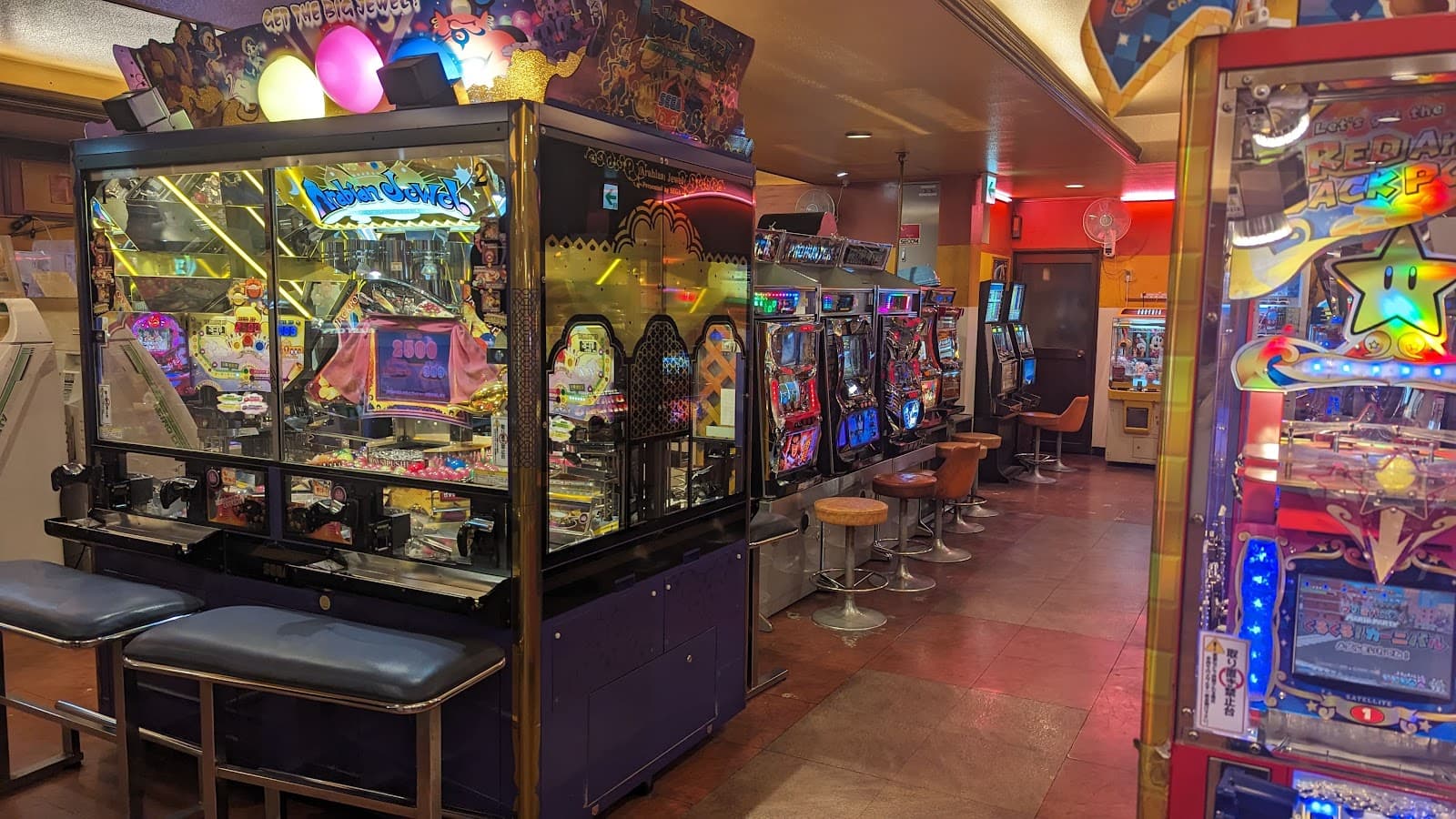
Retro game centres - Janjan Yokocho contains several classic game centres with vintage arcade machines, shogi parlours, and mahjong rooms. Some charge by the hour (¥500-800), offering unlimited play on old arcade games. Fascinating for gaming history enthusiasts.
Billiken statues - Beyond the famous one in Tsutenkaku Tower, hunt for Billiken statues throughout Shinsekai. Shops, restaurants, and street corners all feature variations of this smiling good-luck figure.
Street photography - Shinsekai is a photographer's paradise, especially in evening and night when neon signs create dramatic lighting. The dense visual chaos - layered signs, power lines, and retro architecture - embodies a distinctly Japanese urban aesthetic.
Timing your visit
Shinsekai transforms throughout the day:
Morning (08:00-11:00) - The neighbourhood is quiet, with most restaurants closed. Good for photography without crowds, and you can see residents going about their daily lives. Local cafés near Shin-Imamiya serve breakfast sets.
Afternoon (12:00-17:00) - Restaurants begin opening around 11:30-12:00. This is the best time to avoid queues at popular spots whilst still experiencing the full atmosphere. Natural light suits photography better than artificial lighting.
Evening (17:00-21:00) - Peak time when Shinsekai truly comes alive. Neon signs glow, restaurants fill with locals and tourists, and the energy peaks. Expect queues at popular restaurants between 18:00-20:00. The neighbourhood is most photogenic in the blue hour (just after sunset) when artificial lights balance with remaining daylight.
Late night (21:00 onwards) - Many restaurants close around 22:00-23:00, but bars and standing establishments remain open later. The crowd thins, leaving mostly locals. Some 24-hour establishments serve late-night visitors.
Practical considerations
Budget: Allocate ¥3,000-5,000 per person for a thorough Shinsekai experience including kushi-katsu dinner, drinks, and potentially Tsutenkaku Tower entrance.
Time needed: Three to four hours allows comfortable exploration, dinner, and atmosphere-soaking. Serious food enthusiasts might spend an entire evening hopping between different kushi-katsu restaurants and standing bars.
Language: English menus are common at major restaurants like Daruma, but smaller establishments may have Japanese-only menus. Many places display plastic food models - pointing works universally. Staff at tourist-focused shops speak basic English.
Safety: Despite its historic rough reputation, modern Shinsekai is very safe for tourists. The area is well-policed and busy until late. Use normal urban caution with belongings and you'll have no problems.
Accessibility: The neighbourhood's narrow streets and older buildings mean some areas are challenging for wheelchair users. Major restaurants like Daruma have ground-floor access, but many smaller establishments involve steps.
Combining Shinsekai with nearby attractions
Shinsekai's location makes it easy to combine with other southern Osaka attractions:
Tennoji - Immediately north, featuring Tennoji Park, Shitennoji Temple (Japan's oldest officially-administered temple), and Abeno Harukas (Japan's tallest building with an observation deck at 300 metres). Walk between Tennoji and Shinsekai in 10-15 minutes.
Osaka
Abeno Harukas
Osaka's tallest building features an observation deck, a department store, an art museum & a hotel.
Open in Maps ↗Sumiyoshi Taisha - One of Osaka's most important shrines, 15 minutes away via the Nankai Line from Shin-Imamiya Station. The distinctive arched bridge and traditional architecture provide beautiful contrast to Shinsekai's urban energy.
Osaka Bay area - Shin-Imamiya Station connects to the Nankai Line, which runs to Namba (five minutes) and continues to Osaka Bay's waterfront attractions.
Suggested half-day itinerary: Morning at Shitennoji Temple, lunch in Tennoji, afternoon walk through Tennoji Park to Shinsekai, early dinner of kushi-katsu, evening photography as lights come on, and finish with drinks at a standing bar in Janjan Yokocho.
Final thoughts
Shinsekai offers something increasingly rare in modern Japan: a neighbourhood that has retained its working-class character whilst welcoming visitors. The kushi-katsu culture provides an accessible, delicious introduction to Osaka's food scene, whilst the retro atmosphere delivers visual interest and photographic opportunities at every turn.
Come hungry, bring your camera, embrace the slightly chaotic energy, and remember - never double-dip that skewer. Shinsekai rewards visitors who approach it with curiosity rather than expectations of polish. This is Osaka at its most genuine, where locals and travellers share tables, exchange nods over excellent fried food, and collectively celebrate the joy of unpretentious eating and drinking.
The neighbourhood's authenticity is its greatest asset. Whilst Tokyo polishes its traditional districts into museum pieces and Kyoto carefully preserves its heritage, Shinsekai simply carries on being itself - a little rough around the edges, welcoming, and absolutely delicious.