
 By Declan Barry
Nikko Tosho-gu: A Complete Guide to Japan's Most Ornate Shrine Complex
Nestled in the mountains of Tochigi Prefecture, Tosho-gu Shrine stands as Japan's most elaborately decorated shrine complex. This UNESCO World Heritage site, completed in 1617, serves as the final resting place of Tokugawa Ieyasu, the founder of the Tokugawa shogunate that ruled Japan for over 250 years. Unlike the minimalist aesthetic found at most Japanese shrines, Tosho-gu dazzles visitors with its riot of colour, intricate carvings, and lavish gold leaf - a deliberate display of the Tokugawa clan's power and wealth.
Visiting Tosho-gu requires proper planning. The shrine sits approximately two hours north of Tokyo, making it an ideal day trip or overnight excursion. This guide covers everything you need to know to make the most of your visit to this extraordinary site.
Getting to Nikko and Tosho-gu
From Tokyo, take the Tobu Nikko Line from Asakusa Station directly to Tobu Nikko Station (approximately 1 hour 50 minutes, ¥1,360 with the rapid train). Alternatively, the JR Nikko Line runs from Utsunomiya, connecting to the Tohoku Shinkansen. The JR option costs more but is covered by the Japan Rail Pass.
From Tobu Nikko Station or JR Nikko Station (they're adjacent), you have three options to reach the shrine area. Local buses depart every 10-15 minutes bound for Chuzenji Onsen or Yumoto Onsen - alight at Shinkyo Bridge (¥310, 7 minutes). Taxis cost approximately ¥1,000 for the 2-kilometre journey. However, the 30-minute uphill walk through Nikko's charming streets offers an atmospheric introduction to the area.
Nikko
Shinkyō Bridge
Black-&-red bridge with a storied past, framed by dense forest known for its striking fall colors.
Open in Maps ↗The walk takes you past traditional shops, restaurants, and eventually through towering cryptomeria trees that have lined the approach to Tosho-gu for centuries. These ancient Japanese cedars create a cathedral-like atmosphere, their straight trunks forming natural columns that prepare visitors for the architectural splendour ahead.
Admission and Opening Hours
Tosho-gu opens daily from 8:00 to 17:00 (April to October) and 8:00 to 16:00 (November to March). Admission costs ¥1,300 for adults, which includes access to the main shrine buildings. An additional ¥1,000 grants entry to the Museum of Art (Tosho-gu Museum), though this is optional depending on your interest level and time constraints.
Purchase tickets at the entrance booth near the stone torii gate. English pamphlets are available and highly recommended - they provide context for the complex symbolism throughout the shrine. Audio guides in English cost ¥500 and run approximately 60 minutes.
Arrive at opening time during peak seasons (April-May and October-November) to avoid tour groups. The shrine receives over two million visitors annually, with weekends and Japanese public holidays seeing the heaviest crowds. Weekday mornings, particularly Tuesday through Thursday, offer the most peaceful experience.
The Shrine Complex Layout
Tosho-gu comprises over 40 structures spread across its hillside precinct. The walking route naturally flows upward through increasingly sacred spaces, following traditional shrine design principles.
Sacred Stable and the Three Wise Monkeys
Your first major stop is the Sacred Stable, home to the shrine's ceremonial horses. This building holds Tosho-gu's most famous carving: the Three Wise Monkeys. These three figures - covering their eyes, ears, and mouth respectively - embody the principle "see no evil, hear no evil, speak no evil".
The stable features eight panels depicting monkeys in various life stages, offering moral lessons through visual storytelling. Many visitors focus solely on the famous trio, but examining all eight panels reveals a complete philosophy of virtuous living. The carvings date to the early 17th century and show remarkable preservation.
Yomeimon Gate: A Masterpiece of Detail
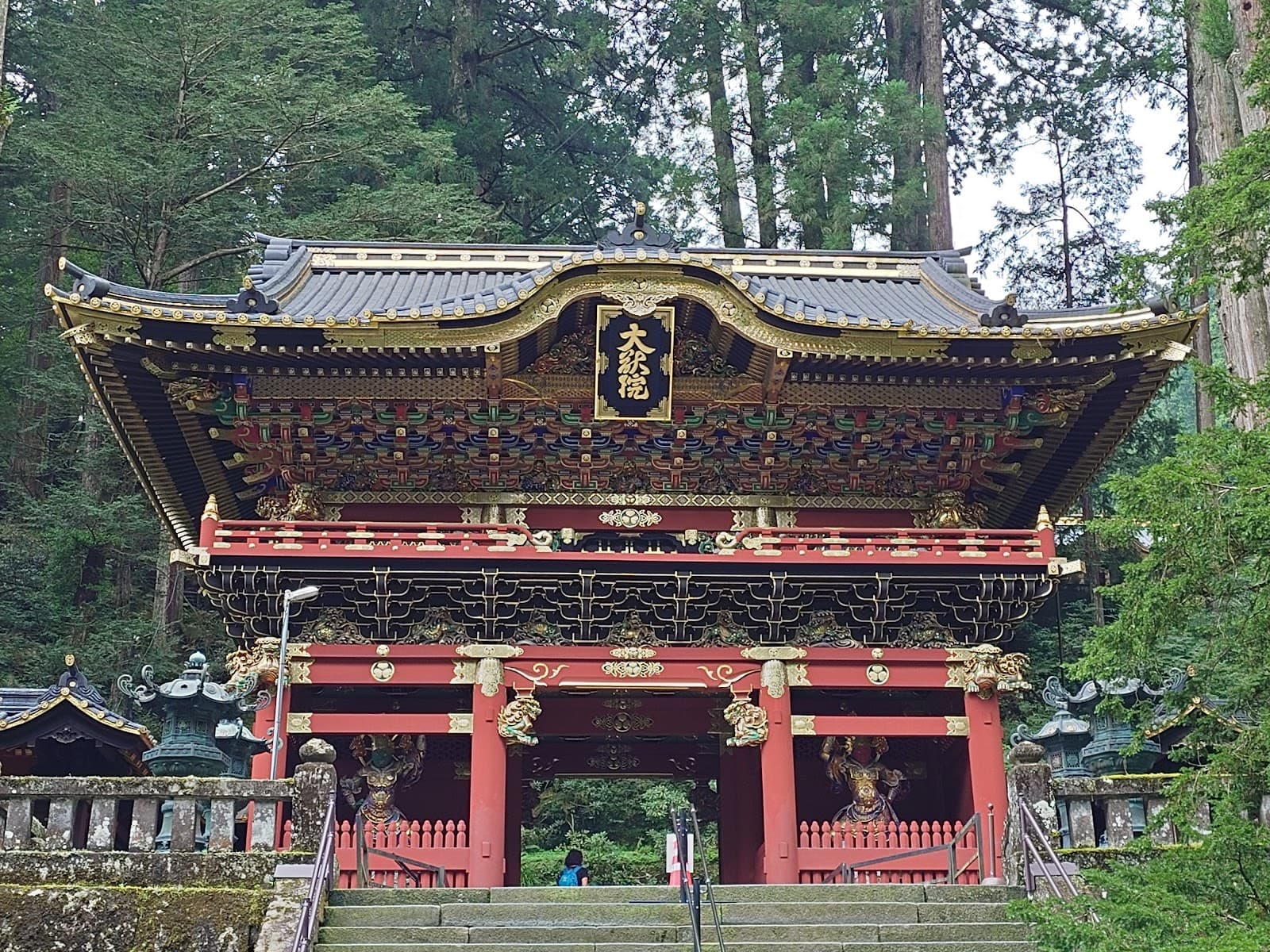
The Yomeimon Gate serves as Tosho-gu's architectural centrepiece. This two-storey structure, completed in 1636, took over 15 million artisans to construct and showcases approximately 500 separate carvings. Every surface - including the 12-metre height - displays intricate decoration in white, gold, blue, green, and red.
Nikko
Yōmeimon Gate
Well-known gate at Nikkō Tōshō-gū, featuring intricately carved reliefs with colorful paint.
Open in Maps ↗Carvings depict dragons, phoenixes, Chinese sages, flowers, and geometric patterns. Legend suggests one column was deliberately installed upside down to prevent perfection, as the gods might grow jealous and destroy a flawless creation. Look for the column with its patterns inverted on the gate's left side.
Yomeimon means "Gate of Sunlight". The name suggests visitors could study its details from sunrise to sunset without exhausting its visual interest. Allow at least 20 minutes here. Binoculars help appreciate the upper-level carvings, though the shrine's design ensures beauty at every height.
Karamon Gate and Main Hall
Beyond Yomeimon, the smaller Karamon (Chinese-style gate) guards the approach to the Main Hall and Inner Shrine. This gate features particularly fine dragon carvings. According to shrine tradition, these wooden dragons descend nightly to drink from nearby Lake Chuzenji.
The Main Hall (Honden) and Hall of Worship (Haiden) connect to form a single large structure. The interior glows with gold leaf applied to ceiling coffers, wall panels, and structural elements. Approximately 2,489,000 sheets of gold leaf cover various shrine structures - a staggering quantity that reflects the Tokugawa clan's resources.
Remove your shoes before entering these buildings. The interior's dimness initially obscures details, but your eyes adjust to reveal painted panels depicting Chinese landscapes, mythical creatures, and natural scenes. Photography is prohibited inside to preserve the delicate artwork.
The Sleeping Cat and Inner Shrine
Above a small doorway leading to the Inner Shrine's approach, look for Nemuri-neko - the famous Sleeping Cat carving. This small sculpture by master craftsman Hidari Jingoro depicts a peacefully dozing cat, symbolising tranquillity. Despite its modest size (approximately 20 centimetres), it ranks among Japan's most celebrated wood carvings.
Pass through this doorway and climb 207 stone steps through the forest to reach Tokugawa Ieyasu's tomb. The bronze urn containing his remains sits atop a stone foundation, surrounded by smaller bronze ornaments. The tomb's relative simplicity contrasts sharply with the elaborate shrine buildings below, creating a contemplative atmosphere.
The climb proves steep but manageable for most visitors. Handrails line the path, and resting platforms appear every 40-50 steps. The surrounding forest remains wonderfully quiet despite the crowds below. Many visitors skip this section due to the climb, making it one of the shrine's most peaceful areas.
Additional Structures Worth Visiting
The Five-Storey Pagoda
This 35-metre pagoda stands near the entrance, offering an impressive introduction to Tosho-gu's scale. Originally built in 1650, it burned down in 1815 and was rebuilt in 1818. Each storey represents one of the five elements in Buddhist cosmology: earth, water, fire, wind, and void.
The pagoda employs a clever structural design - its central pillar hangs suspended, not touching the ground. This flexible system allows the structure to sway during earthquakes without collapsing, demonstrating sophisticated engineering knowledge from the Edo period.
The Drum Tower and Bell Tower
These matching structures flank the approach to Yomeimon Gate. The Drum Tower houses a large ceremonial drum beaten during important festivals. The Bell Tower contains a bronze bell cast in 1618. Both buildings display elaborate bracket systems and decorative carvings, though they're often overlooked in favour of more famous structures.
The Sacred Fountain
This water basin, located near the Five-Storey Pagoda, features a dragon's head spout. Visitors traditionally purify their hands and mouth here before proceeding to the main shrine buildings. The ritual involves scooping water with the provided ladle, rinsing both hands, then pouring water into a cupped hand to rinse the mouth (spit discreetly beside the fountain, not back into it).
Seasonal Considerations
Tosho-gu rewards visits throughout the year, though each season offers distinct experiences.
Spring (late April to early May) brings cherry blossoms and azaleas. The shrine precinct contains over 200 cherry trees that bloom slightly later than Tokyo due to Nikko's higher elevation and cooler temperatures. Azaleas follow in early May, adding pink and red splashes against the shrine's gold and red paintwork.
Summer (June to August) sees warm weather and occasional rain. The surrounding forest provides natural cooling, making Nikko more comfortable than Tokyo during hot spells. Summer also brings the shrine's major festivals, including the Grand Spring Festival in mid-May (despite its name) featuring horseback archery and costume parades.
Autumn (October to early November) offers Japan's finest foliage. The maple trees (momiji) around Tosho-gu and throughout Nikko turn brilliant reds and oranges. Peak colour typically arrives in the first two weeks of November, though timing varies yearly. This season brings the largest crowds - consider weekday visits essential.
Winter (December to March) delivers fewer tourists and occasional snow. Snow-covered shrine roofs create magical scenes, and the gold leaf shines beautifully against white backgrounds. However, the approach to the Inner Shrine may close during heavy snow for safety reasons. Winters in Nikko are genuinely cold - temperatures frequently drop below freezing.
Festival Days
Tosho-gu hosts two major festivals that transform the normally static shrine into a living historical spectacle.
The Grand Spring Festival (Sennin Gyoretsu, May 17-18) features a procession of over 1,000 people dressed in Edo-period warrior costumes, priests' robes, and attendants' outfits. This re-enactment commemorates the original ceremony that brought Tokugawa Ieyasu's remains to Nikko. Horseback archery demonstrations and traditional music performances accompany the procession.
The Grand Autumn Festival (October 16-17) follows a similar programme with cooler weather and autumn colours as backdrop. Both festivals draw significantly larger crowds and require arrival well before scheduled events to secure viewing positions.
Practical Tips for Your Visit
Timing your visit: Budget three to four hours to thoroughly explore Tosho-gu. This allows time to appreciate details, climb to the Inner Shrine, and absorb the atmosphere without rushing. Combine Tosho-gu with nearby Futarasan Shrine and Taiyuin Temple (Iemitsu's mausoleum) for a full day in the shrine area.
Photography: Exterior photography is permitted and encouraged. The Yomeimon Gate looks particularly stunning in afternoon light (after 14:00) when the sun illuminates its western face. Interior photography is prohibited in hall buildings. Selfie sticks are banned throughout the precinct.
Footwear: Wear comfortable walking shoes with good grip. The stone paths become slippery when wet, and the 207 steps to the Inner Shrine require proper footwear. You'll remove shoes when entering certain buildings - ensure your socks are presentable and without holes.
Weather preparation: Nikko sits approximately 600 metres above sea level, making it noticeably cooler than Tokyo. Bring a light jacket even in summer. The forested location means frequent rain showers - carry a compact umbrella or rain jacket. Winter visits require proper cold-weather clothing.
Accessibility: The main shrine areas are accessible, though the Inner Shrine's 207-step approach presents obvious challenges for visitors with mobility limitations. Wheelchairs can access most ground-level structures, and accessible toilet facilities are available near the entrance.
Combining Tosho-gu with Other Nikko Attractions
Tosho-gu forms part of Nikko's UNESCO World Heritage "Shrines and Temples of Nikko" designation, which includes several nearby sites worth visiting.
Futarasan Shrine, a short walk from Tosho-gu, offers a contrasting minimalist aesthetic. This much older shrine (founded in 782) honours the mountain gods of Nikko's three sacred peaks. Its quieter atmosphere provides respite after Tosho-gu's sensory intensity.
Taiyuin Temple, the mausoleum of Tokugawa Iemitsu (Ieyasu's grandson), sits 10 minutes' walk from Tosho-gu. While smaller and less famous, it displays equally impressive craftsmanship with fewer crowds. The admission ticket (¥550) represents excellent value.
Rinnoji Temple, located between the stations and shrine area, houses three large Buddha statues. Its Shoyoen Garden offers seasonal beauty and peaceful walking paths.
Nikko
Rinnōji Temple
Centuries-old Buddhist complex with a renowned wooden hall, a treasure house & a peaceful garden.
Open in Maps ↗A combined ticket covering Tosho-gu, Futarasan, and Taiyuin costs ¥2,100 - saving ¥250 versus individual admissions.
Where to Eat Near Tosho-gu
The area between Nikko Station and Tosho-gu offers numerous dining options. Nikko specialises in yuba (tofu skin), a Buddhist temple food made from soy milk. Local restaurants serve yuba in various forms: sashimi-style, simmered in broth, or wrapped around vegetables.
Several restaurants line the main approach road (Route 119). Expect prices from ¥1,200 for basic set meals to ¥3,000 for elaborate multi-course yuba lunches. Many establishments close by 17:00, making lunch the practical meal option.
Vending machines selling drinks dot the shrine precinct's entrance area, but no food vendors operate within the complex itself. Pack snacks if you need them, though eating within the sacred precinct is discouraged.
Final Thoughts
Tosho-gu Shrine exemplifies Japan's ability to create overwhelming beauty through accumulated detail. Every surface tells a story through carving, painting, or gilding. The shrine deliberately departed from typical Japanese aesthetic restraint to demonstrate the Tokugawa shogunate's power - a successful strategy that still impresses visitors four centuries later.
Approach your visit with patience. Rushing through Tosho-gu misses its essence. The complex rewards careful observation, revealing new details with each glance. Whether you're captivated by craftsmanship, interested in Japanese history, or simply seeking beautiful places, Tosho-gu delivers an unforgettable experience.
The shrine's location in mountainous Nikko, surrounded by ancient forests and near spectacular waterfalls, adds natural beauty to architectural splendour. Consider staying overnight in Nikko to explore the area's full range of attractions at a relaxed pace. The shrine illuminated by early morning mist, before crowds arrive, offers one of Japan's most magical scenes.