
 By Declan Barry
Neon Genesis Evangelion and Hakone: The Real-Life Locations Behind the Anime
When director Hideaki Anno created Neon Genesis Evangelion in the mid-1990s, he transformed the mountain resort town of Hakone into Tokyo-3, the fortified city where humanity makes its last stand against mysterious beings called Angels. For anime fans visiting Japan, Hakone offers something remarkable: the chance to walk through landscapes that inspired one of the most influential series in anime history.
Hakone
Hakone Park
Former imperial palace complex offering walking paths & an observation platform with scenic views.
Open in Maps ↗Hakone
Hakone Shrine
Historic Japanese Shinto shrine with a small museum in a verdant lakefront setting.
Open in Maps ↗Unlike many anime that use generic or heavily fictionalised settings, Evangelion's connection to Hakone is deliberate and specific. Anno and his team at Studio Gainax conducted extensive location scouting in Hakone, incorporating real streets, landmarks, and geographical features into the series. Today, you can stand at the exact viewpoints used in key scenes, ride the same mountain railway featured in the opening sequence, and recognise the volcanic landscape that shaped the show's dystopian aesthetic.
Why Hakone became Tokyo-3
Hakone sits approximately 80 kilometres southwest of Tokyo, nestled in a caldera formed by the ancient eruption of Mount Hakone around 3,000 years ago. This dramatic volcanic geography - with its mountains, lake, and ongoing geothermal activity - provided the perfect setting for a city built to withstand apocalyptic threats.
The choice wasn't arbitrary. Anno grew up in the Yamaguchi Prefecture and spent considerable time studying Hakone's unique topography. The town's natural bowl shape, surrounded by mountains with Lake Ashi at its centre, mirrors Tokyo-3's defensive design. The active volcanic features - still visible today at Owakudani - lent credibility to the series' underground city concept, where massive mechanical installations could plausibly hide beneath the surface.
Hakone
Lake Ashi
Picturesque caldera lake/resort area with boat tours, hot springs, accommodation & views of Mt Fuji.
Open in Maps ↗Hakone's accessibility from Tokyo also mattered. During the show's production in 1994-1995, the anime team could easily travel there for research, photographing locations and absorbing the atmosphere that would inform the series' distinctive visual style.
The Hakone-Yumoto connection
Hakone-Yumoto Station serves as the gateway to Hakone and appears repeatedly throughout Evangelion. When Shinji Ikari first arrives in Episode 1, stepping off a train into an abandoned city, he's standing at a fictional version of this very station.
The real Hakone-Yumoto Station has changed since 1995, but core elements remain recognisable. The mountain backdrop seen in establishing shots matches the actual view northeast from the station platforms. The surrounding streets, though modernised, still follow the same layout visible in background art from the series.
To reach Hakone-Yumoto from Tokyo, take the Odakyu Romance Car from Shinjuku Station. The Limited Express service takes approximately 85 minutes and costs 2,280 yen for an unreserved seat. This direct service runs roughly every 30 minutes during peak hours. Alternatively, use the Odakyu regular line with a change at Odawara Station, which takes about two hours but costs only 1,220 yen.
The Hakone Freepass (valid for two or three days, priced at 6,100 yen or 6,500 yen from Shinjuku) covers the Romance Car surcharge and includes unlimited use of eight different transport services within Hakone, making it excellent value for an Evangelion pilgrimage that covers multiple locations.
Recognising the real Tokyo-3
The series depicts Tokyo-3 as a city where buildings retract underground during Angel attacks. Whilst that's pure fiction, several real Hakone locations clearly inspired specific scenes and settings.
The view from Lake Ashi towards Mount Fuji appears in numerous establishing shots. On clear days (most common November through February, with December offering the highest probability), you can capture nearly identical compositions from the lake's northern shore near Moto-Hakone. The iconic sight of Fuji's symmetrical cone rising beyond forested mountains forms the backdrop to many pivotal scenes.
The Hakone Ropeway, which carries passengers from Sounzan to Togendai via Owakudani, inspired the cable car systems shown transporting characters around Tokyo-3. The real ropeway opened in 1959, and its elevated perspective over volcanic valleys and mountains matches the show's futuristic transit sequences. A one-way journey costs 1,550 yen (included in the Hakone Freepass) and takes approximately 30 minutes for the full route.
Owakudani itself - an active volcanic valley where sulphurous steam vents from the earth - evokes the scarred, geologically unstable world of Evangelion. The otherworldly landscape of grey rocks, yellow sulphur deposits, and constant steam creates an atmosphere remarkably similar to post-Angel battle scenes. The area sits at approximately 1,000 metres elevation, and temperatures typically run 5-8 degrees cooler than Hakone-Yumoto below.
The significance of Mount Ashinoko
Lake Ashi (Ashinoko in Japanese) occupies the caldera's centre and features prominently in the series. Episodes often show expansive water views with mountains beyond, compositions directly referencing the lake's real geography.
You can explore Lake Ashi aboard replica pirate ships operated by Hakone Sightseeing Boats. Three vessels - modelled after 17th and 18th-century European warships - circuit between Moto-Hakone, Hakone-machi, and Togendai. A one-way journey takes 25-40 minutes depending on the route, costs 1,200 yen (included in the Hakone Freepass), and provides excellent photo opportunities matching Evangelion's establishing shots.
The lake sits at 723 metres elevation. Formed by volcanic activity blocking natural drainage around 3,000 years ago, it stretches 6.5 kilometres north to south and reaches a maximum depth of 43 metres. Its dark, slightly ominous waters - especially under overcast skies common March through June - perfectly suit the series' tone.
The Hakone Tozan Railway experience
Evangelion's opening sequence features dramatic shots of trains climbing mountain tracks. These images directly reference the Hakone Tozan Railway, Japan's oldest mountain railway, which has operated since 1919.
The line climbs from Hakone-Yumoto (108 metres elevation) to Gora (553 metres) via a series of switchbacks - sections where the train reverses direction to gain altitude on steep gradients. The journey covers only 8.9 kilometres but includes 26 bridges and 13 tunnels, ascending through forests and along cliff faces in scenes that clearly inspired the anime's opening moments.
Between mid-June and late July, hydrangeas bloom prolifically along the railway, creating a spectacular flower tunnel. Approximately 10,000 plants in shades of blue, purple, pink, and white line the tracks, particularly dense between Tonosawa and Chokokunomori stations. During peak bloom (typically late June), evening illumination services run on weekends, extending operating hours until 21:00.
The full journey from Hakone-Yumoto to Gora takes 40 minutes and costs 430 yen (included in the Hakone Freepass). Trains depart approximately every 15-20 minutes from 06:00 to 21:30.
Finding Evangelion in modern Hakone
Whilst Hakone hasn't developed official Evangelion attractions on the scale of some anime pilgrimage sites, subtle acknowledgements exist. The Lawson convenience store near Hakone-Yumoto Station occasionally features Evangelion merchandise, particularly around anniversary years. Local tourism materials sometimes reference the connection, though you won't find character statues or dedicated museums.
This understated approach actually enhances the experience. You're not visiting a theme park recreation - you're seeing the authentic locations that inspired the creators. Bring screenshots from the series on your phone to compare real locations with their animated counterparts. The matches aren't always exact (artistic licence applied), but the geographical relationships and overall atmosphere remain remarkably faithful.
The best viewing positions for Evangelion-inspired photography include:
The northern shore of Lake Ashi near Moto-Hakone for Mount Fuji compositions (early morning offers clearest views). The observation deck at Owakudani for volcanic landscape shots (station's second floor provides elevated perspectives). Any window seat on the Hakone Tozan Railway's right side when ascending from Hakone-Yumoto (left side when descending). The ropeway between Owakudani and Togendai for aerial views matching the series' flying sequences.
Practical considerations for your visit
Hakone experiences four distinct seasons, each offering different advantages for an Evangelion pilgrimage. Winter (December through February) provides the clearest Mount Fuji views, with visibility rates exceeding 70% on many days. Temperatures range from -2 to 8 degrees Celsius at lake level, colder at elevation. Snow occasionally affects ropeway operations.
Spring (March through May) brings cherry blossoms in late March to early April around Lake Ashi, though Hakone's elevation delays blooms compared to Tokyo. Weather remains somewhat unstable with frequent cloud cover reducing mountain views.
Summer (June through August) sees hydrangea season along the railway but also the highest rainfall. July averages 19 rainy days. Mount Fuji visibility drops to 30-40%. However, lush green mountainsides match some of the series' forest scenes effectively.
Autumn (September through November) balances good weather (September-October) with spectacular foliage (November). Peak autumn colour typically occurs mid to late November. Mount Fuji visibility improves through the season, reaching 60-70% by November.
For overnight stays, consider Hakone-Yumoto or Gora as bases. Both offer numerous ryokan (traditional inns) and hotels, easy transport access, and hot spring facilities. Budget options start around 8,000 yen per person with breakfast; mid-range ryokan with dinner and elaborate baths run 15,000-25,000 yen. Book several weeks ahead for weekends and all of November.
One day suffices for hitting major Evangelion-connected sites, but two days allows a more relaxed pace with time for hot springs and Hakone's many museums.
Beyond the anime
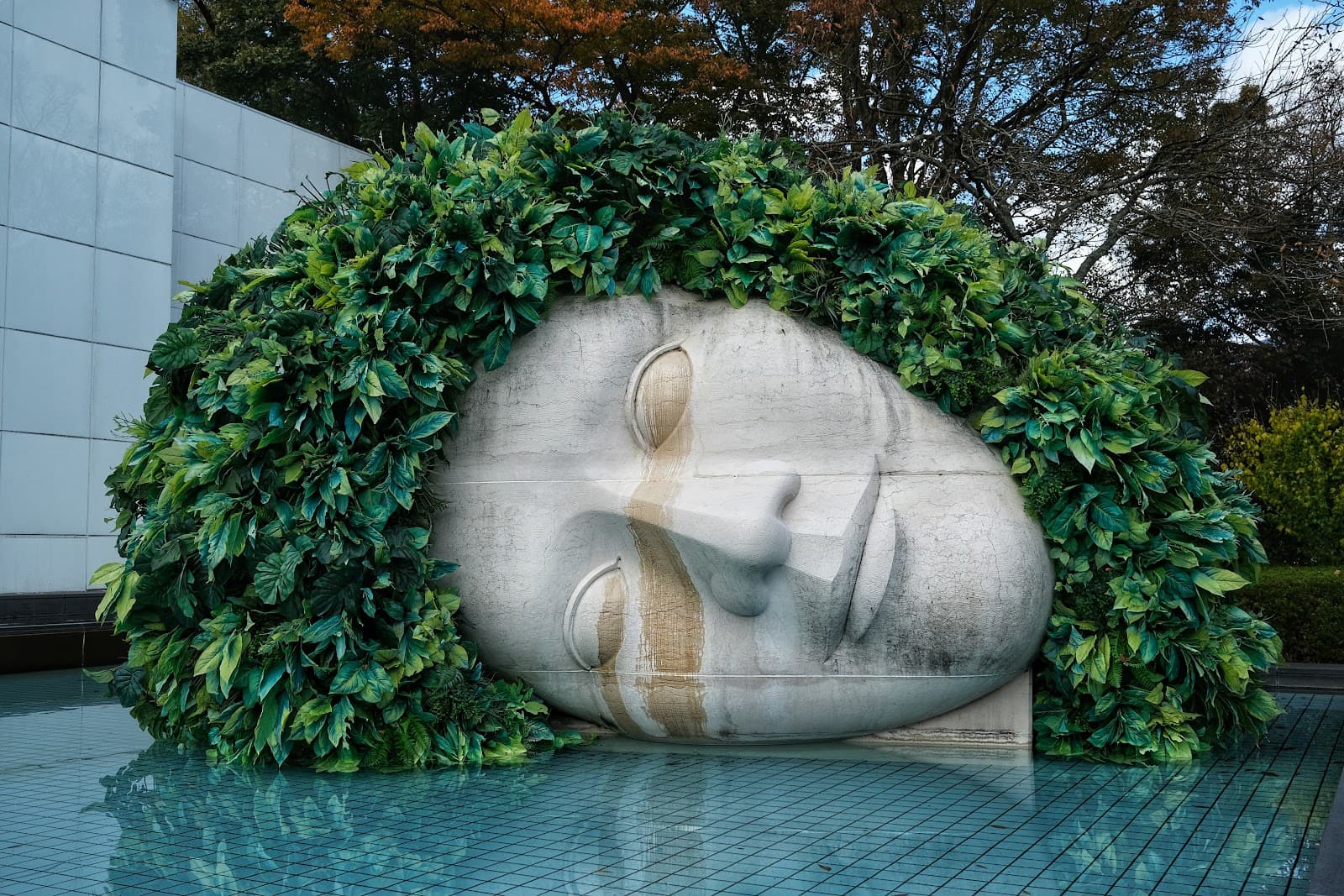
Whilst Evangelion draws many visitors, Hakone rewards exploration beyond pilgrimage sites. The Hakone Open-Air Museum displays over 100 sculptures across 70,000 square metres of gardens and indoor galleries. Entry costs 1,600 yen. The Okada Museum of Art houses exceptional East Asian art collections (entry 2,800 yen). Numerous art museums cluster around Gora and Sengokuhara.
Hakone
The Hakone Open-Air Museum
Museum featuring an outdoor sculpture park & some indoor exhibits, plus a natural hot spring.
Open in Maps ↗Hakone's hot spring tradition dates back over 1,200 years. More than a dozen distinct hot spring sources (onsen) supply the area's 400-plus accommodation facilities and several public bathing houses. Day-use onsen typically charge 1,000-2,000 yen for 60-90 minutes of bathing.
The shrine complex at Lake Ashi's southern end, including Hakone Shrine with its famous torii gate standing in the lake, predates the anime by centuries and remains worth visiting for cultural context completely unrelated to giant robots.
Planning your Tokyo-3 experience
A suggested one-day Evangelion pilgrimage itinerary:
08:30 - Depart Shinjuku on Romance Car to Hakone-Yumoto (arrives 09:55). 10:00 - Board Hakone Tozan Railway to Gora, experiencing the switchback climb. 10:45 - Connect to Hakone Tozan Cable Car (10 minutes to Sounzan). 11:00 - Ride Hakone Ropeway via Owakudani to Togendai (40 minutes total; spend 30-40 minutes exploring Owakudani). 12:30 - Lunch at Togendai (limited options; consider bringing supplies). 13:30 - Pirate ship across Lake Ashi to Moto-Hakone (25 minutes). 14:00 - Explore lakeside area, photograph Mount Fuji views. 16:00 - Bus to Hakone-Yumoto (45 minutes). 17:00 - Browse around station area before return. 18:00 - Romance Car back to Tokyo.
This covers all major Evangelion-connected transport and locations whilst allowing time for photographs and atmosphere absorption.
For serious fans, bringing a tablet loaded with relevant episodes allows direct scene comparisons at actual locations. Episodes 1, 2, 8, 14, and 24 feature particularly clear Hakone-inspired backgrounds.
The lasting connection
Neon Genesis Evangelion premiered in October 1995 and ran for 26 episodes through March 1996. Nearly three decades later, its influence persists. The Rebuild of Evangelion film series (2007-2021) renewed interest, bringing new generations of fans to Hakone's mountains.
The connection works both ways. Hakone inspired Evangelion, but the anime now colours how fans experience Hakone. Walking streets Shinji walked (fictionally), standing where NERV built its fortress (imaginatively), and looking across landscapes that witnessed epic battles (in animation) creates an unusual hybrid of reality and fiction.
You're visiting real places with genuine history and natural beauty that exist completely independent of the anime. Yet you're also stepping into one of anime's most influential settings, where the boundary between real-world location and fictional narrative blur productively.
Whether you approach Hakone primarily as an Evangelion fan or simply as a traveller interested in beautiful mountain scenery and hot springs, the connection adds an extra dimension to the experience - a reminder of how stories transform the places that inspire them.