
 By Declan Barry
Kitakyushu earns its place on a Kyushu itinerary without requiring a night's stay, though staying one night unlocks a lot more. It sits fifteen minutes from Hakata by Shinkansen, has a walkable historic district, a genuinely unusual museum, and a castle that holds its own among Kyushu's feudal sites. Most visitors pass straight through to Fukuoka. That is a reasonable choice, but not the only one.
How to Get There and Whether to Base Here
From Hakata Station, the Sanyo Shinkansen (Kodama or Hikari) reaches Kokura Station in around 15 minutes. The standard fare is approximately ¥1,910 one way, though exact prices vary slightly by service type - check the JR fare calculator before you go. Kokura is Kitakyushu's main hub: the Shinkansen, local JR lines to Mojiko, intercity buses, and the monorail all converge here.
Kitakyushu
Kokura Castle
This reconstructed 17th-century castle houses gardens, a folk museum & the Matsumoto Seicho museum.
Open in Maps ↗If you are arriving in Japan via Kitakyushu Airport rather than Fukuoka, a limousine bus takes around 40 minutes to Kokura Station (roughly ¥1,130). That route is worth knowing because flights into Kitakyushu Airport are sometimes cheaper than those into Fukuoka.
Basing in Kitakyushu vs. Fukuoka: Hakata (Fukuoka) has more hotels, more nightlife, and faster connections to Nagasaki and Kagoshima. Kitakyushu suits travellers who want a quieter base, lower accommodation costs (business hotels in Kokura often run ¥1,000-¥2,000 per night cheaper than comparable Fukuoka options), and a slower pace. If your Kyushu circuit finishes in the north - say you are heading back to Osaka or Tokyo by Shinkansen - spending a final night in Kokura rather than backtracking to Hakata makes good logistical sense. You will not find the same restaurant density as Fukuoka, but Tanga Market and Kokura's shotengai arcade fill in a lot of gaps.
Kitakyushu
Tanga Market
Storied covered market lined with 100+ vendors for fresh seafood, produce, meat & prepared foods.
Open in Maps ↗Kokura Castle and the Arcade
Kokura Castle (¥350 adults, free for under 15s) is a 1959 reconstruction of the 1602 original. It lacks the timber authenticity of Himeji or Matsumoto, but the building contains a small folk museum and a separate Matsumoto Seicho museum on the top floor - Seicho being Kokura's most famous literary son, a crime novelist whose work sold over 200 million copies. If you have any interest in postwar Japanese popular culture, that floor alone justifies the entry fee.
Kitakyushu
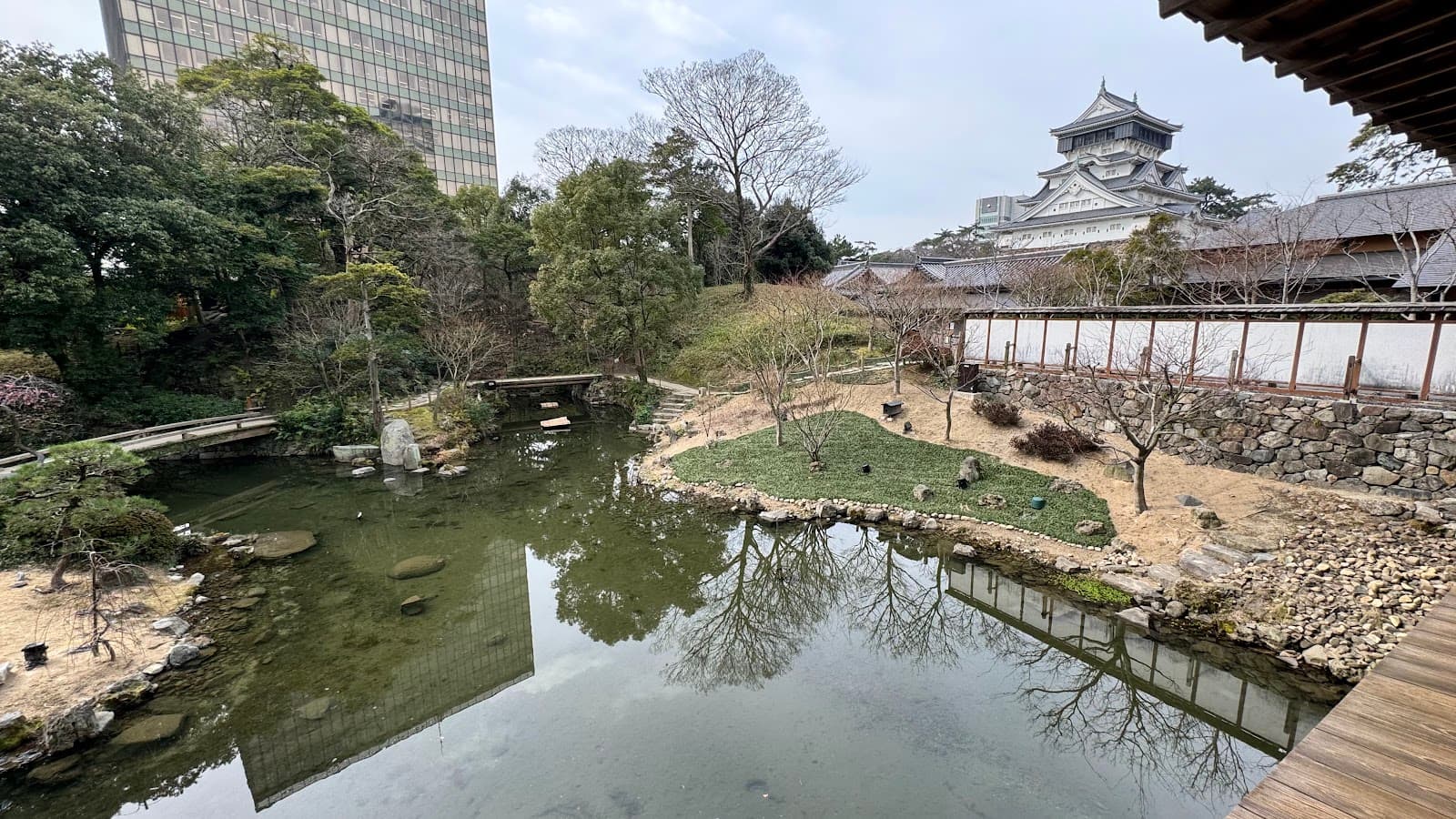
Kokura Castle Garden
Japanese-style manicured garden with blossoms, ponds & bridges by a reconstructed feudal fortress.
Open in Maps ↗The Kokura Castle Garden (¥350, or ¥500 combined with the castle) sits directly alongside. It is a small Edo-style garden rebuilt from period documents. Modest in scale but quiet even on weekends - most visitors do the castle and keep moving.
Directly north of the castle, the Riverwalk Kitakyushu mall and the covered Uonotana and Tanaka-machi shopping arcades run for several hundred metres along the Murasaki River. The arcade is genuinely used by locals - not a tourist preserve. The Kitakyushu Manga Museum (4th floor of Riverwalk, ¥420 adults) warrants a look even without a manga background: the floor-to-ceiling comic lending library is an unusual space, and the original artwork panels in the main gallery include Leiji Matsumoto's work (he was born in Kitakyushu). Aruaru City, a few minutes' walk towards Kokura Station, is a compact anime and manga merchandise mall across several floors - more focused than Akihabara, and noticeably less crowded.
Kitakyushu
Kitakyushu Manga Museum
Colorful galleries of work by major manga artists, with large-scale murals & a comic book library.
Open in Maps ↗Kitakyushu
Aruaru City
Compact mall with shops selling anime, manga & cosplay merchandise, plus karaoke clubs & eateries.
Open in Maps ↗Honest caveat: Kokura's arcade strip can feel quieter than expected on weekday mornings. Some shops open late (11:00 or even noon). If you are arriving early, head to the castle first.
Mojiko Retro
Moji Port - now marketed as Mojiko Retro - is a ten-minute ride from Kokura on the JR Kagoshima Line (¥200). Moji was Kyushu's principal export gateway in the Meiji and Taisho periods, when the Kanmon Straits formed a critical shipping lane. The brick and stone buildings from that era, built between roughly 1889 and 1930, remain clustered within easy walking distance of Moji-ko Station.
The standout building is the former Osaka Shosen shipping company office (1917), a red-brick structure with a tower whose observation deck opens at weekends (free). The former Moji Station, restored in 2019 to its 1914 appearance, is worth walking through rather than just past - the interior woodwork and tiling are well-preserved. Neither of these is a museum; they are still functioning or publicly accessible spaces.
From the waterfront you are looking directly across the Kanmon Straits at Shimonoseki in Yamaguchi Prefecture, just 600 metres away. A passenger ferry crosses in five minutes (¥400 return). That makes a Shimonoseki add-on genuinely easy - the Karato fish market is a ten-minute walk from the Shimonoseki terminal and opens early.
If you have time for one meal in Mojiko,焼きカレー (yaki-kare, baked curry with a layer of melted cheese) is the local dish. Several small restaurants around the waterfront serve it; prices run around ¥900-¥1,200.
Who it suits: Mojiko works well for travellers interested in late Meiji and Taisho architecture, or for anyone curious about the Kanmon Straits crossing. It feels thin if you are not interested in that period - an hour on the waterfront, one building, and you have seen the substance of it. Combine it with a quick Shimonoseki crossing to make better use of the half-day.
The TOTO Museum
Kitakyushu is the birthplace of TOTO, the manufacturer behind the washlet toilet. The TOTO Museum (free entry) in Kokura opened in 2015 and sits adjacent to the company's original factory site. It is not a gimmick attraction: the building itself is a serious piece of architecture, and the permanent exhibition traces the history of indoor plumbing, sanitary ware design, and the industrial history of the company from 1917 to the present.
Kitakyushu
TOTO Museum
Modern, eco-friendly museum displaying toilets & tableware made by the long-running company Toto.
Open in Maps ↗The early exhibition cases show the first flush toilet manufactured in Japan, alongside hand-painted pre-war ceramic tableware that TOTO also produced. By the time you reach the washlet development section, the trajectory makes sense as industrial and social history rather than corporate promotion.
Access: the museum is a five-minute taxi ride from Kokura Station, or a walk of around 15-20 minutes. It is closed on Mondays (and Tuesday if Monday is a public holiday). Allow 60-90 minutes.
This is one of those places where the rating (4.5 stars) outperforms the visitor numbers. It receives a fraction of the footfall of, say, TeamLab in Tokyo, and the galleries are rarely crowded. There is no better time to visit than a weekday morning if your schedule allows.
Kawachi Wisteria Garden (Spring Only)
About 30 minutes by bus or taxi from Kokura, the Kawachi Wisteria Garden opens for roughly three weeks each spring, typically late April to mid-May (check the official site for the exact annual window). Entry costs ¥1,500 during peak bloom (early May) and drops to ¥1,000 before or after. The garden contains around 150 wisteria plants, some over 130 years old, arranged in two tunnel walkways.
A practical note on getting there: take the JR Kagoshima Line from Kokura to Yagami Station (around 20 minutes, ¥330), then a taxi (roughly ¥1,500 one way, 10-15 minutes). Some seasonal shuttle buses operate from Yagami during the bloom period - check Kitakyushu City's tourism site for the current year's schedule.
The garden does get crowded on weekends during peak bloom. A Tuesday or Wednesday morning visit, arriving at opening (9:00), is meaningfully quieter than a Saturday afternoon. If the wisteria is not the reason you are visiting Kyushu, this does not justify a detour from elsewhere. But if you are already spending a night in Kitakyushu in late April or early May, it is the single most time-specific thing the area offers.
Honest caveat: the garden is privately operated and the opening schedule shifts by one to two weeks each year depending on the bloom. Do not build a trip around a specific date without checking the season's forecast.
Practical Notes
Getting around Kitakyushu: The city is genuinely large - over 900,000 people across six districts. Kokura and Mojiko are the relevant areas for most visitors. The Kitakyushu monorail (Kitakyushu Monorail Kitakyushu Line) runs from Kokura Station south through the city, but most of the sights in this guide are on the JR network or walkable from Kokura. A day of walking between the castle, arcade, and TOTO Museum is manageable. Mojiko requires the JR line.
How much time to allow: A single day is enough for Kokura Castle, a walk through the arcade, the TOTO Museum, and a half-day in Mojiko - if you move efficiently. A single overnight stay allows you to add Kawachi Wisteria Garden in season, a slower morning at Tanga Market, and a Shimonoseki ferry crossing. Two nights is probably more than most itineraries can justify unless you are deliberately slowing down.
Tanga Market (Tanga Ichiba, about ten minutes' walk from Kokura Station) opens from early morning and is most alive before noon. Over 100 stalls sell fresh seafood, tofu, pickles, and prepared foods. The prepared food stalls double as informal breakfast spots - look for the vendors selling fish-on-rice bowls near the market entrance.
What to Skip
Space LABO (the city science museum) and the Kitakyushu Museum of Natural History & Human History are both well-regarded but aimed primarily at local families with children. Neither adds much for an adult visitor on a short trip.
Mount Sarakura (accessible via the 皿倉山ケーブルカー cable car from Yagami Station, ¥1,230 return) offers broad views over the Kanmon Straits and has a 4.5-star rating. It is worth the trip on a clear day, but cloud cover in the city often sits at cable-car height - check the weather before committing the hour or so it takes. The summit observation deck (Hobashira Park) is open year-round but closed in high wind and heavy rain.
The Kitakyushu Municipal Museum of Art sits on a hill in the Tobata district, about 20 minutes from Kokura by train. The building by Arata Isozaki is interesting architecturally, and the permanent collection runs to over 6,000 works. For visitors with an interest in postwar Japanese art, it rewards the trip. For those without a specific reason to go, the travel time and the distance from the other Kokura sights make it hard to fit into a short visit.