
 By Declan Barry
Walking the Kiso Valley: Magome to Tsumago Post Towns Guide
The Kiso Valley, tucked into the mountains of Nagano Prefecture, preserves one of Japan's most atmospheric stretches of the historic Nakasendo Way. This ancient route once connected Kyoto and Tokyo through the mountains, and today, the walk between Magome and Tsumago post towns offers travellers a glimpse into Edo-period Japan. Wooden buildings line narrow streets, water wheels turn beside mountain streams, and the forest path between the two villages feels remarkably unchanged from centuries past.
Understanding the Kiso Valley Post Towns
During the Edo period (1603-1868), the Tokugawa shogunate established five major routes connecting the capital. The Nakasendo (literally "road through the mountains") was the inland alternative to the coastal Tokaido, passing through 69 post towns where travellers could rest, eat, and change horses. The Kiso Valley contained eleven of these post towns, with Magome and Tsumago being the best preserved today.
Tsumago holds particular historical significance. In 1968, residents made a collective decision to preserve their town without modern alterations, establishing Japan's first architectural preservation district. This commitment means no overhead power lines, no modern shopfronts, and strict regulations on new construction. Magome, whilst slightly more commercialised, maintains its character beautifully, with steep stone-paved streets following the mountainside.
Both towns served crucial roles during the Edo period. Magome was the 43rd post town on the Nakasendo, whilst Tsumago was the 42nd. Officials, merchants, and pilgrims would stop here overnight, creating a vibrant economy of inns (honjin for officials, waki-honjin for lower-ranking travellers, and hatago for commoners), tea houses, and stables.
Planning Your Walk: Magome to Tsumago
The walk between Magome and Tsumago covers approximately 7.8 kilometres and takes between 2.5 and 3.5 hours, depending on your pace and how often you stop for photographs. Most people walk from Magome to Tsumago because this direction is predominantly downhill, dropping about 200 metres in elevation.
Best Time to Visit
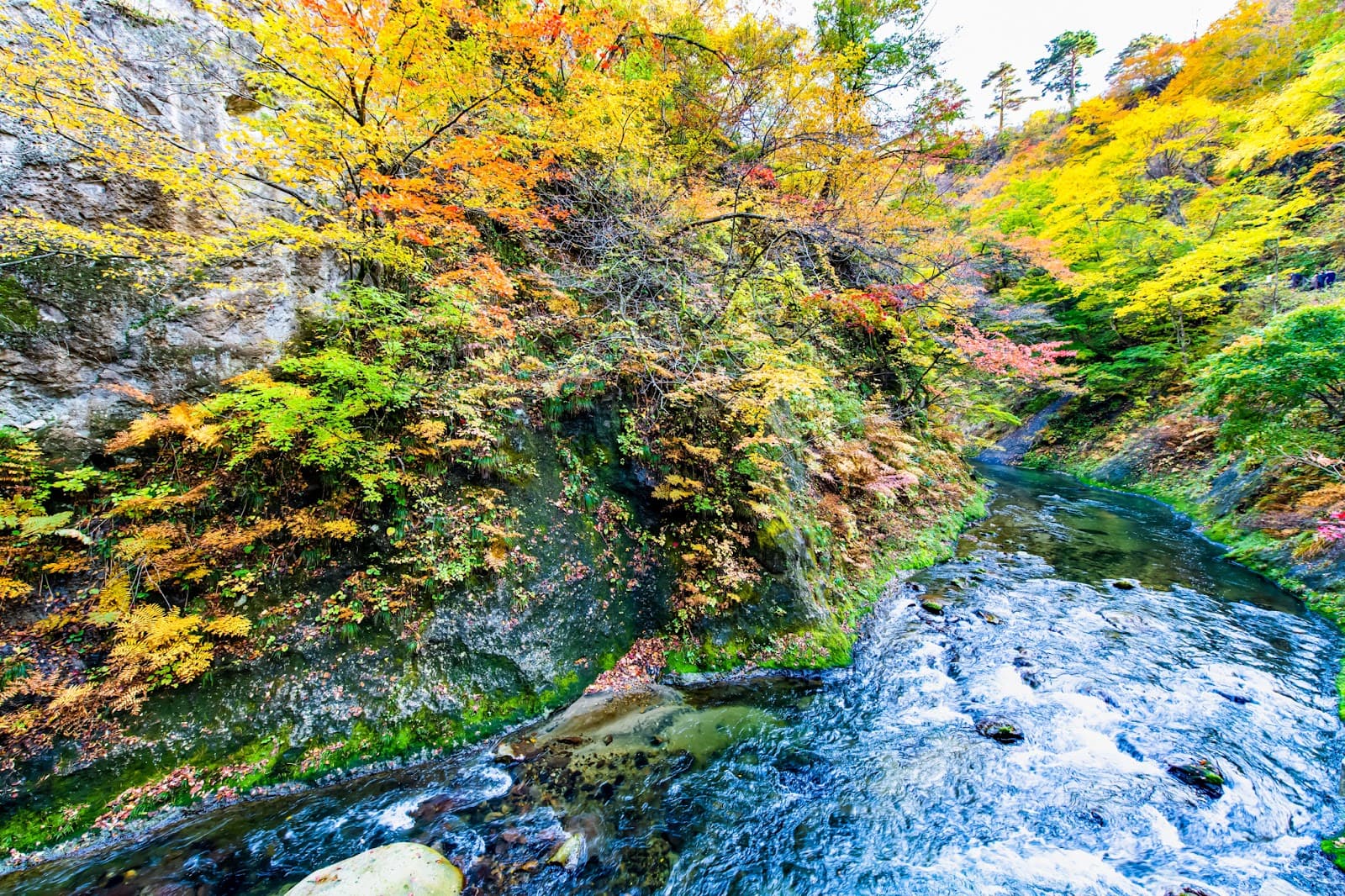
Each season transforms the Kiso Valley distinctly. Spring (late April to May) brings fresh green leaves and occasional cherry blossoms in the villages. Summer (June to August) offers lush forest canopy, though July can be humid and rainy during the monsoon season. Autumn (late October to early November) draws the largest crowds for spectacular red and gold foliage. Winter (December to February) sees snow covering the villages and trail, creating postcard scenes but requiring proper footwear and caution on icy sections.
Weekdays see far fewer visitors than weekends. If possible, arrive on a Tuesday or Wednesday morning for the most peaceful experience. Golden Week (late April to early May), Obon (mid-August), and the autumn foliage peak in early November should be avoided unless you don't mind sharing the trail and streets with hundreds of other visitors.
Getting There
From Nagoya, take the JR Chuo Line to Nakatsugawa Station (approximately 50 minutes by limited express, ¥2,640). From the station, Kitaena Bus operates services to Magome (30 minutes, ¥600). Buses run roughly hourly but check the current timetable, as services reduce in winter.
From Tokyo, take the JR Chuo Line to Nakatsugawa (approximately 3 hours 20 minutes via Nagoya, or use the highway bus which takes about 4.5 hours direct to Magome for ¥4,000). The JR Pass covers trains to Nakatsugawa but not the local bus.
From Matsumoto, take the JR Chuo Line to Nagiso Station (approximately 1 hour, ¥680), then a bus to Tsumago (10 minutes, ¥300). This approach works well if you're touring Nagano Prefecture and want to walk the trail from Tsumago to Magome instead.
Luggage Transfer Service
Carrying a large backpack whilst walking the trail isn't ideal. From late March to late November, both tourist offices operate a baggage transfer service. Drop your luggage at either Magome or Tsumago tourist office before 11:30 AM, and it will be delivered to the other town by 1:00 PM. The service costs ¥1,000 per bag (maximum 20kg) and requires advance booking during peak seasons. This allows you to walk with just a small daypack containing water, snacks, and camera equipment.
The Trail Between Magome and Tsumago
The hiking trail follows the original Nakasendo path through the forest. It's well-maintained and clearly marked with signs in Japanese and English, making navigation straightforward even for first-time visitors.
Leaving Magome, you'll climb briefly before the path enters the forest. The route alternates between forest trail, quiet mountain roads, and short sections through tiny hamlets. Approximately halfway, you'll reach a small settlement with a tea house (seasonal opening) where locals sell fresh vegetables and handmade crafts.
The trail passes several waterfalls - small cascades that become particularly impressive after rain. Stone markers along the route indicate distances in the traditional ri measurement (one ri equals approximately 3.9 kilometres). Look for these moss-covered stones bearing faded inscriptions.
Wearing proper footwear is essential. The trail involves uneven stone steps, tree roots, and potentially muddy sections after rain. Trainers with good grip work fine in dry conditions, but hiking boots provide better ankle support. In winter, attachable ice cleats (available at outdoor shops in Japan) prevent slipping on icy sections.
Bring sufficient water - at least one litre per person. The tea house at the midpoint isn't always open, and whilst there are a few taps along the trail, you shouldn't rely on them. Pack snacks or a light lunch, though many walkers prefer to wait and eat in Tsumago.
Exploring Magome
Magome climbs steeply up the mountainside, with its main street lined by traditional wooden buildings housing shops, restaurants, and guesthouses. The steep stone-paved street means exploring requires reasonable fitness, but the views back down the valley reward the effort.
The Toson Memorial Museum, dedicated to poet and novelist Shimazaki Toson who was born in Magome, occupies the site of the former honjin (inn for officials). Entry costs ¥550 and provides insight into both the author's life and the Edo period's social structure. Displays include original manuscripts, personal effects, and historical documents about the post town system.
Numerous shops sell local specialities, including gohei-mochi (rice cakes grilled with sweet miso sauce), chestnut sweets, and handcrafted wooden items. Prices tend slightly higher than in larger cities due to the tourist focus, but quality generally justifies the cost. A gohei-mochi snack costs around ¥300-400.
For lunch, try kake-soba or kake-udon (hot noodles in broth, around ¥800-1,000) at one of several traditional restaurants. Some establishments serve more elaborate set meals featuring mountain vegetables and local river fish for ¥1,500-2,000.
Discovering Tsumago
Tsumago sits in a broader valley than Magome, creating a more spacious, less commercialised atmosphere. The main street stretches for about 500 metres, with traditional buildings on both sides and mountains visible in every direction.
The Waki-Honjin (secondary inn for lower-ranking officials) and Honjin have been restored and opened to visitors. The combined entry fee of ¥700 allows you to explore both buildings. Inside, you'll find period furnishings, displays explaining the post town system, and gardens designed for contemplation. The buildings' architecture demonstrates the strict social hierarchies of Edo-period Japan - notice the different entrance ways and room sizes for various ranks of travellers.
Tsumago's Local History Museum (¥300 entry) occupies a former merchant house and contains fascinating everyday objects from the Edo period: farming tools, cooking implements, clothing, and trade goods that travelled the Nakasendo.
Walking the backstreets reveals residential areas where locals actually live. Respectful quiet exploration shows you vegetable gardens, tiny shrines, and traditional houses still occupied as homes rather than tourist attractions. The sound of water running through wooden channels beside the streets creates a peaceful soundtrack to your wandering.
Where to Stay
Staying overnight in Magome or Tsumago transforms your visit from a day trip into an immersive experience. Both towns have minshuku (family-run guesthouses) and ryokan offering traditional accommodation.
In Tsumago, several guesthouses occupy buildings over 200 years old. Expect futon bedding on tatami floors, shared bathrooms, and two meals (dinner and breakfast) included. Prices range from ¥9,000-13,000 per person including meals. Dinner typically features local mountain vegetables, river fish, and regional specialties. Book well ahead for weekends and autumn.
Magome has similar options at comparable prices. Some guesthouses offer private bathrooms, though shared facilities are more common and part of the authentic experience.
After day-trippers leave around 4:00 PM, both towns become remarkably peaceful. Evening walks along lantern-lit streets, with mountains darkening above and stars emerging, create magical moments impossible to experience on a day visit.
Practical Tips for Your Visit
Money: Bring cash. Only limited shops accept credit cards, and there are no ATMs in Tsumago. Nakatsugawa Station has ATMs if you need to withdraw money before travelling to the villages.
Toilets: Public toilets exist at both tourist offices, along the trail (two locations), and at various points in the villages. They're basic but clean and free.
Tourist Information: Both villages have excellent tourist offices with English-speaking staff who can provide maps, arrange luggage transfers, and suggest additional walks in the area. They're invaluable resources.
Mobile Signal: Coverage is generally good in the villages but can be patchy on the forest trail. Download offline maps before starting your walk.
Photography: Mornings offer the best light for photographing both villages, with fewer tourists and softer light. The forest trail photographs beautifully any time, though dappled sunlight through leaves creates challenging exposure situations.
Beyond Magome and Tsumago
If you have extra time, the Kiso Valley offers additional post towns worth exploring. Narai, located further north, preserves another beautiful stretch of historic buildings and sees fewer foreign visitors. The town stretches for nearly one kilometre, making it the longest preserved post town on the Nakasendo.
Several other hiking routes in the valley follow sections of the Nakasendo or connect post towns. The tourist offices provide detailed information about these options, including trail conditions and estimated walking times.
The Kiso Valley rewards slow travel. Rather than rushing through in a single day, consider spending two nights - one in Magome and one in Tsumago - to fully absorb the atmosphere and explore at a relaxed pace. Early mornings and evenings, when the villages empty of day visitors, reveal the true character of these remarkable places.
Walking between Magome and Tsumago isn't just about covering distance. It's about stepping into a preserved pocket of historical Japan, where traditional architecture, mountain landscapes, and carefully maintained heritage create an experience unlike anywhere else in the country. The forest path, the sound of water, the wooden buildings, and the mountain air combine to transport you to a different era - one worth taking your time to savour.