
 By Declan Barry
Baseball in Japan: How to See a Game and What to Expect
Japan's passion for baseball runs deep. From the crack of the bat echoing through packed stadiums to the choreographed cheering sections that never stop singing, attending a Japanese baseball game offers one of the most entertaining and uniquely cultural experiences you can have in the country. Whether you're a die-hard fan or someone who's never watched nine innings in their life, the atmosphere alone makes it worth the ticket price.
Why Japanese Baseball Is Different
Japanese professional baseball (Nippon Professional Baseball, or NPB) shares the same basic rules as Major League Baseball, but the experience couldn't be more different. Games are shorter, crowds are more organised, and the stadium food deserves its own guidebook. The fans don't just watch - they participate with choreographed chants, coordinated movements, and an energy level that makes Premier League supporters look reserved.
The season runs from late March through October, with the Japan Series (the championship) typically held in late October or early November. Each team plays 143 regular season games, so you'll have plenty of opportunities to catch a match during your visit.
The Teams and Stadiums
NPB consists of twelve teams split into two leagues: the Central League and the Pacific League. The most accessible teams for tourists are concentrated in Tokyo and Osaka, though several other cities host teams as well.
Tokyo
Tokyo Tower
Reminiscent of the Eiffel Tower, this landmark features observation areas & other attractions.
Open in Maps ↗Osaka
Osaka Castle
Revered castle dating to 1597 & since rebuilt, featuring gardens & a museum with varied exhibits.
Open in Maps ↗Tokyo Teams
Tokyo offers five teams, giving you excellent odds of catching a home game during your visit.
Yomiuri Giants play at Tokyo Dome (Suidobashi Station on the JR Chuo-Sobu Line). They're Japan's most popular team, the equivalent of the New York Yankees in terms of history and following. Games here sell out regularly, especially against rivals like the Hanshin Tigers. The dome means weather never cancels a match.
Yakult Swallows call Meiji Jingu Stadium home (Gaiemmae Station on the Ginza Line). This outdoor stadium sits in central Tokyo near Aoyama, and the atmosphere is more intimate than the cavernous Tokyo Dome. Tickets are easier to obtain, and the beer garden in the outfield opens before games.
Tokyo
Meiji Jingu
Surrounded by forest, this venerable Shinto shrine features a seasonal iris garden.
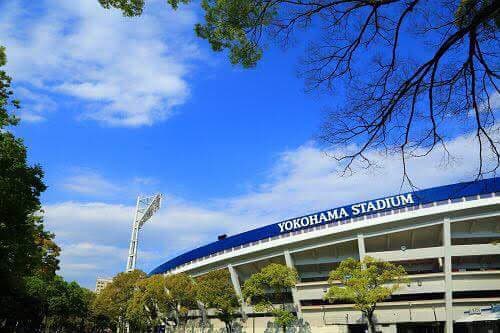
Open in Maps ↗Yokohama DeNA BayStars play at Yokohama Stadium (Kannai Station on the JR Negishi Line, 30 minutes from Tokyo Station). The stadium sits in Yokohama Park, and the open-air setting with views of the Yokohama skyline makes for memorable evening games.
Yokohama
Yokohama Park
Large city park planted with around 70,000 varieties of tulips each year.
Open in Maps ↗Tokyo also hosts the Chiba Lotte Marines (Kaihimmakuhari Station) and Saitama Seibu Lions (Seibu-Kyujo-mae Station), though these require longer journeys from central Tokyo.
Osaka Teams
Hanshin Tigers at Koshien Stadium (Koshien Station on the Hanshin Main Line, 15 minutes from Osaka-Umeda Station) offer the most intense baseball experience in Japan. Koshien is hallowed ground - the oldest professional stadium in the country and home to the famous high school baseball tournaments. Tigers fans are legendarily passionate, and the atmosphere when they play the Giants is electric. Book well ahead for weekend games.
Orix Buffaloes play at Kyocera Dome Osaka (Dome-mae Chiyozaki Station on the Nagahori Tsurumi-ryokuchi Line). This modern dome offers excellent sightlines and is easier to get tickets for than Koshien. The retractable roof means games happen rain or shine.
Buying Tickets
Ticket prices range from ¥1,500 for outfield unreserved seats to ¥6,000+ for premium infield seats. Most tourists will be happy with seats in the ¥2,500-3,500 range, which offer good views without breaking your budget.
Where to Buy
The easiest method is purchasing directly from team websites, many of which now offer English interfaces. You'll need to create an account, but the process is straightforward. Tickets are typically released one month before each game.
Convenience stores (7-Eleven, Lawson, FamilyMart) sell tickets through in-store kiosks, but these machines are Japanese-only. If you're comfortable navigating Japanese menus or travelling with someone who can read hiragana, this method works well and tickets can be printed immediately.
For popular matches against rivals, tickets sell out within hours of release. In these cases, third-party resale platforms like Ticket Pia or StubHub Japan (now Viagogo Japan) offer options, though expect to pay above face value.
Day-of-Game Tickets
Many stadiums sell same-day tickets at the box office, typically opening 90 minutes before first pitch. For less popular weekday games, you can often walk up and buy decent seats. Weekend games and rivalry matches rarely have day-of availability.
Choosing Your Seat
Japanese stadiums divide seating into home team sections and away team sections. This isn't a suggestion - it's enforced. If you buy tickets in the home section, you're expected to participate in the coordinated cheering. The away section follows the same rules for their team.
Infield reserved seats (nai-ya shitei-seki) offer the best views of the action. Look for sections behind home plate or along the first and third base lines. These cost ¥3,000-6,000 depending on the team and opponent.
Outfield seats (gai-ya seki) are where the most passionate fans congregate. Home team supporters pack one outfield section, away fans take the other. Expect standing, jumping, and non-stop chanting for three hours. It's brilliant fun but exhausting. These typically cost ¥1,500-2,500.
Outfield unreserved seats (jiyū-seki) are the budget option at ¥1,500-2,000, but arrive early as they fill up fast. You're competing with university students and die-hard fans who queue before gates open.
For your first game, consider infield seats where you can watch the organised cheering sections whilst having a more relaxed experience yourself.
What to Expect at the Stadium
Arrive at least 45 minutes before first pitch. Gates typically open 60-90 minutes early, and you'll want time to explore the stadium, buy food, and settle into your seat.
The Cheering Culture
Every player has their own theme song. When they come to bat, their section of the stadium erupts into choreographed chanting, clapping, and flag-waving led by official cheer leaders (ouendan). The home team's fans cheer when their team bats; during the other half of the inning, the away section takes over. This back-and-forth continues for three hours, creating an atmosphere unlike any sporting event you've likely experienced.
Between innings, stadium staff lead coordinated activities. Everyone participates - there's no ironic detachment here. During the seventh-inning stretch, thousands of fans release small balloons (some teams) or perform specific rituals. At Hiroshima Carp games, fans perform the "Carp Dance". At Hokkaido Nippon-Ham Fighters games, everyone waves handkerchiefs.
Stadium Food
Forget overpriced hot dogs and stale nachos. Japanese stadium food is legitimately excellent. Each stadium has regional specialities: yakitori skewers, takoyaki (octopus balls), karaage (fried chicken), bento boxes with grilled fish, gyoza, curry rice, and ramen. Prices are reasonable - ¥500-800 for most items.
Beer sellers roam the stands carrying kegs on their backs, pouring fresh pints without you leaving your seat. A large beer costs ¥700-900. You can also buy chu-hi (shochu highballs), whisky, and soft drinks. Unlike many Western stadiums, Japanese venues allow you to bring your own food and non-alcoholic drinks, though most people buy from vendors.
Many stadiums have standing bars or beer gardens where you can grab food and drinks before heading to your seat. Tokyo Dome's "Garden Terrace" and Yokohama Stadium's outfield beer garden are particularly popular.
Game Day Basics
What to Bring
Your ticket (printed or on your phone), cash for food and drinks (many vendors don't accept cards), and a light jacket for evening games or air-conditioned domes. If you're sitting in the cheering section, consider earplugs - it gets genuinely loud.
Photography
Photos for personal use are permitted, but flash photography during play is forbidden. Video recording is typically prohibited. The stadiums take this seriously, and staff will ask you to stop if spotted recording video.
Children
Japanese baseball games are family-friendly. You'll see many children in attendance, and teams often run kids' activities before games. That said, the cheering sections are intense and may overwhelm young children. Choose infield seats for families.
Smoking
Most stadiums have designated smoking areas, typically located outside the main seating bowl. Smoking in the stands is prohibited.
Understanding the Game
If you're new to baseball, the basics are simple: teams alternate batting and fielding. Three outs end an inning. Nine innings make a game. The team with more runs wins.
Japanese baseball has some rule variations from MLB:
- Games can end in a tie after 12 innings during the regular season
- The strike zone is slightly smaller
- There's a pitch limit in some situations
- Foreign players are limited to four per team
You don't need to understand every nuance to enjoy yourself. Follow the crowd's energy - you'll quickly work out when something good has happened.
Language Barriers
Stadium announcements are in Japanese, but this rarely matters. Scoreboards display essential information visually. Staff are accustomed to foreign visitors and will help you find your seat. Basic gestures and pointing work fine for buying food.
Many teams now offer English language support through their apps, showing live scores, player information, and stadium maps. Download your team's app before arriving.
Special Events and Themes
Teams run promotional nights throughout the season: fireworks displays after Friday games, mascot costume giveaways, special uniform nights, and more. Check the team's schedule when booking - these events add extra entertainment value.
Japan Series games (late October/early November) are the pinnacle of NPB, though tickets are nearly impossible to obtain without Japanese residency and advance registration. If you're visiting during this period and desperate to attend, resale platforms are your only realistic option, with tickets costing several times face value.
After the Game
Stadiums empty efficiently despite large crowds. Follow the flow towards your nearest station. Trains will be packed immediately after games, but services run frequently.
Many stadiums sit near entertainment districts. Tokyo Dome is adjacent to Korakuen, with dozens of restaurants and bars. Koshien connects quickly to Osaka's nightlife areas. Consider booking dinner nearby to avoid the immediate post-game rush.
Making the Most of It
Go with the flow. Join in the cheering if you're comfortable, or simply observe the coordinated chaos around you. Buy the overpriced foam finger. Try the local stadium speciality. Strike up a conversation with the fan next to you - baseball enthusiasts worldwide share a common language.
Japanese baseball games blend athletic competition with cultural performance in a way that reveals something essential about how Japan approaches community, tradition, and fun. It's sports, yes, but it's also theatre, festival, and shared ritual.
For ¥2,500 and three hours of your time, you'll gain stories worth retelling and memories of one of Japan's most joyful collective experiences. That's better value than most tourist attractions in Tokyo or Osaka, and considerably more entertaining than your fourteenth temple visit.
Making It Happen
Start checking team schedules about six weeks before your trip. Identify which teams are playing at home during your dates. Book tickets one month out when they're released. Choose a weekday game if possible - tickets are easier to obtain and you'll still get the full experience.
The matches run long. First pitch is typically at 18:00 on weekdays, 14:00 or 18:00 on weekends. Games last three hours minimum, sometimes longer. Plan your day accordingly, but don't schedule anything tight afterwards. You'll want to savour the experience rather than rushing off.
Baseball in Japan isn't just a game. It's a window into how an imported sport became uniquely Japanese, transformed by local culture into something both familiar and completely distinct. Whether the home team wins or loses, you'll leave understanding a bit more about why Japan captivates visitors who take time to engage with its everyday pleasures.